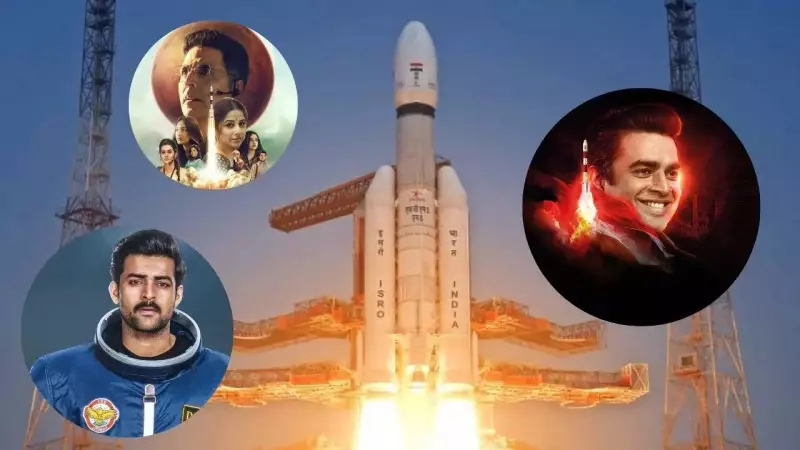
In a significant development for India's space program, the Indian Space Research Organisation (ISRO) launched its PSLV-C62 rocket from the Satish Dhawan Space Centre in Sriharikota today. This event was poised to be a milestone moment in the nation's evolving journey in space science and technology. However, latest reports indicate that the mission has not achieved its intended objectives. A deviation was observed during the completion of the PS3 stage, leading to the mission's failure.
Cinema's Reflection of India's Space Ambitions
While ISRO's real-world endeavors, from the Mars Orbiter Mission to Chandrayaan-3, continue to ignite national pride, Indian cinema has long served as a mirror to these aspirations. Bollywood and regional films have repeatedly turned to the cosmos, blending scientific ambition with deep human emotion and patriotism. As the nation processes the outcome of the PSLV-C62 launch, it's a poignant moment to revisit how filmmakers have envisioned India's celestial dreams.
Bollywood's Homage to ISRO and Beyond
'Mission Mangal' (2019) stands as Bollywood's most direct cinematic tribute to ISRO. Inspired by the historic and successful Mangalyaan mission, the film dramatized how a team of dedicated scientists achieved the extraordinary with limited resources. Its realistic portrayal of ISRO's work culture, the pivotal role of women scientists, and India's signature cost-effective innovation struck a chord with audiences nationwide. The film featured an ensemble cast including Akshay Kumar, Vidya Balan, Taapsee Pannu, Sonakshi Sinha, Kirti Kulhari, and Nithya Menen.

Though not a space mission film in the conventional sense, 'Swades' (2004) begins its narrative at NASA. The protagonist, Mohan Bhargava played by Shah Rukh Khan, is depicted as a project manager there. The story subtly weaves a connection between India's immense scientific potential and global space research, championing the idea that Indian intellect is central to worldwide technological advancement. The film, also starring Gayatri Joshi and Kishori Ballal, ultimately advocates for bringing knowledge and innovation back to the homeland.
The critically acclaimed 'Rocketry: The Nambi Effect' (2022) delves into the personal sacrifices behind India's space triumphs. Based on the life of former ISRO scientist Nambi Narayanan, the film sheds light on the early, foundational days of India's space program. It tackles complex issues including espionage allegations and highlights the resilience of scientists who built the groundwork for future successes like the PSLV series. With R. Madhavan in the lead role, supported by Simran and Rajit Kapoor, the film's narrative feels especially resonant in the wake of the PSLV-C62 launch, reminding viewers of the struggles preceding every launch attempt.
Regional Cinema's Foray into Space Thrillers
The cinematic exploration of space extends beyond Hindi cinema. The Tamil film 'Tik Tik Tik' (2018), which gained pan-India recognition through its Hindi release, was one of the country's first attempts at a space disaster thriller. It imagined an Indian space station and a daring astronaut-led rescue mission, marking a shift towards high-concept, genre-driven storytelling in Indian space narratives. The film starred Jayam Ravi, Nivetha Pethuraj, and Aarav.
Another regional standout, the Telugu film 'Antariksham 9000 KMPH' (2018), focused on satellite communication failures and heroic astronaut missions. It presented space as a high-stakes arena where Indian expertise and quick thinking save the day, a depiction that aligns closely with ISRO's real-world reputation for problem-solving. The film featured Varun Tej, Aditi Rao Hydari, and Lavanya Tripathi in lead roles.
India's space journey, marked by ambitious missions like Chandrayaan-3 and Aditya-L1 alongside the PSLV series, has transitioned from being merely aspirational to establishing an authoritative presence on the global stage. Today's event at Sriharikota, while a setback, is part of the challenging and relentless process of space exploration—a process that continues to inspire both scientists and storytellers alike.