Rang De Basanti at 20: The Film's Enduring Warning About Political Apathy
Written by Vaishnawi Sinha
New Delhi | January 26, 2026 12:06 PM IST
Twenty years after its groundbreaking release, Rang De Basanti continues to resonate with audiences across generations. The film, which premiered in 2006, opens with the powerful words of Chandra Shekhar Azad: 'Ab bhi jiska khoon na khaula, khoon nahi wo paani hai, Jo desh ke kaam na aaye, wo bekar jawani hai.' These revolutionary lines set the stage for what would become one of Indian cinema's most thought-provoking explorations of youth, politics, and responsibility.

From Campus Fantasy to Political Reality
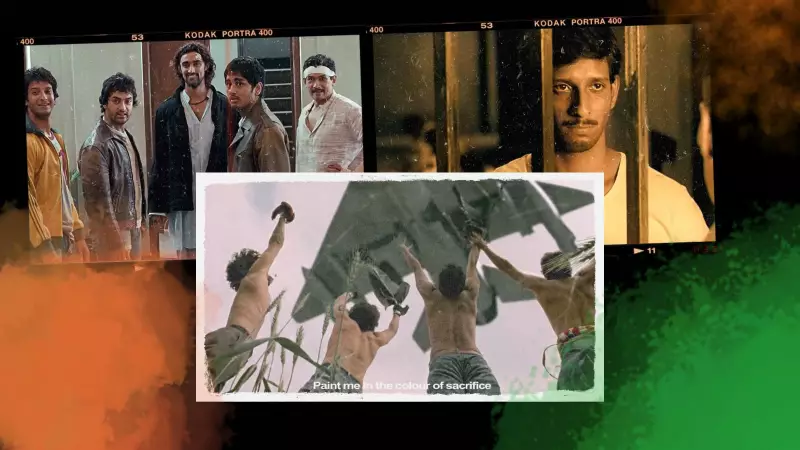
The film begins not as an overt political statement but as a nostalgic glimpse into Delhi University life. Audiences were drawn to the carefree existence of DJ and his friends—midnight bike rides around India Gate, casual beer sessions, and the illusion of living without worldly concerns. We all aspired to be like Aamir Khan's DJ: nonchalant, detached from harsh realities, and trusting that life would somehow work out favorably.
Yet, beneath the surface of youthful exuberance, the film gradually shifts tone. What starts as a story about aimless youth transforms into something profoundly uncomfortable. Rang De Basanti masterfully demonstrates that distance from politics does not equate to safety from its consequences. Two decades later, the film no longer feels like a simple coming-of-age story but rather a warning that many of us initially mistook for entertainment.
The Comfort of Not Caring
In the film's first half, politics exists as background noise—something to be casually complained about over drinks. DJ and his friends are not uninformed; they understand the country's struggles, recognize corruption, and even identify those responsible. What they lack is not awareness but urgency and discomfort. Their educated cynicism manifests through mocking politicians and rolling eyes at the system.
Karan Singhania, portrayed by Siddharth, perfectly captures this sentiment when he declares, 'Kuch nahi badlega iss desh mein. Main toh katt lunga yaha se.' The country may be broken, but not broken enough to disrupt their routine of skipping classes, wasting nights, and enjoying bike rides. Politics remains something unfortunate happening elsewhere, to unfamiliar people.
This detachment becomes particularly evident in how the film initially portrays India Gate. The monument, traditionally symbolizing freedom and sacrifice, is reduced to a backdrop for raat ki gedi and drunken banter. This representation illustrates what apolitical life looks like when cushioned by youth and privilege: the ability to opt out without immediate consequences, and the assumption that injustice will stop just short of one's doorstep.
Mapping the Spectrum of Disengagement
Rang De Basanti presents political awakening not as a single journey but through diverse character arcs:
- Lakshman Pandey (Atul Kulkarni) begins as the loudest voice in the room, his nationalism aggressive and performative. The film exposes the hollowness of this extremism by contrasting it with historical parallels in Sue's film.
- Karan Singhania represents urban India's privileged disengagement—criticizing the system while planning to escape to the United States. His detachment fractures only after personal tragedy forces him into action.
- Sukhi emerges as perhaps the most relatable character—not ideological, angry, or brave, but deeply afraid. His constant anxiety reveals the film's most uncomfortable truth: most people are not heroic or hateful; they are simply scared.
Through these characters, the film maps the various excuses we make for remaining uninvolved: rage, privilege, and fear. Yet, these different paths eventually converge toward dissent, demonstrating that disengagement is ultimately unsustainable.

The Film's Enduring Political Statement
By the final act, nothing about the country has changed—only the characters' position within it. The same India Gate that held their laughter in the first half becomes the site of their pain and grief as protestors demanding justice for Ajay Rathod face lathicharge. This transformation represents the film's most powerful political statement.
The characters are not awakened by nationalist ideology but because the system finally invades their personal lives and refuses to leave. The film also employs religious symbolism with quiet insistence, contrasting Lakshman's initial refusal to sit with Aslam with later scenes showing McKinley kneeling at a church altar while Ramprasad Bismil's chants echo alongside Ashfaq's final namaaz.
Rang De Basanti poses a challenging question: if men walking toward their death could find common ground against injustice, what excuse do the living have for hatred?
A Warning We Still Need
Watching Rang De Basanti two decades after its release remains an uncomfortable experience. The film does not argue that everyone must protest, rebel, or become martyrs. Instead, it systematically dismantles the illusion that opting out is a permanent choice or that neutrality keeps one untouched.
The tragedy lies not in what the characters endure but in what the film reveals: being apolitical represents the privilege of postponing consequences. Sooner or later, those consequences arrive. The film's essence is captured in DJ's final words: 'Zindagi jeene ke do tareeke hote hai: Ek, jo ho raha hai hone do, bardaasth karte jao. Ya fir, zimmedari uthao usko badalne ki.'
Twenty years later, Rang De Basanti continues to ask its audience the same difficult questions about responsibility, engagement, and the cost of indifference in a changing India.