Ram Gopal Varma Counters AR Rahman's Communal Allegations in Bollywood
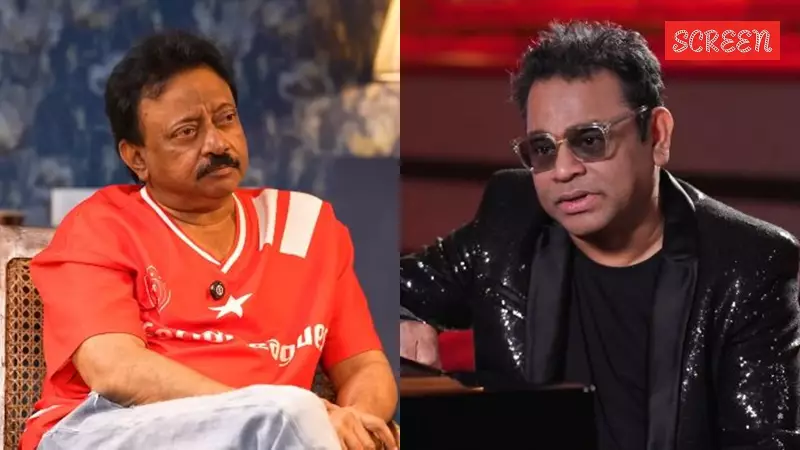
Renowned Indian composer AR Rahman recently sparked a heated nationwide debate by suggesting that the film industry may be growing communal, citing his own experience of receiving less work over the past eight years. This controversial statement has drawn responses from various industry figures, with director Ram Gopal Varma offering a firm rebuttal.
Varma's Perspective: Profit Over Prejudice
While appearing on Faridoon Shahryar's podcast, Varma was asked about Rahman's comments and the ensuing discussion. The acclaimed director of Satya responded by stating, "I don't really want to make a comment on what he said about the communal aspect. Because I do not believe that. I feel that the film industry is only about making money."
Varma elaborated that the industry's primary focus is financial success, not personal backgrounds. "Whoever makes money for them, they will go after that. They don't care about your caste, religion — or where you're from. If the South Indian film directors are making films which are blockbusters, they will go to them," he emphasized.

Historical Examples and Industry Dynamics
To support his argument, Varma cited the example of legendary playback singer SP Balasubrahmanyam. "When SP Balasubrahmanyam was taken for Maine Pyaar Kiya and Hum Aapke Hai Koun by Sooraj Barjatya, those songs were big hits, which is the reason they took them. The moment he was not there, the other songs weren't working," Varma explained.
He further clarified that linguistic or regional backgrounds hold no significance in this context. "It could be a Hindi guy or a Telugu or Tamil guy; it doesn't make a difference," Varma asserted, reinforcing his view that commercial viability drives all decisions in Bollywood.
Acknowledging Personal Experiences
Despite his strong stance, Varma acknowledged that Rahman might have had specific personal experiences that differ from the general industry trend. "Having said that, I can't speak for Rahman because I don't know the experiences that he has had. Any one of us could speak in general, but it is possible for someone to go through something specific, which has made them talk like that," he said.
Varma added a note of caution, stating, "Is it a general thing, or was it something that happened to him? Not knowing these things, I can't make a comment on them." This balanced approach shows his willingness to consider individual circumstances while maintaining his overall perspective.
Industry Reactions and Counterarguments
Rahman's comments have not gone unchallenged within the entertainment community. Singer and independent musician Sona Mohapatra is among those who disagree with the composer's assessment. During a conversation with The Indian Express, she argued that Rahman remains a top choice for major projects.
"He scored Chhaava. He is scoring Ramayana. He continues to be attached to some of the biggest, most high-profile projects in the country, while also being globally active and constantly travelling and likely not available to many projects. By any objective measure, that is not marginalisation," Mohapatra stated, highlighting his ongoing prominence in the industry.
This debate underscores the complex dynamics of Bollywood, where perceptions of bias, commercial pressures, and personal experiences often intersect, creating multifaceted discussions about inclusivity and opportunity in India's vibrant film landscape.