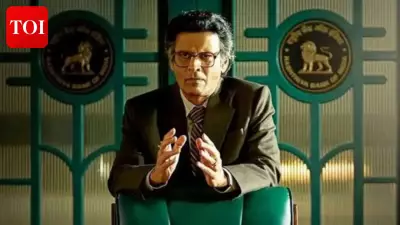
Controversial filmmaker Ram Gopal Varma has stirred the pot in the Hindi film industry with a bold claim. He asserts that the blockbuster success of the film Dhurandhar has exposed a weak commercial formula in Bollywood, leaving top stars and producers too scared to speak openly about it.
RGV's Explosive Claim: Realism Over Glamour
In comments made public on December 25, 2025, Varma pointed to the industry's notably muted response to Dhurandhar's phenomenal run. He suggested that the film's focus on raw, gritty realism, as opposed to the typical high-glamour spectacle, has directly challenged long-held beliefs about what makes a commercial hit in Mumbai. According to RGV, this deviation from the standard formula is what has made the industry's established players deeply uncomfortable.
The numbers support the film's impact. Dhurandhar has crossed a staggering ₹900 crore in worldwide box office collections, a figure that places its lead actor, Ranveer Singh, in an elite historical club. This financial triumph, achieved without relying on traditional song-and-dance glamour, is seen as a validation of its content-driven approach.

The Silence of the A-Listers
Varma's core argument hinges on the perceived silence from Bollywood's A-list celebrities and powerful production houses. He interprets this lack of loud celebration as fear. The fear, he implies, is that Dhurandhar's success story undermines the very template these stars and producers have built their careers and businesses upon.
This isn't the only industry voice commenting on the shift. Director Aditya Dhar also recently made a subtle swipe at commentator Dhruv Rathee in the context of Dhurandhar's success, indicating that the film has become a focal point for broader debates about cinematic merit and audience taste.
A Fundamental Creative Shift for Bollywood?
The combined effect of Dhurandhar's box office rampage and Varma's pointed remarks has intensified a crucial discussion. The central question now being asked is whether mainstream Hindi cinema is on the brink of a fundamental creative shift.
For years, a specific formula—star power, foreign locales, item numbers, and aspirational storytelling—has dominated big-budget productions. Dhurandhar, with its strong roots in realism and powerful narrative, has proven that audiences are hungry for alternatives. This has potentially opened the door for more diverse and content-heavy films to receive green lights and substantial marketing budgets.
Whether this is a one-off phenomenon or the beginning of a new trend remains to be seen. However, Ram Gopal Varma has successfully used the platform of Dhurandhar's success to launch a sharp critique at the industry's core, suggesting that its biggest names are now nervously watching a changing landscape they did not anticipate.