Riddhi Kumar Credits Mother for Instilling Core Values of Equality at Home
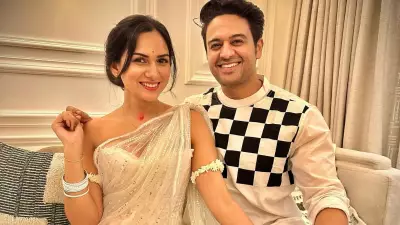
On International Women's Day, actress Riddhi Kumar, known for her roles in films like Radhe Shyam, Superboys of Malegaon, Lover, and The Raja Saab, revealed that the most profound lessons about equality often originate within the family unit. She emphasized how domestic environments can fundamentally shape one's understanding of independence, identity, and personal choice.
Mother's Influence Created a Natural Foundation for Gender Equality
Riddhi Kumar pointed directly to her mother as the primary architect of her values and personal journey. "The one woman who has shaped my values and my journey the most, cliché enough, has to be my mom," she stated. "She created a home where equality felt natural. She's truly created a life that is so equal, with such intense gender equality, that growing up I didn't even understand the concept behind it. I thought that's just how the world was."
This upbringing provided Riddhi with a powerful perspective on self-determination. "The biggest lesson I've learnt from her is that circumstances don't define you as an individual," she explained. "It's about what you decide to do with your life, making active, deliberate, intentional changes and creating the life that you want."

Defining the Modern Indian Woman Beyond Labels
When discussing what it means to be a modern Indian woman, Riddhi Kumar advocated for a focus on individuality over categorization. "The idea of a modern Indian woman is that of an individual," she articulated. "It's not about labels like modern, traditional, feminine or masculine, but about seeing a woman as a person first."
She elaborated that her identity transcends gender-based classification. "Being a woman is not about categorising myself as belonging to the female gender, but about being a human being figuring life out, exploring, experimenting and balancing personal growth with professional aspirations."
Feminism as a Path to Recognizing Individuality
For Riddhi Kumar, the essence of feminism revolves around a simple yet profound principle. "When we speak about feminism and blurring gender bias and discrimination, it's about normalising the idea of individuals being individuals first," she asserted. This perspective frames her entire outlook on womanhood in contemporary India.
"So being a modern Indian woman means being a person, and that's it," she concluded, distilling complex societal discussions into a clear, human-centric vision. Her reflections offer a personal narrative that connects familial influence with broader cultural conversations about gender, identity, and equality in today's evolving society.