Saurabh Shukla's Hilarious Behind-the-Scenes Stories from 'Satya' Iconic Song Shoot
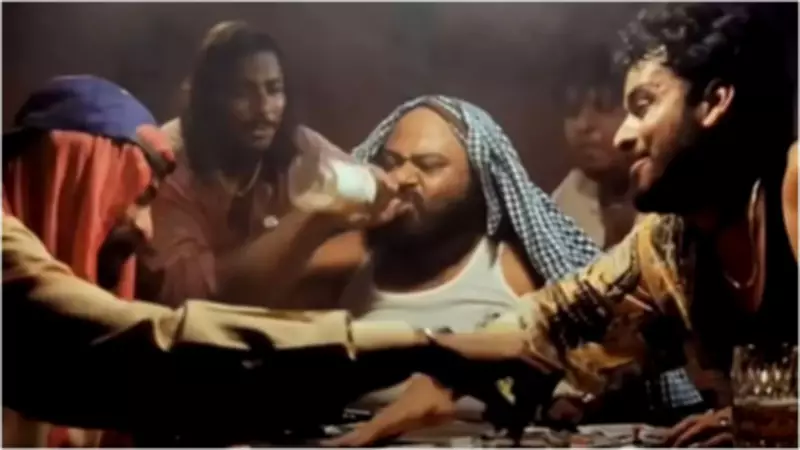
Remember the high-energy, rustic celebration number 'Goli maar bheje mein' from the cult classic film 'Satya,' featuring National Award-winning actor Saurabh Shukla in a carefree and tipsy avatar amid a lively crowd? The veteran actor has now shared some fascinating and hilarious anecdotes about filming this iconic track, including an unexpected "interrogation" that occurred after the shoot.
The Remarkably Quick 5.5-Hour Shoot
Talking exclusively to IANS, Saurabh Shukla revealed fascinating details about the production timeline of this memorable song. He explained that when 'Satya' was made in 1998, songs in Hindi cinema typically required several days of filming.
"The Kallu Mama song, you have to understand the context of the time when that film was made," Shukla emphasized. "In those days, there was a tradition, a set precedent, that film songs were shot for at least 3 to 4 days. Big, elaborate songs would take 10 to 15 days to shoot."

Given this industry standard, the actor posed a rhetorical question: "So, if a song was supposed to take 3 to 4 days, how many days do you think this one took? It was shot in exactly 5 and a half hours."
He confirmed this astonishing timeline, stating clearly: "It was shot in 5 and a half hours," about the track that perfectly captures the raw, street-style vibe of Mumbai's underbelly with its spontaneous dancing and chaotic fun.
Minimalist Production with Maximum Energy
Saurabh Shukla went on to describe the remarkably simple production setup that contributed to the song's authentic energy. The entire number was filmed with just a "one-camera set-up," which was highly unusual for song sequences at that time.
"It was not a multiple-camera setup. It was a one-camera setup," he explained. "So there was this wild energy. It wasn't choreographed, it was like a free-for-all."
This minimalist approach created the spontaneous, authentic feel that has made the song so memorable among audiences even decades after the film's release.
Real Beer Props and Post-Shoot Plans
The actor also reminisced about an interesting production detail that added to the authenticity of the scene. The production team had arranged real beer as props during the shoot of the song, which also features acclaimed actors Manoj Bajpayee and Makarand Deshpande.
"The best thing was, they provided real beer for the shoot," Shukla recalled with amusement. "Which, of course, we did not drink, because we were working, we are not stupid. So we did not drink."
Once the remarkably quick shoot wrapped up within those few hours, the team decided to head to a celebration party at Saurabh Shukla's house.
"And the amazing thing was that after those 5.5 hours, pack-up happened. Then we were ready for the party. My home was the party place," he shared.
The Unexpected Police Encounter
However, their journey to the celebration was briefly interrupted in a most unexpected and humorous manner. Shukla described the scene: "Toh mere paas car thi, sab log baith gaye... sare jitne main actors the. Manoj tha, Aditya Srivastava tha, bohot saare log the. Toh baith ke hum log apni gaadi mein ja rahe the. And suddenly, humari car roki gayi."
Translated, this means: "I had a car, so everyone got into it - all the main actors. Manoj was there, Aditya Srivastava was there, and many others. So we were all sitting in the car and driving when suddenly our car was stopped."
The actor revealed that they had not even changed out of their costumes and were driving straight to the party when their car was suddenly stopped on the way.
"Aur hum logon ne costume change nahi kiya tha, usi costume mein ghar ja rahe the," he explained, meaning: "We hadn't changed our costumes and were heading home in the same outfits."
What happened next was pure comedy. Shukla recounted: "Toh usne darwaza khola aur bola, 'Baap re! Andar kya poora ka poora bhatti laga rakhi hai tum logon ne?'"

This translates to: "He opened the door and said, 'Oh my God! What's going on inside? Have you set up an entire liquor distillery in here?'"
The actor quickly clarified that none of them had been drinking during the shoot: "Toh humne kaha, 'Nahi sir, humne kuch nahi piya hai.'" Meaning: "We told him, 'No sir, we haven't drunk anything.'"
Shukla added with a laugh: "He said, 'Kya nahi piya hai? Poora tumhari car mein aisa smell aa raha hai jaise samandar ke andar poori sharaab ki bhatti ho.'"
This humorous response translates to: "What do you mean you haven't drunk anything? Your car smells as if there's a whole liquor distillery inside the ocean!"
Legacy of 'Satya'
'Satya' was directed by visionary filmmaker Ram Gopal Varma and stars J. D. Chakravarthy, Urmila Matondkar, and Manoj Bajpayee in pivotal roles, alongside Saurabh Shukla, Aditya Shrivastava, and Paresh Rawal. The film is widely recognized as the first installment of Varma's Gangster trilogy, which explores organized crime in urban India with remarkable authenticity.
The narrative follows Satya, an immigrant who arrives in Mumbai seeking employment, befriends the charismatic gangster Bhiku Mhatre (played brilliantly by Manoj Bajpayee), and becomes increasingly drawn into the city's dangerous underworld. The film's raw portrayal of Mumbai's criminal landscape, combined with memorable performances and iconic scenes like the 'Goli maar bheje mein' song, has cemented its status as a landmark in Indian cinema.
Saurabh Shukla's hilarious revelations about the making of this iconic song provide fascinating insight into the creative process behind one of Bollywood's most memorable sequences, demonstrating how spontaneity and authenticity can sometimes create cinematic magic more effectively than elaborate planning and extended production schedules.