SD Burman's Strong Reaction to Dev Anand's Film Concept
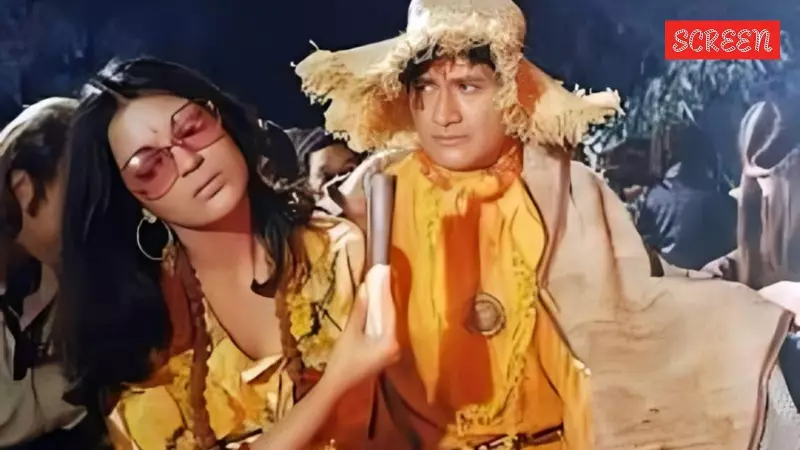
Dev Anand's 1972 classic Hare Rama Hare Krishna almost had a very different beginning. The film's original story shocked legendary composer SD Burman so much that he refused to work on it. Mohan Churiwala, a close friend of Dev Anand, recently shared this fascinating behind-the-scenes story.
"This is a Disgusting Story"
Dev Anand always discussed his film ideas with SD Burman first. When he narrated the initial plot of Hare Rama Hare Krishna, Burman had a dramatic reaction. The story involved Dev Anand's character searching for his sister, falling in love with a woman, planning to marry her, and then discovering she was actually his long-lost sister.
"Burman Dada stood up immediately," Mohan recalled. "He said, 'Don't make this film. This is a disgusting story. What is wrong with you to plan such a story?'"

Dev Anand realized he might have gone too far. He revised the screenplay by adding another character to create a proper romantic subplot. This change ensured there would be no inappropriate connection with the sister character. However, SD Burman still refused to participate. He firmly told Dev Anand, "You don't make this film. I don't want to do it, and you shouldn't either."
Zaheeda Was the Original Choice, Not Zeenat Aman
Another surprising revelation concerns the casting. Zeenat Aman, who became famous through this film, was not the first choice. Actress Zaheeda, who was reportedly romantically linked with Dev Anand at that time, was initially selected for the role.
Zaheeda had to decline the offer due to an interesting professional conflict. She was playing Dev Anand's heroine in another film called Gambler. The director of that film, Amarjeet, advised her against taking the sister role in Hare Rama Hare Krishna.
"Amarjeet told her, 'If you play the sister in another film while being a heroine here, it might negatively affect the picture,'" Mohan explained. Zaheeda herself thought, "How can I be your sister when I just played your heroine?" This opened the door for Zeenat Aman to step into what became her breakthrough role.
RD Burman Takes Over the Music
After rejecting the project, SD Burman made an important suggestion. He recognized that the film dealt with modern themes, particularly the hippie culture. He advised Dev Anand to approach his son, RD Burman, for the music composition.
"This is a modern film, and it needs a modern tune," SD Burman said. "For this, Pancham will be better for you." RD Burman indeed created the memorable soundtrack, including the iconic song "Dum Maro Dum" that remains popular today.
Shooting Challenges in Nepal
The film's production faced significant challenges during shooting at Nepal's Pashupatinath Temple. The temple had strict rules allowing entry only to Hindus. Dev Anand's crew included three Muslim artists: Zeenat Aman, Mumtaz, and cinematographer Fali Mistry.
King Mahendra of Nepal personally intervened to make an exception. He allowed the temple to be closed for the shoot. "The temple was closed for the occasion, and we were allowed to shoot," Mohan remembered. "Who can do that now?"
Raj Kapoor's Emotional Reaction to Guide
In the same conversation, Mohan shared another anecdote about Dev Anand's classic film Guide. After watching the film early one morning, legendary filmmaker Raj Kapoor called Dev Anand around 6 a.m.
Raj Kapoor praised both the film and Dev Anand's brother, director Vijay Anand. He reportedly said, "You are so lucky to have such a talented brother." Mohan revealed that Raj Kapoor was actually crying on the phone during this emotional conversation.
These stories reveal the complex relationships and creative decisions that shaped one of Bollywood's most memorable films. Despite initial objections and casting changes, Hare Rama Hare Krishna became a cultural phenomenon that continues to fascinate audiences decades later.