Spider-Man: Brand New Day Trailer Weaves Real Spider Science Into Peter Parker's Story
The newly released trailer for Spider-Man: Brand New Day opens with a compelling narration that describes the three distinct life stages of a spider and the vulnerable transitions between them. This scientific framework, it turns out, provides a surprisingly accurate metaphor for the emotional and physical journey of Tom Holland's Peter Parker in the upcoming film.
Peter Parker's Disorienting Awakening and Organic Webbing Shift
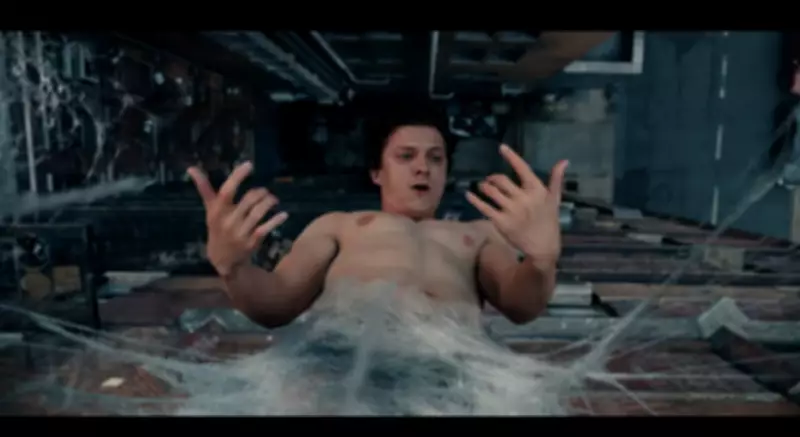
In the trailer, Peter Parker is shown waking disoriented inside what appears to be a massive silk cocoon, struggling to control webbing that now emerges organically from his body. This marks a significant departure from the mechanical web-shooters he has relied on throughout his Marvel Cinematic Universe appearances. The shift to biological web production is not entirely unprecedented for the franchise; Tobey Maguire's Spider-Man featured organic webbing in Sam Raimi's 2002 film, and the concept received a brief nod in No Way Home.
However, in Brand New Day, this change suggests something more profound—a physical evolution potentially linked to DNA mutation or the cumulative toll of being Spider-Man. This leaves Parker exposed in ways he has never experienced before. Comic book history shows such biological alterations can take dark turns, with Parker occasionally developing additional limbs, predatory physiology, or losing aspects of his humanity.

The Three Life Cycles of Spiders: A Biological Blueprint
The trailer's narration, delivered by actor Keith David in an undisclosed role, states: "Spiders have three life cycles. When between cycles, it can leave the spider vulnerable to threats. And for those spiders who make it through, it amounts to a kind of rebirth." This script cleverly mirrors Parker's arc while remaining biologically faithful.
Every spider species progresses through three phases: egg, spiderling, and adult. Unlike butterflies, spiders do not undergo metamorphosis through larval or pupal stages. Their development occurs through a series of moults where they shed their exoskeleton to grow.
The Egg Sac: Protective Beginnings
Spider life begins in an egg sac, a silk structure constructed by the mother before laying eggs. This sac provides protection against environmental elements and can contain anywhere from a few eggs to several thousand, depending on the species. Some mothers, like wolf spiders, carry the sac with them and even assist in hatching by biting it open. Others deposit the sac in a secure location, leaving offspring survival to chance. Eggs typically hatch within weeks, though in colder climates they may overwinter and emerge in spring.
The Spiderling Stage: Vulnerability and Dispersal
Upon hatching, spiderlings are fully formed miniature spiders with all adult anatomical features. Their primary limitation is size, requiring multiple moults—usually five to ten—to reach adulthood. The moulting process represents the spider's most vulnerable period, as the old exoskeleton is shed before the new one hardens, leaving them unable to move or defend effectively.
Dispersal at this stage showcases remarkable adaptability. Some spiderlings simply walk away, while others engage in "ballooning"—climbing to elevated points, releasing fine silk threads that catch the wind, and traveling hundreds of meters or further. This silk forms a triangular kite-like structure, enabling spiders to colonize new environments and potentially reach adulthood in entirely different locations.
Adulthood: Reproduction and Lifespan Variations
Upon reaching adulthood, spiders become capable of reproduction. For males, this often marks the end of their life cycle. They first spin a small web to deposit sperm, then transfer it to specialized appendages called pedipalps before seeking a female. This approach requires caution, as females are typically larger and stronger, and males may be mistaken for prey. Many males die shortly after mating, sometimes due to biological inevitability rather than female aggression.

Female spiders generally live longer, with most species surviving one to two years. However, female tarantulas are exceptional outliers, with some individuals living beyond twenty years. They continue moulting into adulthood, creating a unique reproductive challenge: if a female tarantula moults after mating, she sheds the sperm storage structure and must mate again.
Metaphorical Application to Peter Parker's Journey
In Brand New Day, the filmmakers utilize this biological framework as a metaphor for Peter Parker's current state—caught between versions of himself, temporarily disoriented, and facing an uncertain future. The trailer suggests no extreme physical transformations like additional limbs, but the direction points toward significant evolution. Whether the film successfully earns this metaphor will be revealed when it releases on July 31. The spider biology it references, however, provides a solid foundation for exploring themes of vulnerability, rebirth, and transformation.