Meryl Streep Revisits Melania Trump's Controversial Jacket in Fashion Discussion
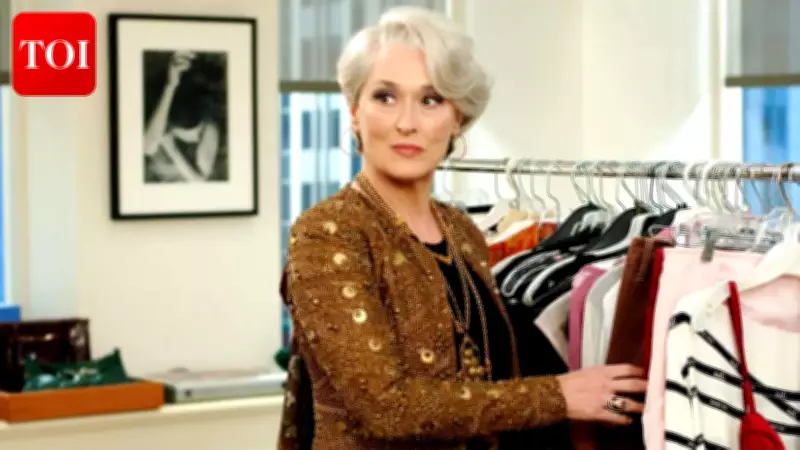
In a recent high-profile interview, Oscar-winning actress Meryl Streep has reignited discussion about a debated fashion moment involving former US First Lady Melania Trump. The conversation, which also featured Vogue's global editorial director Anna Wintour and was moderated by filmmaker Greta Gerwig, explored how women in public life use clothing to project authority and identity.
The Fashion Power Discussion
The interview took place ahead of the release of 'The Devil Wears Prada 2,' in which Streep reprises her iconic role as Miranda Priestly. Streep appeared on the cover of Vogue alongside Wintour, with Gerwig leading the conversation that delved deep into the intersection of fashion, politics, and personal expression.
During the discussion, Wintour praised several public figures for their distinctive style, including former First Lady Michelle Obama and New York City First Lady Rama Duwaji. When the conversation turned to Melania Trump, Wintour offered a measured observation, stating that the former first lady "always looks like herself when she dresses."

Streep's Critical Reflection
Streep, however, provided a more pointed analysis, specifically referencing a controversial incident from 2018. "I have so many thoughts about this," Streep began. "I think the most powerful message that our current first lady sent was in the coat that said 'I Really Don't Care, Do U?' when she was going to see migrant children who were incarcerated."
The actress emphasized that fashion extends beyond personal style, explaining that it is profoundly shaped by "larger historical and political sweeps of expectation." Her comments directly referenced Melania Trump's visit to a migrant children's shelter in Texas, during which the first lady wore a jacket prominently displaying the phrase "I really don't care, do u?"
The 2018 Controversy Revisited
This fashion choice sparked immediate controversy and widespread media attention at the time. Melania Trump later clarified that the message on her jacket was not directed at the migrant children she was visiting, but rather at "the people and for the left-wing media who are criticizing me."
Streep's decision to revisit this moment years later highlights how certain fashion choices can transcend mere style to become lasting political statements. The actress's commentary suggests that such moments become embedded in public memory and continue to resonate long after the initial controversy has faded.
Fashion as Political Communication
The broader interview explored how clothing serves as a form of non-verbal communication for women in positions of power and public visibility. Both Streep and Wintour acknowledged that fashion choices are rarely neutral, particularly for political figures whose every appearance is scrutinized and analyzed.
This discussion comes at a time when the relationship between fashion and politics has become increasingly prominent, with public figures using their sartorial choices to make statements, signal allegiances, and project specific images to both supporters and critics.
The conversation between these three influential women in fashion and entertainment underscores how clothing can serve as both personal expression and political commentary, with certain moments becoming indelible parts of public discourse that continue to be analyzed and debated years later.