The Political Rise of Tamil Cinema Stars and Their Neglected Homeground
From former chief minister C N Annadurai to contemporary actor Vijay, Tamil cinema has consistently served as a powerful pathway to political influence in Tamil Nadu. These stars have leveraged their immense popularity and mass appeal to transition into political careers, yet they have often failed to prioritize the very industry that propelled them to fame. Films in this region do more than entertain; they shape public imagination, amplify critical social messaging, and build dedicated followings that directly translate into electoral votes. Despite this profound influence, the cinema industry rarely receives meaningful attention in electoral manifestos, even from leaders who emerged from its ranks.
A Legacy of Political Careers Built on Silver Screen Fame
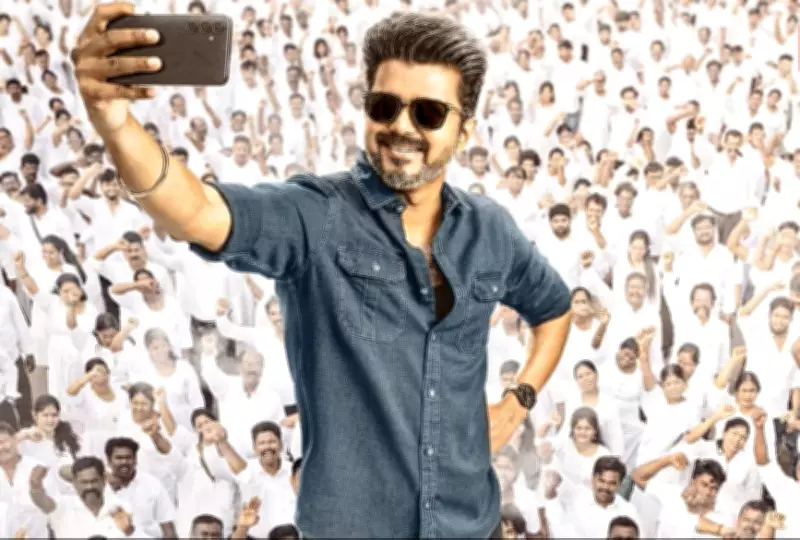
Tamil cinema has been instrumental in building political careers for decades, with iconic figures like M G Ramachandran and J Jayalalithaa paving the way. Now, actor Vijay is seeking to carve out his own political base, continuing this tradition. However, an industry insider points out that Vijay himself has not addressed cinema-related issues in his manifesto, reflecting a broader pattern. Leaders from the industry have typically limited their support to broad welfare gestures, such as establishing film institutes or implementing housing schemes for workers, while neglecting core challenges.
Core issues like piracy, which has drained the industry financially for years, have never been adequately addressed. Actors are frequently invited to endorse political campaigns and public causes, yet when a crisis strikes the industry, it struggles to speak with a unified voice, leaving it vulnerable and disorganized.

The 'Jana Nayagan' Leak: Exposing Structural Vulnerabilities
The leak of Vijay's film 'Jana Nayagan' on April 10, just before the Tamil Nadu polls, has thrust this issue back into the spotlight. This incident exposed a compromised supply chain involving post-production units, distributors, and digital handlers, where access is loosely controlled and accountability is diffused. When a high-profile film escapes before certification, it indicates a structural problem within the industry's security framework.
The breach raised serious concerns about content security within the certification pipeline, as such copies are typically restricted to tightly controlled channels. Weeks later, the source of the leak remains unidentified, fueling speculation and unease across Kollywood. Adding to the complexity is the perceived influence of Vijay, whose evolving political role has led some to question whether his involvement has indirectly shaped the response—or lack thereof—to the incident.
Industry Voices Highlight Systemic Failures
Producer G Dhananjheyan lamented, "Unfortunately, we are an unorganised sector. We need tighter control. The editor should be the sole custodian of the movie." He referred to the alleged lapse, noting that the edit suite was made vulnerable by allowing access to an unused facility, which compromised valuable content. He added that production units often share files via insecure methods like Google Drive, WeTransfer, and pen drives.
In contrast, producer Ishari K Ganesh claimed the leak originated from Singapore or Malaysia, stating, "What has been leaked is a censor print. It is crystal clear, with no watermark. The editor has been made a scapegoat." This discrepancy underscores the confusion and lack of coordination within the industry.
Theatre personality and producer Shivpprasadh observed, "Some blame the actor, others political parties, but many within the industry hesitate because it involves governments." He called for a separate cell with a strong police force, arguing that only small offenders are caught while the major culprits remain at large.

Kollywood's Financial Stakes and Content Security Crisis
Kollywood invests more than ₹5,000 crore annually and produces films with budgets mounting to ₹500 crore, yet it struggles to secure its most basic asset—its content. If a blockbuster film like 'Jana Nayagan' can be compromised before release, smaller films stand even less chance against piracy threats. This leak should serve as a turning point for the industry, not merely because of the star involved, but because it has exposed Kollywood's weakest link: its own internal vulnerabilities.
The 'Jana Nayagan' incident highlights a critical need for systemic reform. If the industry does not address these security flaws now, the next leak is not a question of if, but when. The political power derived from Tamil cinema must be harnessed to protect the industry that created it, ensuring that future leaders prioritize core issues like piracy and content security to safeguard Kollywood's legacy and economic viability.