From Advertising Discipline to Cinematic Ambition: The Yogesh Deshpande Story
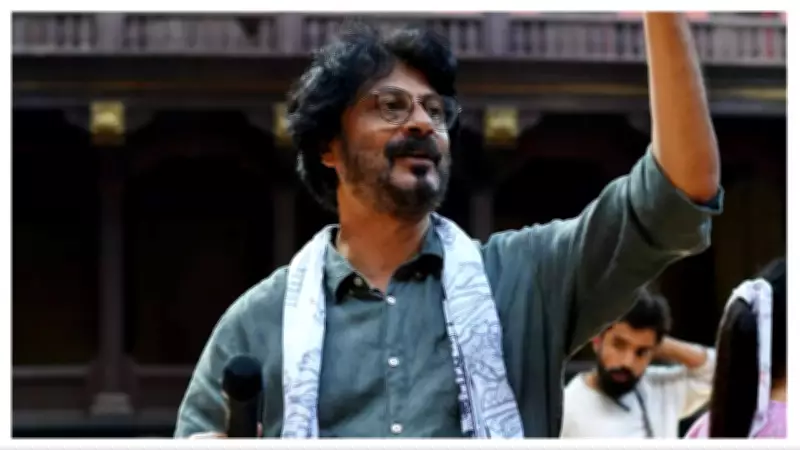
Filmmaker Yogesh Deshpande embarked on his creative journey in the world of advertising, where he directed more than 100 commercial films before making a significant transition to feature-length cinema. His debut feature film, Swaragandharva Sudhir Phadke, meticulously traces the life and legacy of the celebrated composer-singer Sudhir Phadke. The production stands out for its faithful recreation of classic musical pieces originally performed by legendary artists including Lata Mangeshkar, Asha Bhosle, Sudhir Phadke himself, and Kishore Kumar, thereby highlighting a rich musical heritage.
Oscar Recognition and Advertising Foundations
The film garnered multiple recognitions and achieved a notable milestone by being among the titles submitted for consideration as India's official entry to the Academy Awards for 2025. Reflecting on his formative years in advertising, Deshpande credits this medium with fundamentally shaping his filmmaking philosophy. He articulates a perspective that challenges conventional hierarchies within the creative industries.
"People often perceive advertising as a lesser form than cinema. I never subscribed to that view," Deshpande states. "When your canvas is limited to 30 seconds to evoke an emotion, you cultivate a discipline that transcends traditional film school education. Every single frame must justify its existence, and every second must resonate with purpose. After creating over 100 ad films, I didn't just accumulate a portfolio; I developed a kind of muscular memory for narrative efficiency. That's the essence I brought into cinema: velocity, exactitude, and a relentless focus on the audience's emotional journey. Advertising didn't confine my creativity; it equipped me with precision tools."

The Creative Restlessness Behind the Transition
Deshpande explains that his move from commercials to feature films was driven by an innate creative yearning. "To be honest, it was a profound restlessness," he admits with a laugh. "I found myself repeatedly crafting 30-second narratives and departing with the sensation of having only penned the opening sentence of an epic novel. There was always more depth to explore, more textual layers, more character development, and more meaningful silence between the dialogues. My film 66 Sadashiv represented my opportunity to let a story expand and breathe naturally. It allowed me the temporal space to sit with the narrative and permit its organic unfolding. That project was my definitive leap of faith—not merely into a new industry but into an evolved iteration of myself as a storyteller."
An Organic Ascent to Hindi Cinema
The filmmaker's entry into the realm of Hindi cinema unfolded through a natural, unplanned progression rather than strategic calculation. "I never drafted a rigid five-year plan with a bullet point stating 'Step Three: Conquer Bollywood.' That methodology doesn't align with my creative process," Deshpande shares. "My core belief has always been that the stories I feel compelled to tell deserve to reach the broadest possible audience. When Swaragandharva Sudhir Phadke achieved a release across five nations and entered the conversation for India's Oscar submission, that wasn't a meticulously engineered outcome. It transpired because the narrative carried an inherent authenticity. I believe that very authenticity is now naturally guiding my path toward Hindi cinema. While the linguistic medium may change, the fundamental soul of the storytelling remains constant."
Upcoming Project: Thumbz Up and the Digital Divide
Deshpande's forthcoming film, currently titled Thumbz Up and in the pre-production phase, is set against the picturesque backdrop of the Konkan region. The narrative delves into the stark realities of the digital divide in contemporary India. It centers on a female protagonist navigating a world rapidly transformed by technological advancements.

The filmmaker reveals that the concept originated from a powerful, persistent visual. "It began with an indelible image I couldn't erase from my mind: a woman in a coastal village clutching a smartphone she doesn't fully comprehend how to operate, yet desperately needs to master because her economic survival hinges on it," Deshpande explains. "That poignant moment lingered with me. We frequently discuss 'Digital India' as an omnipresent reality, but the truth is more nuanced. The Konkan coastline is visually stunning, yet beneath that scenic beauty lies communities grappling to keep pace with a world evolving faster than their capacity to adapt. Thumbz Up is not fundamentally a film about technology. It is a profoundly human story about aspiration, resilience, and the chasm between the promises of global progress and the tangible realities delivered to everyday individuals."
The Emotional Core: A Relatable Protagonist
The film is anchored by its female lead, whose personal journey forms the emotional and narrative backbone. "She embodies the character with the highest stakes and the least institutional support, and that is precisely where the most gripping human dramas reside," Deshpande elaborates. "She does not commence her journey as a conventional hero. She begins as an individual striving merely to survive and attain visibility in a world that has advanced without seeking her consent. The profound strength of her character arc lies in the fact that she doesn't discover her power by transforming into someone else. She becomes formidable by embracing and amplifying her authentic self. I am confident that audiences will share moments of laughter with her, feel profound empathy for her struggles, and, ultimately, find themselves championing her cause."