Years have passed, but Aashna Kushwaha still remembers those exact words clearly: "Your height is equal to my penis." Not because they were said in anger, nor because they came from a stranger, but because they were spoken inside a classroom, in front of other students, at a time when she was already fighting to like herself. For most people, height is just a physical trait. For Aashna, it became the reason she was bullied, mocked, rejected, and made to feel less worthy than everyone else. Fast forward to today, she is a much more confident woman, but getting here was anything but easy.
"I Almost Forgot My Real Name"
As a kid, Aashna almost never heard her real name being called out. Instead, it was "Chhoti," "Bauni," "Dedh Futia," "Chuhiya," and countless other nicknames revolving around one thing: how short she was. "I grew up with these names. Sometimes, I even forgot my real name because classmates and even teachers called me 'Chuhiya,'" she recalls. At home, she'd lock herself in a room and cry, then wipe her tears, fix her face, and step back outside because the next day had to be faced too. Her height was simply genetics—her grandmother stood at 4 feet 9 inches, and Aashna grew up to be exactly the same height. But knowing the 'why' didn't make the daily reality any less painful.
The School Assembly Incident She Never Forgot
Morning assemblies were a nightmare for her. "Students were lined up according to height, the shortest in front and the tallest at the back," she said. One day, Aashna arrived late and was made to stand in the last row. With taller students blocking her view, she couldn't see the exercises being demonstrated up front. When she failed to follow along, the PT teacher walked over, twisted her ear, and demanded an explanation in front of everyone. The boys around her burst out laughing. "That was probably the first time I truly felt I was different," she says. "It was the first time the joke felt like a joke on me." That night, she went home and asked her mother why her height wasn't increasing. Her mother told her it was genetic. Aashna accepted the answer, but the world around her did not.

At 13, People Had Already Decided Her Future
By the time she was 13 and had her first periods, people were already telling her parents that this was it—she wasn't going to grow any taller. The comments didn't stop there. Some people even suggested her parents should start the paperwork for a disability certificate in class 10 because, in their words, she was "too short." "I became a certified 'Bauni,'" she says with painful sarcasm. Hoping for some kind of solution, she pleaded with her parents to take her to a doctor. By then, they had even started losing hope. One comment from her father cut especially deep: "He said maybe I didn't grow tall because I didn't eat enough green vegetables." For a young girl already carrying insecurities, it felt like she was somehow responsible for her own pain.
The Classroom Comment That Broke Something Inside Her
Then came the incident that changed everything. She was sitting in class one day when a boy started taunting her about her height. "Teri height mere genitals ke barabar hai," he said. Then he repeated it in English: "Your height is equal to my penis." The hand gesture he made still flashes before her eyes. "He compared my height to his private part. Even today, when I remember it, I get goosebumps," says Aashna. Humiliated and shaking, she ran straight to a teacher to report what had happened. What she heard back left her stunned: "The short skirt you are wearing is the reason that boy has the courage to talk to you like that," the teacher reportedly replied. Aashna remembers standing there, confused. Was she being targeted because of her height? Or was it her clothes that were to blame? She ran into the bathroom, locked the door, and broke down completely. A bottle of phenyl was kept nearby. For a brief moment, she thought about drinking it. Then someone walked in. Startled, she dropped it and rushed out. She called her mother and begged her to come and take her home. That day changed her relationship with school forever.

"Not Even My Parents Were Ready to Understand"
After that incident, just walking into school felt impossible. She started inventing excuses to stay home. Her grades began to slip, and soon people slapped a new label on her: "nalayak." They assumed she didn't want to study. "No one, not even my parents, were ready to understand what I was going through," she says. The emotional burden followed her into her teenage years. By the time she was in Class 12, marriage talks had already begun at home. A woman looked her up and down, asked if she at least knew how to manage a household, and reassured everyone that "she could learn everything after marriage." Her father pointed out that a prospective groom happened to be short too, so apparently they'd "make a good match." "Get married now. Later you may not find a boy," she recalls her father saying. The message was clear: her height had become her identity, and her future seemed to be shrinking because of it.
Finding Confidence Away from Home
After Class 12, Aashna took a two-year gap. Several career paths were ruled out one by one. Eventually, she chose hotel management. That decision changed the course of her life. For the first time, she found herself surrounded by teachers who actually supported her and friends who genuinely cared. Slowly, her confidence started coming back. Later, she landed an internship at the Taj in Mumbai, where she met 'him'—a man who stood six feet tall. They became friends, then fell in love. Unlike everyone else, he never seemed embarrassed to be seen with her. Sometimes, Aashna still felt insecure and wore heels around him. He would tell her not to bother. One day, she asked him, "We have such a huge height difference. How will this work?" His reply stayed with her forever: "You come up to my chest. Just listen to my heartbeat and life will pass beautifully."
When Love Wasn't Enough for Others
While the couple was planning a future together, her family remained unconvinced. People questioned the relationship. Some insisted that a six-foot man would eventually get bored of her. Others suggested he must have hidden motives. There were cultural differences too—she belonged to a Punjabi family, he was from Uttar Pradesh. Despite the resistance, she managed to convince her family to agree to the engagement, but the criticism did not stop. Eventually, things reached a breaking point. One day, her father threw her out of the house. At first, she thought he was joking. He wasn't. She called her boyfriend, panicked. His response was calm and immediate: "Me and my parents have accepted you. Don't worry about anything." Between 2016 and 2017, her parents barely spoke to her. "Whether I was alive or dead, my parents didn't think of calling me," she recalls. She struggled financially, working jobs to support herself. Through it all, her boyfriend and friends stood by her side.
The Real Family She Found
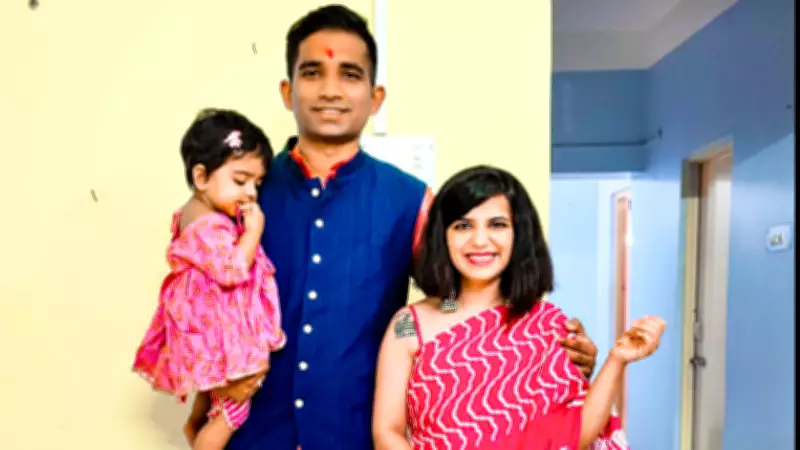
On February 24, 2018, Aashna got married. Today, her husband serves as an Army officer. "The love I never received in my own home, I received from my in-laws," she says. The outside world, however, still has opinions. "People say Amitabh Bachchan and Jaya Bachchan ki jodi and move on." Others made assumptions about her ability to become a mother. Some even claimed that because of her height, she wouldn't be able to have children. Today, she is the mother of a healthy five-year-old daughter. Yet the comments continue. People look at her daughter and say, "She is so cute. Hopefully she doesn't take after your height."
Turning Years of Pain into Purpose
Years later, Aashna attempted to reconnect with her parents, but the relationship remained strained. One painful incident saw her being thrown out of the house again. She says, "It gets dark early in Himachal. My house is right on the Chandigarh-Shimla highway, and that evening I was standing there alone with my daughter. I had no idea where to go." She called her husband, who arranged a taxi and got them out of there, booking her train tickets and asking her to stay with her in-laws for a while. The incident left deep emotional scars, and she eventually slipped into depression. But this time, she found a different way forward. She began sharing her story on Instagram. "Today, I'm financially independent. Through making content on Instagram, I also started my own small business too." She has one message: "If you feel low because of how you look, whether you're tall, short, heavy, thin, fair or dark, just remember this: your appearance is not your identity." When you really think about it, this was never just a story about height. It's about going through humiliation, rejection, and deep loneliness, and still not losing yourself in the process—a story about choosing self-belief when others have already decided your worth. And perhaps most importantly, it is a reminder that the things society labels as flaws often become the very things that teach us how strong we really are.