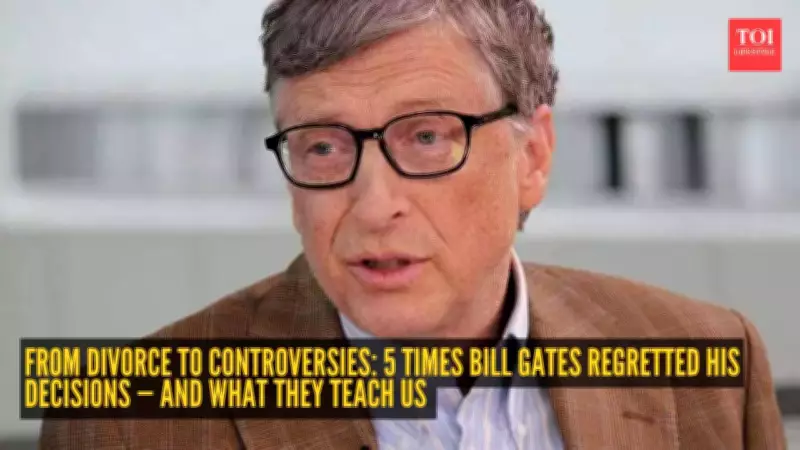
Bill Gates' Public Regrets: A Psychological Examination of Power and Vulnerability
Success at the pinnacle of achievement does not eliminate human fallibility; in many ways, it intensifies it. Over recent years, Bill Gates—the iconic founder of Microsoft and global philanthropist—has openly reflected on decisions he deeply regrets. These range from strategic missteps to profoundly personal errors, offering a rare window into the psychological dynamics that accompany immense power and influence.
1. Admitting Affairs with Russian Women and Apologizing to Foundation Staff
On February 25, 2026, amid ongoing media scrutiny over his past associations, Bill Gates addressed staff at the Gates Foundation in a town hall meeting. He explicitly apologized for the disgrace brought upon the organization due to his links with convicted sex offender Jeffrey Epstein, calling it a "huge mistake." Gates clarified, "I did nothing illicit. I saw nothing illicit... To be clear, I never spent any time with victims, the women around him," as reported by The Wall Street Journal.
The psychological lesson: This incident underscores how power amplifies consequences and highlights the fragility of reputation, even for those at the top. It echoes the adage that with great power comes great responsibility, demonstrating that ethical lapses can have far-reaching impacts on both personal and organizational credibility.

2. Regretting the Divorce from Melinda French Gates
For decades, Bill and Melinda Gates were viewed as an inspirational power couple, making their 2021 divorce after 27 years of marriage a global shock. Gates later publicly acknowledged that the divorce was "a source of great personal sadness," revealing the emotional toll behind the separation.
The psychology behind it: High-achievers often prioritize mission-driven goals over relational maintenance. Gates operated for years in a builder mode—scaling Microsoft and tackling global health issues—but relationships demand emotional presence, not just intellectual commitment. This regret illustrates that even the most analytical minds cannot navigate intimacy through logic alone, emphasizing the quiet growth of emotional distance over time.
3. Calling Association with Jeffrey Epstein a "Huge Mistake"
Gates has admitted that meeting with Jeffrey Epstein after his conviction was a significant error. He stated he believed discussions around philanthropy might emerge, but nothing materialized, leading to substantial reputational damage.
The psychology behind it: Individuals in positions of power often assume they can control optics and outcomes due to their past successes. This reflects an overconfidence bias and reputational blind spots, showing that intelligence does not preclude social miscalculation. In fact, power can insulate leaders from critical feedback, exacerbating such errors.
4. Workplace Relationship Allegations and Reputational Fallout
Media reports have referenced Gates having inappropriate workplace relationships during his tenure at Microsoft. While he has acknowledged past conduct that caused hurt, these issues contributed to internal investigations and scrutiny before his departure from corporate boards.
The psychological insight: Leaders in high-control environments may develop an unconscious belief that rules are flexible around them. This demonstrates how a reputation built over decades can be shaken by moments of emotional impulsivity, highlighting the importance of consistent ethical behavior in maintaining trust and integrity.
5. Reflecting on Early Management Style as Overly Intense
In his 2025 memoir 'Source Code,' Gates reflected on his early management approach, describing it as "overly intense." He admitted to fostering a workaholic culture without weekends or vacations, and former colleagues have noted he could be intimidating and hyper-critical.
The lesson: This reveals founder tunnel vision, where urgency overrides empathy. Early-stage builders often operate in survival mode, but as organizations grow, emotional intelligence becomes as crucial as intellectual prowess. Gates later acknowledged that learning to soften, listen, and evolve was essential to his personal and professional growth.

The Overarching Psychological Lessons from Bill Gates' Journey
Bill Gates' trajectory is not merely a tale of wealth and innovation; it is a profound study of how ambition, ego, intention, and vulnerability intersect at the highest echelons of success. The key takeaways include:
- Power magnifies both achievements and mistakes, making ethical vigilance paramount.
- Emotional intelligence is critical for sustaining relationships, even for those driven by intellectual pursuits.
- Reputational management requires ongoing self-awareness and humility, as blind spots can lead to significant fallout.
- Growth involves evolving from intense, control-oriented approaches to more empathetic and collaborative styles.
Ultimately, Gates' regrets teach us that even the world's most analytical minds cannot always make optimal life decisions, underscoring the universal human need for reflection, adaptation, and emotional connection.