Cartoon Critiques Political Deception
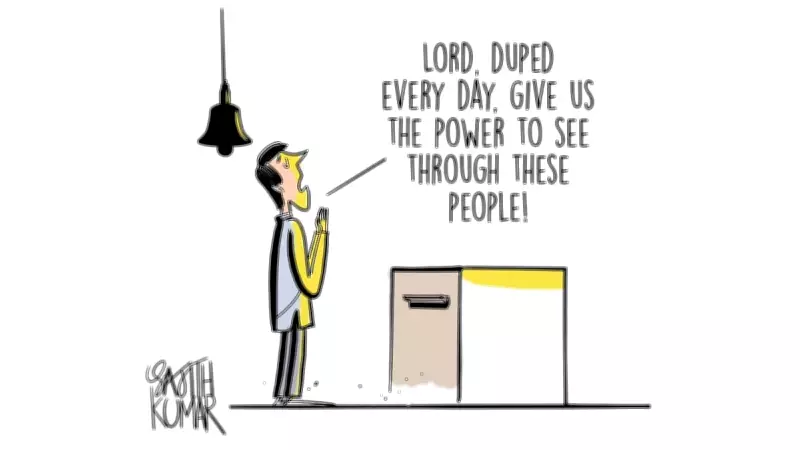
A recent editorial cartoon published by Deccan Herald, titled 'A Prayer Against Deception,' uses satire to highlight the pervasive issue of political manipulation in elections. The cartoon depicts a voter praying for protection from deceptive tactics, symbolizing public distrust in political campaigns that rely on false promises and misinformation.
Visual Elements and Symbolism
The cartoon features a common citizen kneeling in prayer, with speech bubbles containing hollow promises like 'freebies' and 'development' floating above. Background imagery includes a ballot box and a politician's silhouette, emphasizing the electoral context. The prayer is directed against 'deception,' a term that resonates with voters weary of unfulfilled pledges.
Context of Voter Concerns
According to Deccan Herald, the cartoon reflects growing public skepticism ahead of elections, where parties often resort to misleading campaigns. A 2023 survey by the Association for Democratic Reforms found that 78% of voters consider honesty in promises a key factor in their voting decision. The cartoon serves as a reminder of the need for transparency in political discourse.

Impact on Public Discourse
Editorial cartoons like this one play a crucial role in shaping public opinion by distilling complex issues into accessible visuals. They encourage critical thinking and hold leaders accountable. The Deccan Herald cartoon has been widely shared on social media, with many users echoing its sentiment against deceptive politics.
Broader Implications for Democracy
The prayer against deception underscores a democratic deficit where voters feel powerless against manipulative tactics. Political analysts note that such cartoons can mobilize public demand for ethical campaigning. As one commentator stated, 'Satire remains a powerful tool to expose hypocrisy and demand integrity in governance.'