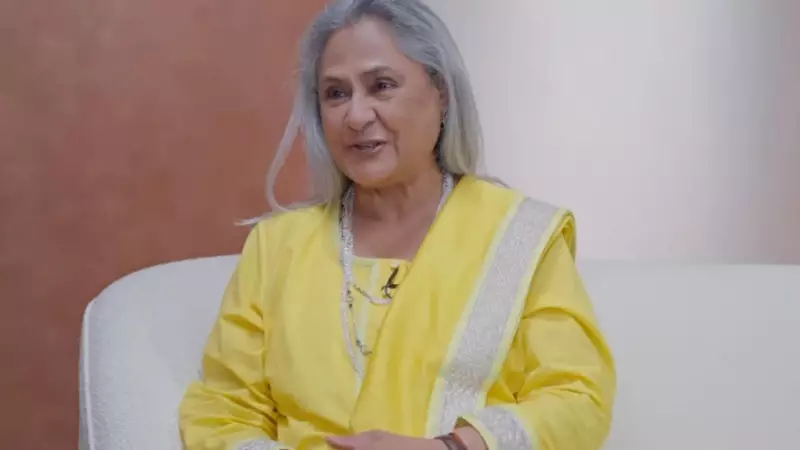
Veteran actor Jaya Bachchan has reignited a timeless parenting debate by advocating for the importance of physical discipline in raising well-behaved children. Her candid remarks, made during a public event, have drawn attention to the fine line between correction and creating fear in a child's mind.
Jaya Bachchan's Unapologetic Stance on Strict Parenting
Speaking at an event moderated by journalist Barkha Dutt, Jaya Bachchan reflected on her own parenting style with her children, actor Abhishek Bachchan and entrepreneur Shweta Bachchan Nanda. "I was a very strict mother," she stated frankly. She acknowledged that her view might be considered controversial in contemporary times but stood by it.
Elaborating further, she said, "Shayad ye kehna aajke zamane mei galat hoga, magar kabhi kabhi chote bache batameezi karte hein toh kabhi kabhi dhar dena chahiye." She clarified that she was not advocating for excessive force but emphasized that children need to understand the consequences of their actions. Bachchan cited examples from public places where children misbehave, stating that such scenes often made her want to step in and correct the child, reflecting her instinctive approach as a parent.

Expert Insight: Drawing the Line Between Discipline and Fear
To understand the nuances of modern, healthy discipline, we consulted Dr. Meghana Phadke Sultania, Senior Consultant and Head of Unit III – Pediatrics and Adolescent Health at Asian Hospital, Faridabad. Dr. Sultania affirmed that guiding children is essential but stressed the methodology is key.
"Healthy discipline offers boundaries, predictability, and emotional security, helping children understand consequences without damaging trust," she explained. The line is crossed, she warns, when correction turns into shouting, humiliation, or unpredictable reactions that make a child feel unsafe. The core principle, according to Dr. Sultania, is that a child should understand the behaviour is wrong, not that they are wrong.
"A calm, steady, and structured approach ensures discipline builds confidence rather than anxiety, while also protecting self-esteem," she elaborated.
Navigating Public Meltdowns and Long-Term Emotional Impact
Addressing a common parental challenge, Dr. Sultania advised on handling misbehaviour in public spaces. She noted that such acts often stem from overstimulation, tiredness, or frustration. A harsh public reaction can amplify the child's distress and humiliation.
Instead, she recommends parents first compose themselves, acknowledge the child's feelings, and gently remove the child from the overwhelming situation. "Soft firmness helps them settle, while the parents’ self-control models emotional regulation," she said. This approach resolves the issue without public embarrassment or excessive strictness.
On the long-term effects of authoritarian parenting, Dr. Sultania offered a cautionary perspective. She stated that constant harshness can lead children to become fearful of self-expression, overly dependent on external validation, or develop a fragile self-image. While structure is beneficial, rigidity can suppress emotional growth.
"Boundaries work best when paired with warmth," she emphasized. This combination of clear limits and emotional support is what strengthens communication, resilience, and self-regulation, ultimately fostering secure and confident adults.
The conversation initiated by Jaya Bachchan's personal admission continues to highlight the complex, evolving landscape of parenting, where traditional methods are constantly weighed against contemporary psychological understanding of child development.