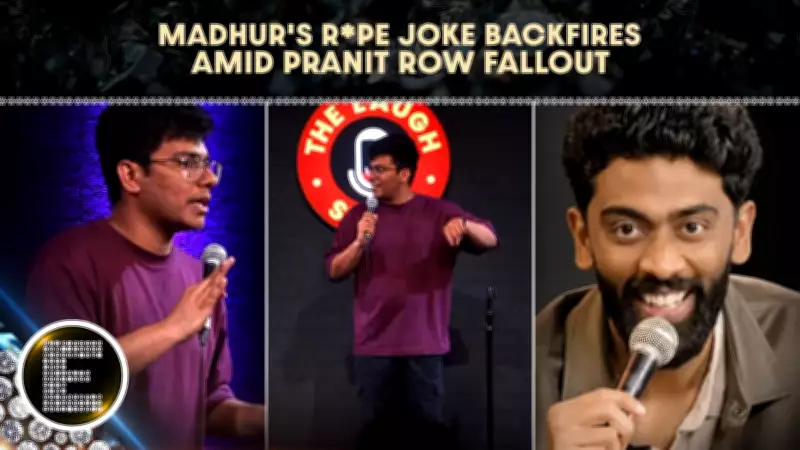
Comedian Madhur Virli has issued a public apology after a two-year-old stand-up clip involving rape and murder resurfaced online and sparked widespread outrage. The controversy comes amid the fallout from Pranit More's ₹370 biryani row and has now widened after an old Comicstaan clip featuring Aishwarya Mohanraj resurfaced, with many social media users accusing audiences of selective outrage and double standards.
Background of the Controversy
The resurfaced clip from Madhur Virli's stand-up routine has drawn sharp criticism for its content, leading to a public apology from the comedian. Simultaneously, the Pranit More biryani row continues to generate debate, with supporters and detractors clashing over issues of accountability and artistic freedom. The situation escalated further when a past Comicstaan performance by Aishwarya Mohanraj was brought back into the spotlight, prompting accusations of hypocrisy among audiences.
Public Reaction and Debate
Social media platforms have become a battleground for discussions on comedy, accountability, and artistic freedom. Many users have pointed out perceived double standards in how male and female comedians are treated, as well as how different jokes are judged. The debate has intensified, with questions being raised over whether jokes should be evaluated based on intent, impact, or both.

As the controversy unfolds, several public figures have weighed in. Kunickaa Sadanand has backed Pranit More, while Himanshu has apologized, and Sejal Pawar has faced action. The incident has also drawn reactions from other celebrities, including Elvish Yadav, Ranvir Shorey, and Apoorva Mukhija, who have shared their perspectives on the matter.
Broader Implications for Comedy
This series of events highlights the ongoing tension between comedic expression and social responsibility. The resurfacing of old clips and the subsequent outrage underscore the evolving standards of what is considered acceptable in comedy. The debate now centers on whether comedians should be held accountable for past material and how audiences can balance freedom of speech with sensitivity to potentially harmful content.
As the conversation continues, many are calling for a more nuanced approach to evaluating comedy, one that considers both the artist's intent and the societal impact of their words. The outcome of these discussions could shape the future of stand-up comedy in India and beyond.