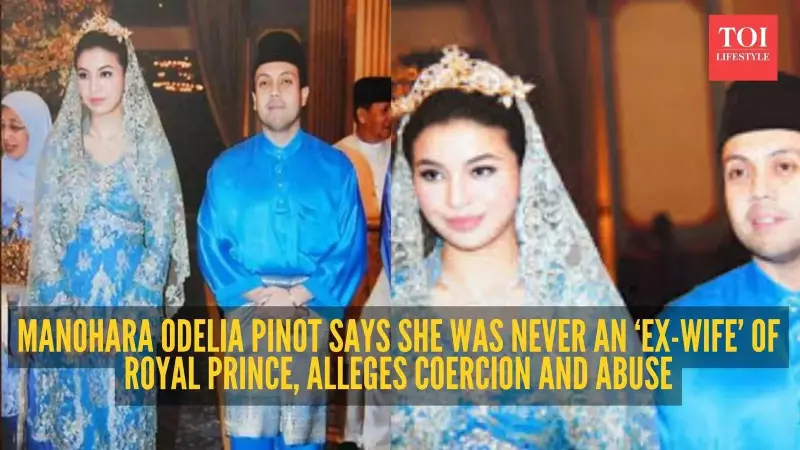
More than fifteen years after a dramatic escape from a Malaysian palace, Manohara Odelia Pinot is challenging the very language used to describe her past. The Indonesian-American model, who was just 16 when she entered a relationship with Malaysian prince Tengku Muhammad Fakhry Petra in 2008, has issued a powerful plea for accuracy, stating that calling her an "ex-wife" fundamentally distorts a story of alleged coercion and abuse.
A Public Plea for Accurate Language
On January 5, 2026, Manohara took to Instagram to share a clarion call to media and digital platforms. Now 33, she stressed that her intent is not to reopen old wounds but to correct a persistent narrative. She vehemently rejects the label "ex-wife," arguing it implies adulthood, consent, and choice—elements she says were entirely absent from her experience as a trapped minor.
"What happened during my teenage years was not a romantic relationship," she wrote. "It was not consensual. And it was not a legal marriage." Her statement underscores a critical point: language shapes perception. By using domestic terms like "ex-wife," she believes the media unintentionally sanitises what she describes as a severe case of coercion involving a significant power imbalance.

Recounting a Life of Control and Alleged Abuse
The story that captivated Southeast Asia in 2008 was presented as a fairytale union between a prince and a model. The reality, as alleged by Manohara, was starkly different. After the relationship began, the prince, son of the Sultan of Malaysia's Kelantan state, brought her to live in Kelantan. There, she says, her life became one of extreme isolation and control.
In previous interviews, Manohara described a harrowing existence. She alleges she was not allowed to move freely, had minimal contact with her family, and lived under constant surveillance within the palace walls. She has spoken of routine sexual violence and harassment, with refusal met with physical punishment. The foundation of the relationship, she maintains, was fear, not mutual agreement.
The Dramatic Escape and Lasting Impact
Her captivity ended in 2009 through a daring escape. During a royal family trip to Singapore, Manohara fled from a hotel. With the crucial assistance of her mother, local authorities, and officials from the US Embassy, she managed to return to Indonesia. While this marked the end of her physical ordeal, the battle over the story of her life had just begun.
For over a decade and a half, headlines and references have continued to frame her as the prince's "ex-wife." Manohara's recent intervention is a direct challenge to this framing. She has asked journalists, editors, and platforms like search engines and online encyclopedias to stop using the term altogether. This request, she clarifies, is about journalistic accuracy and social responsibility.
Her story transcends personal trauma. It becomes a case study in how society discusses relationships marred by unequal power dynamics, age disparities, and the absence of consent. It highlights how the respectable veneer of titles like "marriage" can obscure underlying abuse. For Manohara, the correction is simple yet profound: what happened was not a failed relationship she walked away from. It was a situation she, as a minor, never truly chose to enter.