In a conversation expected to revolve around technology and global issues, a personal revelation by Elon Musk has captivated Indian audiences. During a podcast with Indian entrepreneur Nikhil Kamath, Musk acknowledged that one of his children is half-Indian, a detail that instantly detonated across social media platforms and shifted the focus from satellites to his gene pool.
The Viral Moment That Redefined the Conversation
The discussion was anticipated to cover typical topics like the H-1B visa, Starlink's prospects, and Musk's frequent warnings about population decline. However, the defining moment came when Musk casually confirmed the Indian lineage through Shivon Zilis, an AI researcher and executive at his neurotechnology company, Neuralink. Zilis's mother is of Indian origin, making their children half-Indian.
This offhand remark triggered an immediate and disproportionate wave of pride online. Memes flooded the internet, and the narrative swiftly moved from tech and policy to India's unexpected, symbolic entry into the sprawling Musk family tree. It was a diplomatic win achieved not through formal channels, but through personal lineage.

Decoding the Musk Family Saga: Four Branches
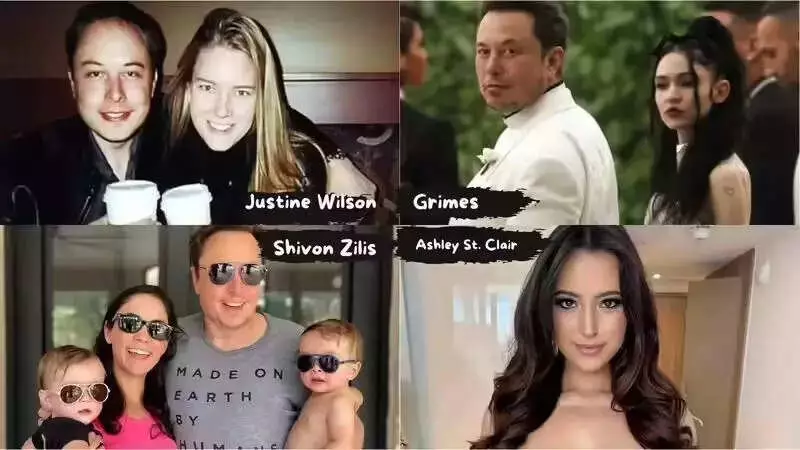
To understand the context, one must look at Elon Musk's unconventional family structure, which now includes fourteen children with four different women. This revelation adds a new cultural layer to an already complex dynasty.
The Origin Chapter with Justine Wilson: Musk's first marriage produced six children, including twins and triplets, marked by personal tragedy and a lengthy divorce.
The Sci-Fi Chapter with Grimes: This relationship introduced uniquely named children like X, Y, and Tau, blending art and technology before ending in a public custody dispute.
The Neural Network Chapter with Shivon Zilis: This is the quietest partnership, centered on a shared passion for brain-machine interfaces. The couple has four children, and Zilis moved into Musk's vast Austin, Texas compound in 2023. Her mixed Indian-Canadian heritage, now highlighted, makes this branch particularly intriguing for Indian netizens.
The Political Chapter with Ashley St. Clair: The latest and most controversial addition involves the conservative influencer, who revealed having a child with Musk in 2024, amplifying the drama surrounding his expanding family.
Ideology in Motion: Musk's Worldview on Family and India
During the podcast, Musk reiterated his firm belief that declining birth rates are the world's biggest problem. He expressed admiration for India's demographic strength and views having many children as a form of civilizational maintenance. For Musk, this is not just theory; it is a practiced ideology. His fourteen children are a testament to this belief, and the newly highlighted Indian connection adds a fresh dimension to his experiment in futuristic parenting.
The detail about Zilis's heritage had flown under the radar despite her high-profile role. She represents a quieter, intellectual facet of the Indian diaspora, distinct from more flamboyant stereotypes. It was Musk's casual mention that finally connected the dots for the global audience.
While the facts of the Musk family remain unchanged—the same number of children, the same partners—the narrative has undeniably shifted. India now finds a place in this modern-day saga not through a corporate deal or a factory, but through the bloodline of a pioneering AI executive. Kamath aimed for a tech dialogue but ended up facilitating a genealogical cameo that India enthusiastically embraced, proving once again that personal stories often resonate louder than policy debates.