Luck Shapes Lives More Than We Acknowledge
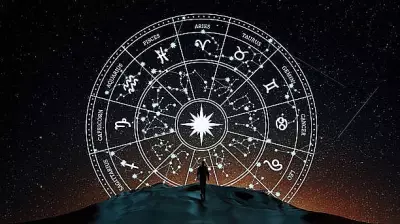
In a world where millions are at war and millions more teeter on the brink, a privileged teenager sits in safety, writing about the spinning wheel of luck. Gurmeher Kaur Bajwa, a Class XI student, argues that the circumstances of our birth — the country we are born in, the body we are given, the opportunities we receive — are largely a matter of chance. She imagines God spinning a great wheel before each person's story begins; if the needle lands on peace, life unfolds in safety; if not, it begins in the shadow of conflict.
Bajwa acknowledges her own good fortune: she breathes smoke-free air, sleeps without sirens, and has the means to read and write. She contrasts this with children in conflict zones — Gaza, Israel, Sudan, Ukraine — who possess talent but face survival as their primary challenge. She notes that the next Maria Sharapova may be in Sudan, struggling through a civil war, and the next Marie Curie may be in Palestine, trying to survive bombardment. Their brilliance may never be witnessed because survival consumes them.
Guilt and Gratitude for Ordinary Privileges
The writer admits feeling guilty for living a normal life — sitting beside her brother, going to school, sleeping in an air-conditioned room, allowing herself to be happy. Her heart aches for those who have lost homes, families, and futures in wars that seem impossible to justify. She calls the bright minds of her generation "lighthouses" with the power to guide through darkness, but many are simply trying to survive another day, wondering when they will next sleep in a warm bed or eat a proper meal.

Bajwa urges readers to be grateful for their lives and appreciate privileges that easily become invisible. She challenges them to remember, when complaining about an air conditioner not cooling fast enough or traffic taking too long, that people — perhaps just two kilometres away — search for shade under a tree, would love to feel a ceiling fan, hear rain on a roof, or own a vehicle, even if it meant hours in traffic.
Gratitude as a Call to Action
The needle on the spinning wheel could have landed anywhere. It could have placed anyone in the middle of conflict, uncertainty, or unimaginable hardship. But it didn't. Bajwa concludes with a call to be grateful, live life fully, and not let opportunities pass by due to fear or hesitation. Somewhere in the world, someone would give anything to live just one ordinary day of an extraordinarily fortunate life.