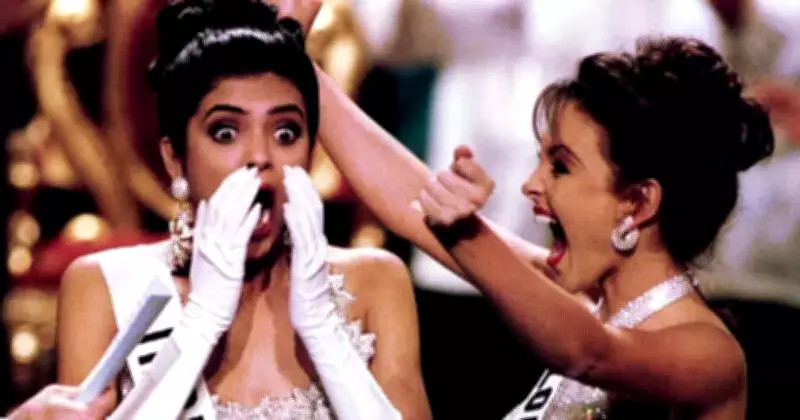
Thirty-two years ago, on May 21, 1994, Sushmita Sen was crowned Miss Universe in the Philippines. Today, the image of a woman wearing a crown is instantly recognizable, evoking power, beauty, drama, and confidence. But in the 1990s, particularly in India, the context was vastly different. That decade was a time of great hope as the Indian economy liberalized, MTV brought visual music, and global influences reshaped aspirations. Women began dreaming of independence, career freedom, and cosmopolitan lifestyles.
The Historic Victory
On that night in 1994, Sen answered a question about the essence of being a woman with remarkable calmness, creating a moment etched in Indian pop culture. Her win shattered myths and went beyond pageantry. The crown represented not just her achievement but the aspirations of a nation opening up to satellite television, global brands, and modern femininity. While Aishwarya Rai was the favorite for Miss India, Sen, at 18, exuded a unique confidence that led her to the global title.
For many middle-class families, beauty pageants redefined female ambition. A glamorous woman could now be articulate, intelligent, and financially independent. The crown legitimized ambition in a society still grappling with women occupying public space unapologetically.

Cultural Impact and Evolution
Sen's victory was followed by Aishwarya Rai winning Miss World the same year, and later Lara Dutta and Priyanka Chopra Jonas, turning pageants into a pipeline to Bollywood stardom. These wins coincided with India's desire for international recognition, making the crown a symbol of national confidence. Pageants transformed how female ambition was viewed, offering legitimacy to women's aspirations.
Fast forward to 2026, and the narrative has shifted dramatically. Women now prioritize financial freedom over traditional milestones like marriage. The crown has evolved from an external validation to a self-authored symbol of power. Today, women build billion-dollar companies, dominate streaming platforms, and create global identities without institutional approval. They crown themselves through visibility, influence, and narrative control.
The Age of Self-Coronation
If the 1990s were about being chosen, the 2020s are about choosing oneself. The Spice Girls' 'girl power' became a global phenomenon, changing advertising, corporate culture, and self-perception. Bollywood heroines like Geet from Jab We Met declared being their own favorite, while characters like Vidya Balan's in Ishqiya overturned the damsel-in-distress trope. Women stopped apologizing for their desires and began manipulating the world to get what they wanted.
Beyoncé's 'Who runs the world? Girls' became an anthem, but she also monetized empowerment into empire-level power, becoming economically untouchable. Rihanna redefined celebrity power through ownership with Fenty Beauty, embracing inclusivity and disrupting beauty standards. Taylor Swift turned narrative control into economic machinery, with the Eras Tour generating billions and reshaping local economies. Together, these icons represent self-created kingdoms where power is cultural, emotional, financial, and global.
Modern Crown Symbolism
The modern crown is metaphorical, symbolized by follower counts, influence, startup success, and personal branding. Digital culture has made royalty language mainstream, with women called 'queens' online and pop stars building mythologies around dominance. Unlike the pageant era, women now define their own terms of power, embracing glamour, irony, vulnerability, and rebellion. The shift from perfection to power is evident in pop culture: in The Crown, royalty is a burden, while Billie Eilish's 'You should see me in a crown' is a warning of domination and self-created mythology.
Why Crown Imagery Survives
Despite changing feminism, culture remains fascinated by women wearing crowns because they tell stories of visibility and transformation. Fashion uses royal imagery, bridal tiaras remain aspirational, and pop stars perform on throne-like sets. Crowns instantly communicate that the woman is meant to be looked at, turning presence into spectacle. They offer escape from ordinary life and allow women to occupy heightened versions of themselves. The crown has been democratized, owned by every woman emotionally.

In contemporary India, the crown has shifted from pageants to economic and cultural power. The modern aspirational woman is a founder, creator, athlete, or investor. Financial independence itself is glamorous. Women today seek what the crown symbolized: visibility, transformation, admiration, and power, but on their own terms. As Sen herself evolved into a symbol of independence and self-definition, her journey mirrors the evolution of the crown from being chosen to choosing oneself.