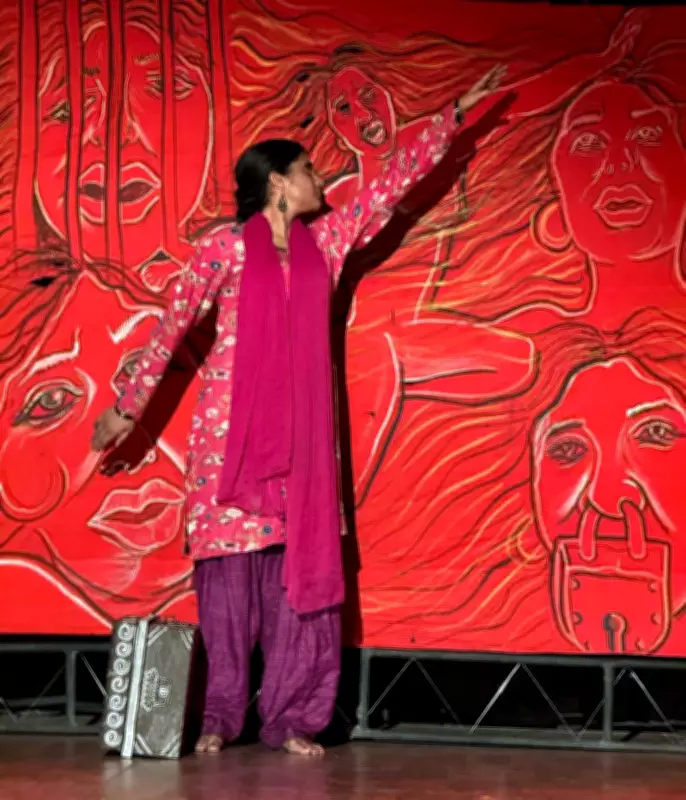
The five-day National Theatre Festival in Amritsar is reviving timeless theatre classics, with performances that tackle social issues such as human trafficking and the aftermath of Partition. The festival, curated by theatre director Kewal Dhaliwal, Manch Rangmanch and Virsa Vihar, opened on Friday at Virsa Vihar.
Kudessan: A Stark Portrayal of Human Trafficking
A highlight of the festival is the Punjabi play Kudessan, written by acclaimed playwright Jatinder Brar in 1992. The play has been staged nearly 300 times worldwide during Brar's lifetime. It exposes the brutal reality of human trafficking, focusing on the practice of buying brides from other regions, which had become normalized in certain communities. The play confronts audiences with the powerful truth that a woman is not a commodity to be bought and sold, and questions society's silence when a kudessan is reduced to a victim in the name of cultural norms.
Directed by Kewal Dhaliwal, the production follows a young woman sold by her parents and bought as a bride for a Punjabi man. Throughout the story, her identity is stripped away, reducing her to little more than a commodity purchased to bear children and continue a family lineage. The production features artistes from several states who trained under Dhaliwal during a month-long summer theatre workshop, culminating in the festival. Technically polished and emotionally compelling, the performance balances artistic excellence with sharp social commentary.

“Kudessan was written at a time when newspapers frequently carried stories of young women from Bihar, Uttar Pradesh and eastern India being bought as brides by families in Punjab and Haryana. This practice was largely accepted as a social compulsion born out of patriarchy and female foeticide, which had created a severe gender imbalance. Times may have changed, but many women continue to live with the burden and stigma of being labelled a kudessan,” said Dhaliwal.
Oedipus and Muawze: Classics with Enduring Relevance
The festival opened with Oedipus, directed by Partha Banerjee and based on the celebrated tragedy by ancient Greek playwright Sophocles. Considered one of the most famous tragedies in world literature, it explores fate, truth and the limits of human control over destiny. Drawing upon Greek mythology, Oedipus tells the story of a man struggling to escape a prophecy, only to fulfil it unknowingly.
Another festival highlight was Bhisham Sahni's Muawze, a poignant work centred on the aftermath of communal violence during Partition. The play questions whether any monetary compensation (muawza) can truly make up for the loss of loved ones, homes, dignity and humanity, exposing the irony embedded in the very idea of compensation.
Dr Swarajbir’s Tu Bulleh Wangu Bol offered another powerful contemporary intervention. While not a classic in the conventional sense, the play challenges religious orthodoxy and gives voice to the marginalised, exploring how caste, religion and power continue to be used as instruments of oppression.
A Tribute to Jatinder Brar
The five-day festival also serves as a tribute to the late Jatinder Brar, playwright and founder of Punjab Naatshala, one of Punjab’s most significant modern spaces dedicated to Punjabi theatre. Brar passed away last year after a prolonged illness, marking the end of a remarkable legacy.
The festival is being helmed by alumni of the National School of Drama, with Dhaliwal joined by Partha Banerjee, Pritpal Rupana and Gulzar Kabir Khan, who have mentored the workshop participants while bringing timeless theatre classics to Punjabi audiences.