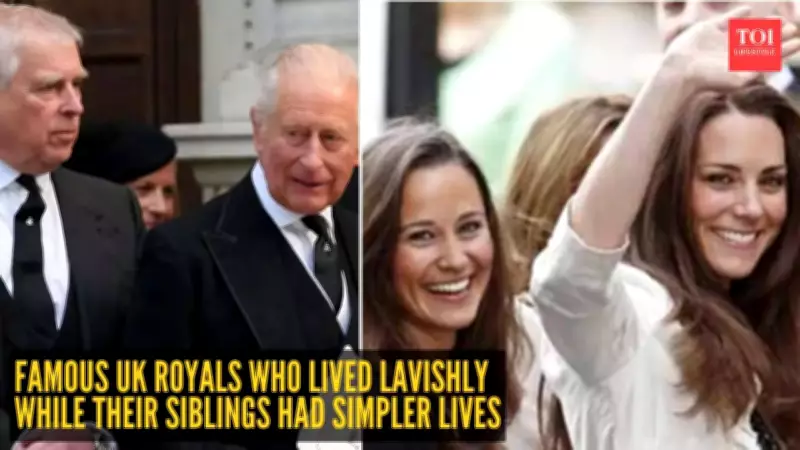
6 UK Royals Who Lived Lavishly While Their Siblings Chose Simpler Lives
The British royal family stands as one of the world's most iconic dynasties, synonymous with grandeur, tradition, and public duty. However, behind the glittering facade of palaces and titles, not every sibling shares the same destiny. While some heirs embrace the full weight of royal responsibility and its accompanying opulence, their brothers and sisters often carve out quieter, more private paths, deliberately stepping away from the relentless spotlight. This fascinating dynamic reveals the stark contrasts within royal households, where lavish lifestyles coexist with simpler, grounded existences.
Kate Middleton and Pippa Middleton (Plus Their Brother James)
Kate Middleton, now the Princess of Wales, transformed from her middle-class upbringing into a central figure of the monarchy after marrying Prince William in 2011. Her life revolves around Kensington Palace, state banquets, glittering tiaras, and raising the future monarchs: Prince George, Princess Charlotte, and Prince Louis. In stark contrast, her younger sister Pippa and brother James have maintained a far more low-key existence. Pippa married financier Nico Matthews in 2017, raising three children in a £5 million Berkshire home while managing a successful party-planning business and authoring books—embracing entrepreneurship over royal titles. James operates a sustainable candle company from the family estate, steadfastly avoiding media attention. Their grounded lives highlight the dramatic shift Kate underwent as she prepares to become the future Queen Consort.
Queen Elizabeth II and Princess Margaret
The late Queen Elizabeth II reigned for an unprecedented 70 years, embodying Buckingham Palace splendor through coronations, extensive Commonwealth tours, and a lifetime of unwavering duty. Her younger sister, Princess Margaret, however, navigated the challenging role of the "spare" heir. Margaret craved glamour and excitement, indulging in lavish parties, high-profile romances with Peter Townsend and Antony Armstrong-Jones, and rebellious 1960s escapades including divorces and Caribbean soirées. Yet, she perpetually lived in Elizabeth's shadow, facing public scrutiny and health issues that led to a simpler retirement marked by smoking, holidays, and tabloid fascination. Her vibrant but ultimately overshadowed life underscored the inherent tensions between heir and spare, culminating in her death in 2002 without the gravitas of her sister's legacy.

Edward VIII and King George VI
Edward VIII's reign lasted a mere 326 days, abruptly ending in the 1936 Abdication Crisis when he chose love over duty, marrying the divorced American socialite Wallis Simpson against church and parliamentary norms. Post-abdication, Edward lived a life of exiled luxury in Paris, enjoying villas, yacht parties, and controversial associations, including flirtations with Nazi figures—a stark departure from royal constraints. Meanwhile, his younger brother Albert was thrust onto the throne as King George VI, reluctantly embracing Buckingham Palace amid the turmoil of World War II. With his wife, Elizabeth (the future Queen Mother), he endured wartime rationing, bombings, and personal struggles like his stammer, providing steadfast leadership. Edward's lavish rogue existence contrasted sharply with George's reluctant heroism, leaving a lasting scar on the royal family.
Diana, Princess of Wales and Charles Spencer
Diana, the "People's Princess," captivated the world after her fairy-tale wedding to Prince Charles in 1981, though their marriage ended in a bitter divorce. Her life was a whirlwind of public adoration, philanthropic work, and intense media scrutiny, tragically cut short in 1997. In contrast, her brother Charles Spencer, the 9th Earl, inherited the family seat at Althorp but has pursued a markedly simpler life. He focuses on authoring books, managing Althorp as a tourist attraction, and raising his seven children following his own divorces. Preferring the quiet Northamptonshire countryside to palace life, he advocates against press intrusion—echoing Diana's battles—while fiercely guarding his privacy away from the spotlight.

Prince William and Prince Harry
Prince William, the heir apparent to the British throne, has embraced a life of duty reminiscent of his grandmother, Queen Elizabeth II, balancing royal responsibilities with a modern family life. His younger brother, Prince Harry, along with his wife Meghan, famously stepped down as senior royals in 2020, seeking freedom from royal constraints. The couple traded Frogmore Cottage for a Montecito mansion in California, engaging in Netflix deals, supporting the Invictus Games, and raising their children Archie and Lilibet. Harry's memoir Spare and ongoing legal battles with tabloids highlight his pursuit of a freer, albeit publicly feuding, existence—a dramatic departure from William's path of traditional royal service.
King Charles III and Former Prince Andrew
King Charles III ascended the throne in 2022, inheriting the ultimate symbols of lavishness: Buckingham Palace, Balmoral Castle, and the golden trappings of coronation ceremonies. Conversely, his youngest brother, Prince Andrew, has faced a precipitous fall from grace. Amid scandals linked to convicted sex trafficker Jeffrey Epstein, Andrew was stripped of his royal titles, military honors, and even his residence at Frogmore Cottage. He now lives a more modest life at the Royal Lodge (by royal standards), avoiding public attention amidst lawsuits and widespread public criticism. This pairing illustrates how royal opulence can be juxtaposed with a sibling's retreat into simplicity under the weight of controversy.
These six examples vividly demonstrate the diverse paths taken within the British royal family, where sibling dynamics often pivot on the choice between embracing lavish, duty-bound lives or seeking simpler, more private existences. From historical figures like Edward VIII to contemporary royals like Prince Harry, the contrast between heir and spare continues to shape the monarchy's narrative, revealing the personal sacrifices and freedoms that define life behind the crown.