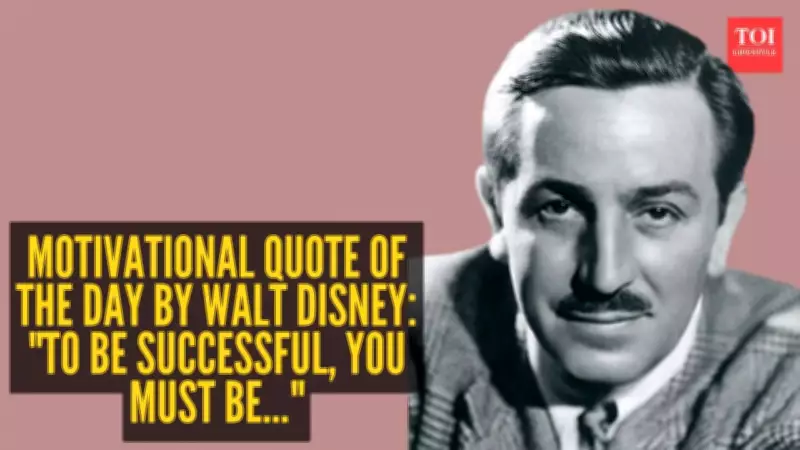
Walt Disney’s movies might be filled with fairy tales, but his actual business advice was grounded in pure reality. He once famously noted: "To be successful, you must be unique..." It sounds incredibly simple on paper. But in a world that constantly pressures us to fit into neat little boxes and copy what’s already working, standing out is actually terrifyingly hard. True success doesn’t happen by building a slightly shinier version of someone else’s blueprint. It happens when you have the courage to double down on what makes you irreplaceable.
What "Unique" Actually Means (And What It Doesn't)
Being unique isn’t about being loud, flashy, or contrarian just for the sake of attention. It’s simply about leaning into your specific mix of life experiences, weird hobbies, past failures, and personal perspective. Think about it: in a crowded market or workplace, trying to blend in is a one-way ticket to becoming completely invisible. Sameness is boring. When you embrace your distinct angle, you become a magnet for the right people, clients, and opportunities. Walt Disney didn’t build an empire by copying traditional live-action films; he did it by betting his entire future on animation and immersive theme parks, concepts that critics at the time thought were absolutely unhinged.
Creativity Needs an Engine
Let’s be real for a second: being quirky without a plan is just a novelty act. Originality without a clear direction rarely moves the needle. Your uniqueness needs to be paired with a relentless work ethic and a solid strategy. If you’re a creator, your unique style doesn’t mean much if you never finish a project. If you’re an entrepreneur, a wild new business model will still fail if it doesn't solve a real human problem. Your "secret sauce" has to deliver actual, undeniable value, or people will quickly look past it.

Actionable Ways to Build Your Edge
- Own your weird plot twists: Your setbacks, odd career pivots, and personal quirks aren't bugs in your system; they’re features. Use them explicitly in how you work and communicate.
- Look for more ideas: Don't just look at your own industry for inspiration. Pull concepts from different fields and merge them together. The best innovations live at the intersection of completely unrelated domains.
- Show up consistently: A single brilliant idea doesn’t make you unique; a steady stream of execution does. Consistency turns a random creative spark into a recognizable personal brand.
- Choose depth over trends: Algorithm chasing is a trap. By the time you copy a viral trend, the internet has already moved on. Spend your energy mastering the heavy, timeless elements of your craft instead.
The Dark Side of Breaking the Mold
Here is the candid truth: when you decide to do things differently, people are going to judge you. The mainstream loves what is safe, predictable, and familiar. Walt Disney faced endless skeptics, mountain-high debts, and studio doors slammed in his face before Mickey Mouse ever became a household name. If you are going to color outside the lines, you need to develop thick skin. Rejection isn’t a final verdict on your worth; it’s just a natural filter weeding out the audiences who aren't your people anyway. Treat criticism as data, adjust your sails, and keep moving.
The Ultimate Competitive Moat
We live in an era of hyper-polished, automated, and cookie-cutter content. Because of that, raw authenticity has become a literal superpower. People can smell a fake from a mile away. You don’t need to be flawless, but your actions do need to match your words. When your unique perspective is backed up by genuine character, you build a competitive moat that no competitor—and no algorithm—can ever replicate. Don't try to build an empire by Monday morning. Just pick one small project, give it your distinct spin, launch it, and learn from it. Uniqueness alone won’t save you, and raw grind alone will burn you out. But when your original voice meets real craft, you become unstoppable.