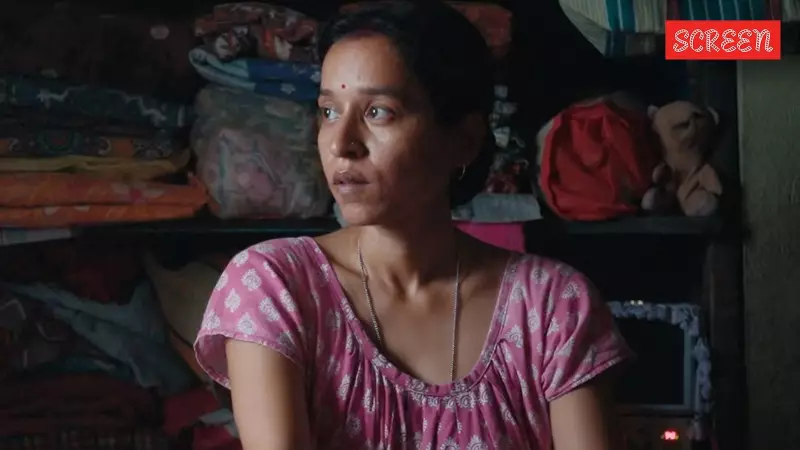
Tillotama Shome delivers yet another career-defining performance in the critically acclaimed mystery drama 'Baksho Bondi' (Shadowbox), which premiered at the 30th International Film Festival of Kerala (IFFK) in December 2025. Directed by the duo Tanushree Das and Saumyananda Sahi, the film has been hailed as a stunning, multi-layered narrative that transcends the typical tropes of poverty-centric cinema. It earned a stellar rating of 4.5 out of 5 from critics.
A Gripping Narrative Anchored in Reality
The plot revolves around Maya, portrayed by Tillotama Shome, a resilient woman from Barrackpore, a suburb of Kolkata. She is the sole breadwinner for her family, which includes her husband Sundar, a retired soldier battling PTSD (Chandan Bisht), and their school-going son Debu (Sayan Karmakar). The story takes a tense turn when Sundar goes missing, and the police inform Maya they have found a body suspected to be his.
In a powerful scene described by reviewers, Maya's world crumbles as she processes this news near a railway crossing, her usual refuge. The audience witnesses a complex wave of shock, sorrow, and an unfair guilt washing over her, showcasing Shome's exceptional ability to convey profound emotion with remarkable restraint. This moment is emblematic of the film's strength: its focus on the internal lives of its characters rather than external melodrama.

Beyond Poverty Porn: A Nuanced Portrayal of Struggle
One of the most praised aspects of Baksho Bondi is its conscious avoidance of what is often termed 'poverty porn.' The directors ensure the narrative never exploits its characters' hardships for cheap pity. Instead, it presents a clear-eyed, empathetic look at their daily battles. Maya juggles multiple jobs—from delivering ironed clothes on her bicycle to working as a domestic helper and at a poultry farm—while shielding her fragile husband from a judgmental world.
Sundar's PTSD is portrayed with sensitivity, manifesting in his fear of public spaces and his unusual habit of catching frogs for science labs. His condition becomes a source of embarrassment for young Debu, highlighting the family's social isolation and the lack of sensitization towards mental health issues in their community.
The film cleverly sidesteps the opportunity to become a generic thriller even when the plot thickens. After the discovered body is identified as a local drunkard, Sundar's drinking companion, Maya instinctively shifts into protector mode. She begins fabricating stories for the police, mirroring a desperate, grassroots version of a cover-up, albeit without the cunning of a classic movie criminal.
Layered Themes and Masterful Craftsmanship
Baksho Bondi is rich with subtext and social commentary. A standout scene involves Maya's employer, an elderly woman, who patronizingly advises her to teach Debu driving instead of aiming for expensive coaching classes. This interaction masterfully exposes ingrained classism and elitism without explicit dialogue.
The dynamics within Maya's own family are equally complex. Her relationship with her better-off brother reveals subtle insecurities, while Debu's evolving feelings towards his father—from cold embarrassment to fearful concern—form a poignant emotional arc. The film also leaves several questions intentionally unanswered, such as the exact cause of Sundar's PTSD or whether he was involved in the murder. This narrative choice reinforces a central theme: for the marginalized, the truth often matters less than the systemic presumption of guilt.
The technical team deserves high praise for their cohesive vision. With Saumyananda Sahi handling cinematography and Tanushree Das on editing, the film captures the essence of Barrackpore with an authentic gaze. The use of ambient sound, minimal music, and meticulous production design all serve the story without overshadowing it. The final, emotionally charged conversations between Maya and Sundar are highlighted as extraordinary examples of writing and performance.

In conclusion, Baksho Bondi is a testament to nuanced filmmaking and powerhouse acting. Tillotama Shome proves her unparalleled skill once again, ably supported by Chandan Bisht and young Sayan Karmakar. It is a film that engages not just as a mystery but as a profound, socially resonant drama about family, resilience, and the shadows that linger on the margins of society.