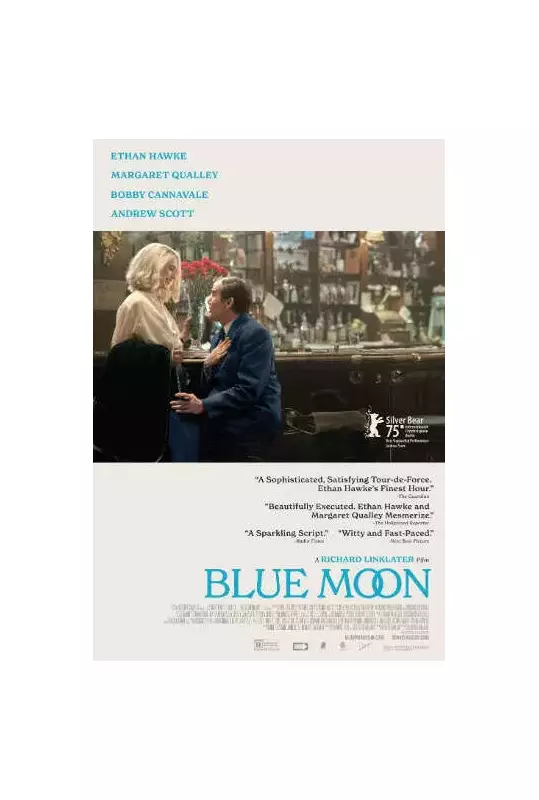
Richard Linklater's latest cinematic offering, 'Blue Moon', is a masterful and intimate exploration of artistry, regret, and the human condition. Released on 17 October 2025, this English-language comedy-drama has garnered a strong critical and audience reception, with a 4.0 rating from both groups. The film eschews grand spectacle for a deeply personal journey through one fateful night in the life of a legendary wordsmith.
A Night of Reflection in 1943 New York
The narrative of 'Blue Moon' unfolds on a significant evening in 1943 New York. While the city buzzes with the success of the groundbreaking musical Oklahoma!, its co-creator, lyricist Lorenz Hart (Ethan Hawke), finds himself adrift. The story begins with Hart's tragic end, found drunk on a city street, before flashing back to the hours leading to his demise. This structural choice immediately frames the film as a reflective elegy.
As his former collaborator, Richard Rodgers (Andrew Scott), celebrates his new partnership with Oscar Hammerstein (Simon Delaney), Hart wanders through dimly lit bars, late-night diners, and city sidewalks. The plot is deliberately simple, functioning as a slice-of-life portrait. Each encounter—whether with the gentle Elizabeth (Margaret Qualley), who offers a moment of solace, or other figures from his past—peels back a layer of Hart's complex personality, revealing a man grappling with profound envy, insecurity, and a desperate longing for connection he cannot seem to secure.

Linklater's Direction and Hawke's Unforgettable Performance
Director Richard Linklater employs his signature style, prioritizing conversation and nuanced character moments over conventional plot-driven action. The film moves at a contemplative pace, mirroring Hart's own meandering journey, yet it possesses a rhythmic, lifelike quality that draws the viewer completely into his world. We experience his quick wit, his deep melancholy, and the heartbreaking contradictions that define him. Linklater cultivates a powerful sense of nostalgia, a bittersweet ache for a past that is both remembered and mourned.
The film's undeniable heart is Ethan Hawke's tour de force performance. He embodies Lorenz Hart with a restless, captivating energy, seamlessly blending humor and deep-seated sorrow. Hawke makes the brilliant, complicated lyricist feel vividly alive and painfully real in every scene. He is magnificently supported by Margaret Qualley, whose warmth and subtle emotional depth provide a crucial counterbalance to Hart's turbulence. In a smaller but pivotal role, Andrew Scott portrays Richard Rodgers with a calm, collected demeanor that perfectly highlights Hart's volatile vulnerabilities.
A Thoughtful Portrait of an Artist at a Crossroads
'Blue Moon' is not a film for those seeking fast-paced drama or Broadway glitz. Instead, it is a patient, rewarding character study that lingers in the mind long after the credits roll. It tackles the fleeting nature of success and the immense personal cost that often accompanies extraordinary talent. The film reminds us that genius does not guarantee happiness or peace of mind.
With its insightful writing, deliberate pacing, and a cluster of stellar performances led by Ethan Hawke, 'Blue Moon' transcends the typical biopic. It is a charming, quietly moving, and deeply thoughtful examination of friendship, regret, and the twilight of a career. Richard Linklater has crafted a memorable portrait of an artist standing at a personal and professional crossroads, making 'Blue Moon' a significant and engaging entry in his filmography.