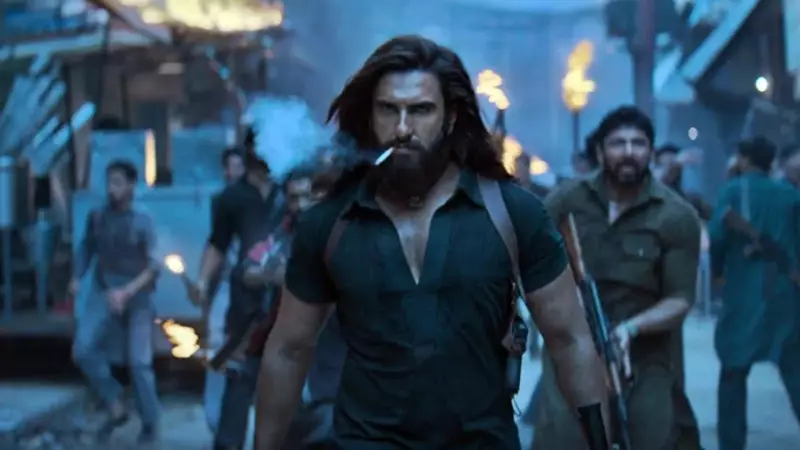
Aditya Dhar's latest cinematic venture, Dhurandhar, has sparked conversations far beyond its surface as a high-octane spy thriller. Released in December 2025, the film, starring Ranveer Singh, compels viewers to look deeper into the sickness of entrenched hostility between nations and its corrosive effects on society and intellect. While framed as entertainment, the narrative holds up a mirror to complex realities.
From Wasseypur to Karachi: A Cinematic Legacy
Critics have quickly drawn parallels between Dhurandhar and Anurag Kashyap's 2012 epic, Gangs of Wasseypur. Dhar adopts a similar gritty pace, raw squalor, and masculine energy. The film also uses nostalgic interruptions of peppy 1970s and '80s songs during key action sequences, serving as both musical tribute and a tool for popular nostalgia, though it forgoes original subaltern scores like Wasseypur's.
The connection, however, runs deeper than style. Kashyap's film explored the criminalised Muslim underclass in Bihar, a situation born from political and capitalist nationalism. Dhurandhar shifts this lens to the underbelly of Karachi. Here, the labour of the marginalised is exploited in weapons factories, and juveniles are recruited for religious radicalisation and cross-border terrorism. If Wasseypur's setting was the coal mine, Dhar's is unequivocally the arms bazaar.

Unpacking the Grey Shades Within the Underworld
The film is set in Lyari, a dense locality in Karachi, portrayed with a degree of stark realism. Through believable performances by actors like Akshaye Khanna, the film shows a world where the ordinary and criminal coexist. It is here that Indian Intelligence Bureau (IB) informants, disguised as a juice-shop owner and a waiter, infiltrate the criminal nexus.
Ranveer Singh's restrained portrayal of undercover agent Hamza Ali Mazari reveals a layered plot. As Mazari climbs the trust ladder, he uncovers a macabre game played by the Pakistani army and its Inter-Services Intelligence (ISI). The script suggests that the primary drive to "bleed" India stems not from Pakistan's politicians, who are engrossed in local rivalries, but from the ISI. The agency is shown encouraging fake truces between Balochi and mainstream Pathan politicians while simultaneously using the army to inflict atrocities on the Baloch community, all to maintain a sham of national unity.
Beyond Vilification: The Human Cost and Introspection
Importantly, Dhurandhar does not vilify Muslims. The gangs are in the business of crime for mammon, not God, with religious slogans ringing hollow. The film introduces compelling shades of grey. The Balochi gangster, Rehman Dakait, earns audience sympathy as a mercurial underdog. Mazari's patriotic betrayal of him carries a poignant, almost Shakespearean tragedy, highlighted in a section titled "Et Tu, Brute?".
Similarly, Mazari's romance with Yalina, daughter of feudal politician Jameel Jamali, adds a layer of fragile humanity. Her betrayal of her misogynist father and her ignorance of her lover's true identity create real vulnerability, holding a fragile light against the hyper-masculinist saga of violence.
The film, released on December 19, 2025, ultimately serves as a cautionary tale. It lays bare how instrumental use of religion for national identity is born from political and moral crisis—a failure to build a social ethic based on collective dignity rather than empty, violent rhetoric. The barrage of sexist swearing in the film reflects this soul-crushing emptiness. While the film's dark portrayal risks cinematic caricature, it undeniably forces a crucial introspection on how neighbourly hate can ravage a nation's economy and stall its social and intellectual progress from within.