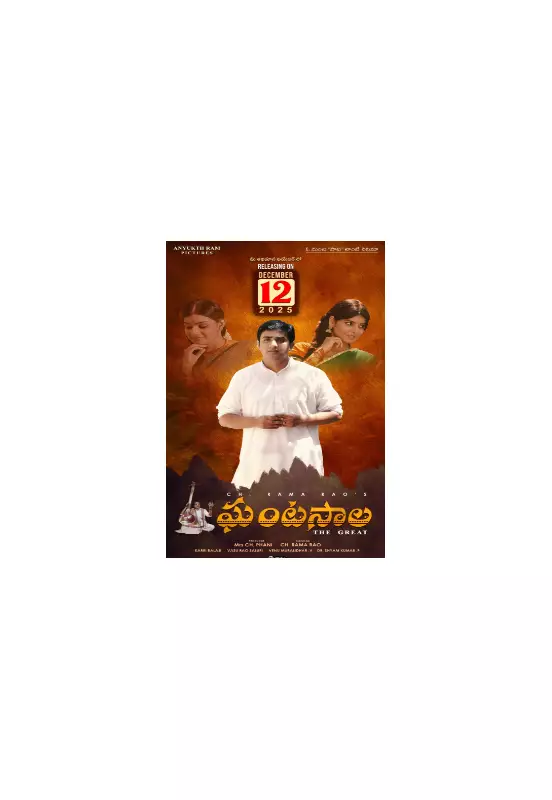
The cinematic tribute to one of Telugu music's most revered voices, Ghantasala: The Great, arrived in theatres on 2 January 2026. This biographical drama, directed by CH Rama Rao, aims to chronicle the life and legacy of the legendary playback singer Ghantasala Venkateswara Rao. With a runtime of 2 hours and 42 minutes, the film has garnered a 3.0 rating from both critics and early audiences, positioning it as an earnest, if uneven, homage.
A Journey Through Struggle and Stardom
The narrative of Ghantasala: The Great meticulously traces the singer's arduous path to fame. The story begins with his early life, highlighting his training under guru Patrayani Sitarama Sastry and the profound hardships he faced, including rejection, hunger, and humiliation. A turning point arrives with the encouragement from lyricist Samudrala Raghavacharya, which propels Ghantasala's pivotal move to Madras (now Chennai). The film then follows his subsequent rise to national and global recognition, stitching together these defining moments into a cohesive, if not always smoothly flowing, timeline.
Strengths in Authenticity and Performance
Where the film truly finds its voice is in its authentic use of Ghantasala's original musical compositions. The music serves as the undeniable backbone of the narrative, lending it a profound sense of legitimacy. This is bolstered by careful cinematography and a dedicated production design that effectively recreates the bygone era, making the period setting one of the film's standout achievements.

In terms of performances, Krishna Chaitanya brings a quiet, understated conviction to the role of the adult Ghantasala. Mrudula Iyengar makes an impact despite limited screen time, while Suman Talwar portrays the iconic musician Bade Ghulam Ali Khan with notable assurance. The young actor playing the early-life Ghantasala, Atulith, is praised for delivering a grounded and sincere performance that sets the film's emotional foundation.
Where the Rhythm Stumbles
Despite its sincere intentions, Ghantasala: The Great encounters several narrative hurdles. The editing is cited as uneven, with abrupt time jumps that disrupt the story's flow. The pacing often leans slow, and at times, the background score overpowers the dialogue. The film's focused perspective, presenting key moments strictly through Ghantasala's lens, may also pose a challenge for viewers less familiar with the historical and cultural context of the era.
In conclusion, Ghantasala: The Great is a respectful, music-driven tribute that resonates more in its individual moments than as a wholly satisfying cinematic experience. It is a film best appreciated for its old-world charm, its sincere performances, and, most importantly, for reintroducing the timeless music of a legend to a new generation. It stands as a patchwork of brilliant fragments rather than a seamless portrait.