In an era of sensational headlines and noisy debates, George Clooney's 2005 film 'Good Night, and Good Luck' stands as a stark, powerful reminder of journalism's core duty: to speak truth to power. The film, now revisited for its enduring relevance, meticulously chronicles the real-life confrontation between legendary CBS newsman Edward R. Murrow and the red-baiting Senator Joseph McCarthy in the 1950s.
A Stark Cinematic Vision Against Hysteria
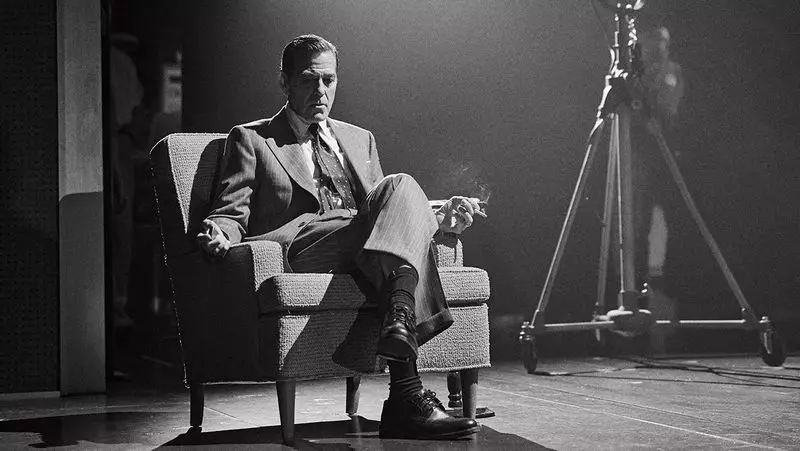
Clooney, who co-wrote, directed, and appears in the film, makes a series of bold artistic choices that define its unique impact. The movie is shot in a striking black-and-white palette, not just for period authenticity but to mirror the moral clarity of its central conflict. The narrative is tightly focused, almost entirely set within the tense confines of the CBS newsroom and television studio. This creates a claustrophobic atmosphere where the pressure on Murrow and his producer, Fred Friendly (played by Clooney himself), is palpable.
The film brilliantly uses archival footage of Senator Joseph McCarthy himself, rather than an actor portraying him. This decision is a masterstroke, forcing the audience to confront the senator's real, blustering menace and the chilling effect of his unsubstantiated accusations. David Strathairn delivers a career-defining performance as Edward R. Murrow, capturing his iconic cadence, steely resolve, and the quiet burden of his responsibility. He is not portrayed as a fiery crusader but as a deeply principled man driven by a profound belief in facts and fairness.

The High Stakes of Telling the Truth
The plot centers on Murrow and Friendly's decision to use their premier news program, 'See It Now,' to challenge McCarthy's tactics directly. The film details the immense professional and personal risks involved. CBS and its chairman, William Paley (Frank Langella), face intense pressure from sponsors and political allies. The journalists risk being labeled communist sympathizers, a charge that could end careers and ruin lives.
A poignant subplot involves the fate of Don Hollenbeck, a CBS news anchor played by Ray Wise. Hollenbeck, a colleague supportive of Murrow's stand, becomes a target of smear campaigns in the press, tragically highlighting the very real human cost of the era's paranoia. This storyline underscores that the battle was not just ideological but had devastating personal consequences.
Why This Historical Drama Feels Urgent Today
Nearly two decades after its release, 'Good Night, and Good Luck' resonates more powerfully than ever. Its themes are not locked in the past. The film serves as a crucial lens through which to examine modern challenges:
- The Role of Media: In a landscape of fragmented news and accusations of "fake news," the film champions rigorous, fact-based reporting as a pillar of democracy.
- Corporate Influence: The tension between journalistic integrity and commercial sponsorship, depicted through Paley's concerns, mirrors ongoing debates about media ownership and independence.
- Civic Responsibility: Murrow's famous line that "we must not confuse dissent with disloyalty" is a timeless call for reasoned public discourse.
The movie argues that the pursuit of truth is not a loud, glamorous endeavor but often a quiet, determined, and risky one. It is a film about courage under pressure and the ethical backbone required to hold authority accountable. It doesn't offer easy victories; instead, it shows the incremental, hard-fought nature of defending democratic principles.
In conclusion, George Clooney's 'Good Night, and Good Luck' is far more than a period piece. It is a masterfully crafted, intensely focused drama that functions as both a compelling history lesson and a vital moral compass for the present. Its quiet power lies in its unwavering belief that in the face of fear and misinformation, telling the truth with clarity and conviction is the most powerful act of all.