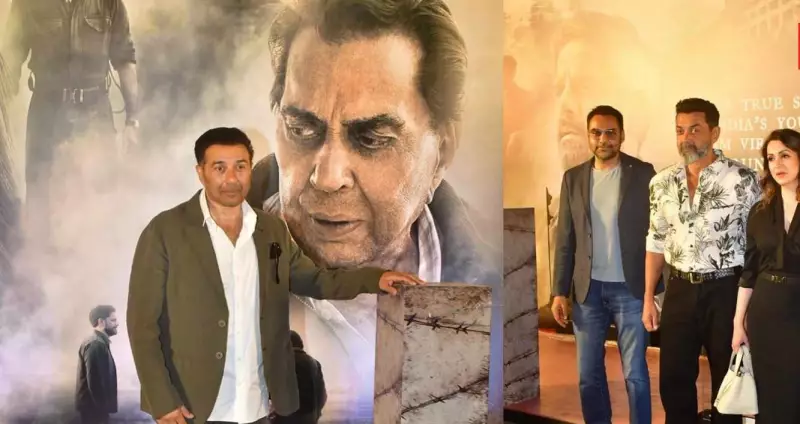
In an era dominated by hyper-masculine, chest-thumping war narratives, director Sriram Raghavan's latest film, 'Ikkis', emerges as a poignant and necessary antidote. Released on January 1, 2026, the film, produced by Dinesh Vijan's Maddock Films, boldly subverts the established tropes of the genre. Instead of jingoism and Pakistan-bashing, it roots its story in empathy, grace, and a profound exploration of internal and external battles.
A Narrative Rooted in True Heroism and Vulnerability
'Ikkis' is based on the true story of the youngest recipient of the Param Vir Chakra, Lieutenant Arun Khetarpal. Played by Agastya Nanda, Khetarpal was a 21-year-old tank commander who was martyred in the Battle of Basantar during the 1971 Indo-Pak War. The film meticulously follows his journey but deliberately avoids painting him as an infallible, rage-driven hero. In a defining moment, Arun hesitates and flinches when asked to kill an animal as a final test before commanding a tank—a subtle display of his humanity.
The narrative cleverly weaves a parallel track set in 2001, where Arun's father, Brigadier Madan Lal Khetarpal (Dharmendra), visits their ancestral home in Sargodha, Pakistan. He is hosted by Pakistani Brigadier Naser (Jaideep Ahlawat). This thread adds layers of reconciliation and shared history, moving beyond simplistic nationalist rhetoric.

Quiet Grace Over Stylized Machismo
Raghavan's direction consciously provides a counterpoint to the aggressive machismo seen in films like 'Dhurandhar' or the narrative rage of 'Chhava'. The three central army officers—Arun Khetarpal, his father, and Brigadier Naser—are portrayed with depth and vulnerability. Their heroism is not measured by the bullets they fire but by their moral courage and emotional honesty.
In a key sequence, Captain Vijendra Malhotra (Vivaan Shah) advises Arun to "be a man" by admitting his mistakes and reconciling with his girlfriend—a starkly different definition of masculinity. Raghavan, who previously cast Dharmendra as a gentleman gangster in 'Johnny Gaddaar' (2007), once again taps into the veteran actor's inherent quiet grace, which once defined Indian cinema's 'He-Man'.
Thrilling Battlefields and Humanizing Moments
The film does not shy away from depicting the visceral reality of war. The battle scenes are thrilling, with tanks exploding and intense gunfights. However, the narrative consistently makes room for softness and personal stakes. Scenes of soldiers eagerly awaiting letters from home, a newly-wed trying to catch a radio signal for a song dedication from his wife, or Arun placing his girlfriend's photo inside his tank—all these moments humanize the men in uniform.
Agastya Nanda, who signed the film when he was 21, delivers an immersive and assured performance, capturing the 'josh' of a young officer alongside his dilemmas. The film's true triumph lies in its gentle questioning of established notions of valour while reaffirming the meaning of being a person of honour.
With its emotional depth and nuanced understanding of cultural ethos, 'Ikkis' stands as a significant cinematic achievement. It offers a powerful, reflective counter-narrative to the prevailing shrillness of jingoism, proving that stories of war can be told with empathy and profound humanity.