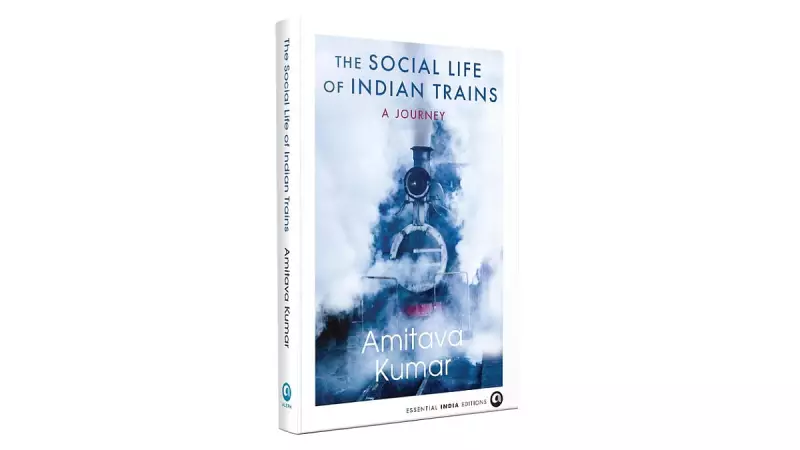
In a world constantly on the move, a new book takes a deep and reflective journey into the cultural tracks laid by railways. 'The Social Life Of Trains', recently reviewed, offers a compelling examination of how locomotives have chugged their way into the heart of human expression.
More Than Just Transport: Trains as Cultural Icons
The review, penned by Nimesh Ved and published on 03 January 2026, praises the author's multifaceted approach. Ved highlights the writer's keen observational skills, comfort with multiple languages, and a masterful dexterity with words. These tools are used not to discuss timetables or engineering, but to elucidate the profound role trains play in poetry, movies, and books.
The core argument of the book, as presented in the review, is that trains are far more than a mode of conveyance. They are powerful symbols, narrative devices, and mirrors reflecting societal changes. The author successfully connects the steel tracks to the softer tracks of human emotion and memory, making readers recall their own encounters with trains in art and life.

A Literary Journey Through Familiar Landscapes
Ved notes that the book operates in a manner that feels both insightful and familiar. It acts as a catalyst, reminding readers of what they have read, heard, and seen about trains throughout their lives. From the romanticism of a long-distance journey in classic cinema to the metaphorical use of railways in modern poetry, the book stitches together a vast tapestry of references.
This approach creates a unique corollary: by examining the train's role in art, the book inadvertently clarifies its significant role in our own personal and collective lives. The whistle of a train, the rhythm of the wheels, and the transient communities formed in compartments are all unpacked as shared cultural experiences.
A Ride with Occasional Bumps
The review's headline, however, suggests the journey is not entirely smooth. With the subtitle "A book on rails that often derails," Ved implies that while the project is ambitious and often enlightening, it may occasionally lose focus or stray from its main track. This critical perspective adds balance, indicating that the book's wide-ranging exploration might sometimes come at the expense of narrative cohesion.
Despite this, the overall impression from the review is one of admiration for the book's scope and the author's erudition. It positions 'The Social Life Of Trains' as a significant contribution to understanding how everyday infrastructure is deeply woven into our cultural consciousness. It's a read that promises to change how one hears the next train whistle—not just as sound, but as a story.