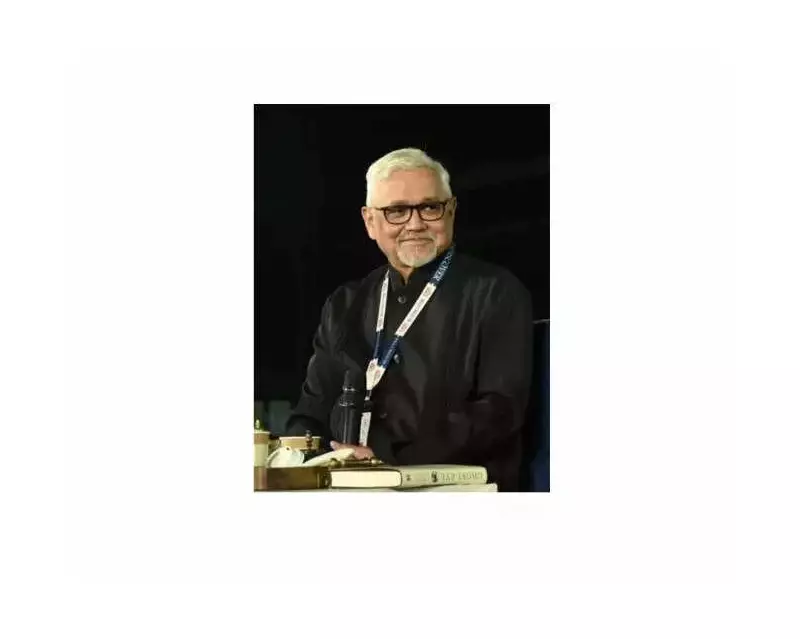
Amitav Ghosh Returns to Kolkata with Ghost Eye, Shares Insights on Fiction and Climate
Renowned author Amitav Ghosh made a significant return to Kolkata, presenting his latest novel Ghost Eye at a city literary gathering. During the event, he delved into why fiction remains his true artistic home, how climate disasters have fundamentally reshaped his worldview, and why the everyday world holds more strangeness than we often acknowledge.
"My Heart Lives for Fiction": Ghosh's Return to the Novel
Reflecting on his journey back to fiction after years of non-fiction writing, Ghosh expressed a deep personal connection to the novel form. "In between I wrote a lot of non-fiction, but my heart lives for fiction," he stated, emphasizing that returning to fiction made him realize "just being lost in that dream world is what I live for." He suggested that fiction offers him an immersive engagement with the world, where ideas emerge organically through narrative rather than through argumentative explanation.
Language and Food: Crucial Human Connections to the Universe
Discussing the research behind Ghost Eye, Ghosh highlighted the profound roles of language and food in human experience. He explained that many cases in his research involve children whose memories are tied to language, sometimes speaking tongues unknown to their families but spoken thousands of miles away. "The other thing that it's really tied to is food," he stressed, noting that these two aspects are crucial because "food is our primary mode of connection with the universe around us." Referring to India, he pointed to numerous recorded cases where children's food preferences challenge caste or family norms, arguing this "completely overturn" the idea of caste as fixed or eternal.

Environmental Destruction and a Mechanistic Worldview
Ghosh linked environmental issues to broader philosophical perspectives, stating, "All the problems really begin with thinking of the Earth as inanimate, as dead," and with the belief that Earth's resources exist solely for exploitation. He emphasized the need to "move away from that very mechanistic view of the Earth," sharing that he felt fortunate to have grown up in India when extractive ideologies were less pervasive, exposing him to alternative ways of thinking about our planet.
Storms as Wake-Up Calls: Reshaping a Writer's Perspective
Ghosh recounted how writing The Hungry Tide transformed his outlook, as he observed environmental disruptions in mangrove forests that have worsened over time. He was further affected by "a series of major storms" including Hurricane Katrina, Cyclone Aila in the Sundarbans, and Hurricane Sandy in New York. "These massive storms really served as wake-up calls for me," he said, highlighting their role in deepening his engagement with climate themes in his work.
Throughout the discussion, Ghosh moved seamlessly between memory, science, and imagination, reflecting on past-life stories, the intersections of food and language, and the storms—both literal and metaphorical—that have shaped his prolific writing career.