Filmmaker and Author Unmask the Human Reality Behind India's App-Driven Labor Boom
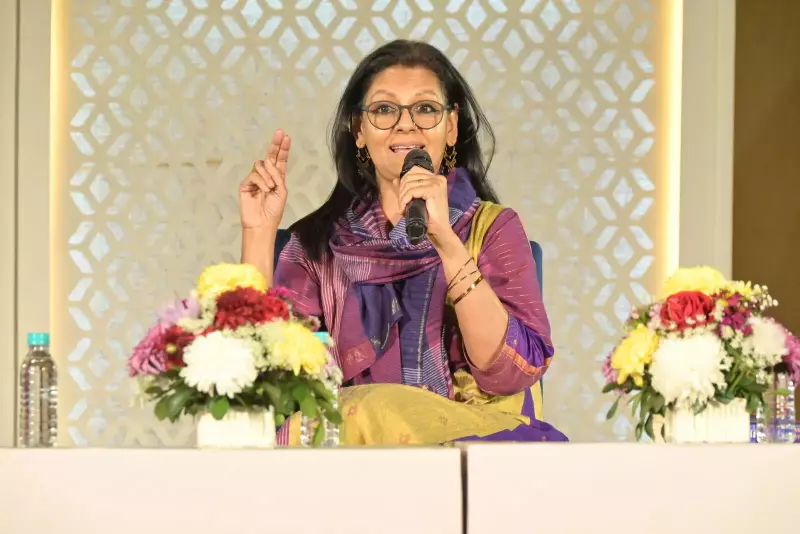
In a powerful dialogue at a literary festival in Kolkata, acclaimed filmmaker Nandita Das joined author and researcher Vandana Vasudevan to critically examine India's rapidly expanding gig economy. Moving beyond the surface-level convenience of food deliveries and quick commerce, their conversation delved into the profound human costs embedded within this digital labor system.
The Invisible Workforce: Lives Hidden in Plain Sight
Nandita Das revealed that her fascination with the lives of delivery personnel was ignited during the COVID-19 pandemic. She observed a stark paradox: society's dependence on these workers skyrocketed, yet their vulnerability and precariousness intensified simultaneously. Recalling a poignant encounter with a delivery rider who profusely apologized for a mere five-minute delay, Das described the pervasive culture of fear ingrained in the system. "During COVID we became dependent on them, but they were anything but partners," she remarked, lamenting how working-class narratives, once a staple of Indian cinema, have now largely disappeared from mainstream storytelling.
This initial curiosity blossomed into her film "Zigato," a project born from her exploration of the gig ecosystem's mechanics. Das immersed herself in understanding the realities of algorithmic ratings, performance incentives, and digital surveillance that govern workers' daily lives. "The challenge was to humanise a world that had been reduced to data," she stated, emphasizing her artistic mission to restore individuality and dignity to workers often seen merely as data points on a platform.

Convenience at a Cost: Normalizing Deep-Rooted Inequality
Vandana Vasudevan, drawing from her research for the book "OTP, Please," characterized the contemporary delivery culture as an unprecedented era of consumer entitlement. She argued that the normalization of instant gratification—from meals ordered every few seconds to groceries delivered in minutes—fuels an endless cycle of demand. "No distance is too far and no worker too expendable in the service of convenience," Vasudevan asserted, highlighting the extreme pressures placed on the labor force.
The discussion pointed to a troubling imbalance: while customers are empowered and companies are insulated from financial risks, the entire burden of pressure is absorbed by the worker. Das connected this modern exploitation to India's enduring social fabric, noting how centuries-old caste and class hierarchies have conditioned society to accept such disparities as natural. "We've normalised it so deeply that we don't even recognise it as cruelty anymore," she observed, calling for a critical reevaluation of these ingrained attitudes.
Reclaiming Agency: The Power and Responsibility of Consumers
Both speakers critically analyzed the structural design of the gig economy, which systematically removes human accountability. Workers are managed through opaque apps, monitored by unfeeling algorithms, and often forced to navigate automated systems for grievance redressal. Despite this dehumanizing framework, Das and Vasudevan emphasized that consumers are not passive bystanders.
"Every rating we give and every complaint we make shapes someone's livelihood," Das reminded the audience, urging for greater mindfulness and empathy in digital interactions. She clarified that the purpose of storytelling, through films like "Zigato" or books like "OTP, Please," is not to directly target corporations or workers, but to provoke societal introspection. The goal is to expose collective complicity and rebuild a sense of shared humanity. "The question isn't whether technology should exist," Das concluded. "It's whether we're willing to see the people carrying its weight."
The conversation in Kolkata served as a stark reminder that behind every seamless app notification and timely delivery lies a complex web of human struggle, algorithmic control, and social inequality that demands urgent attention and action.