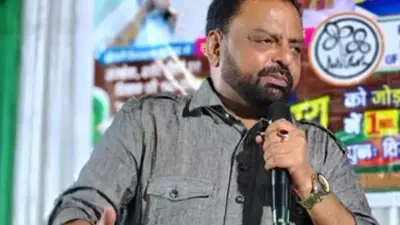
In the dense rainforests of Central and South America, the common basilisk lizard performs a miraculous feat. When danger approaches, juveniles can sprint across water for distances up to 60 feet, a talent that has earned them the nickname "Jesus lizard." However, as they age, grow larger and slower, this defiance of physics becomes impossible. Adults manage only a few metres before sinking, vulnerable once more to the predators below—a powerful metaphor for the career trajectory of Mumbai's hip-hop king, Divine, whose fifth studio album, Walking On Water, has just been released.
The Unassailable Throne Faces Challenges
For a full decade, Divine has reigned as the undisputed pioneer of Indian hip-hop. He was instrumental in pushing the gritty sounds of gully rap from the streets of Mumbai into the nation's cultural mainstream. His journey from the trenches to triumph inspired the hit Bollywood film Gully Boy, directed by Zoya Akhtar. He has built a legacy of commercially successful singles and albums and secured collaborations with global rap legends like Nas, Pusha T, and Vince Staples.
Yet, in recent years, his dominance has faced significant headwinds. The very scene he helped create is now populated by ambitious peers and a fearless new generation of artists who are constantly redefining the sound. Divine's recent musical offerings, such as a remix of Karan Aujla's Wavy and the single Aag, have been perceived as lacking inspiration, riding more on his established reputation than fresh artistic merit. Walking On Water was anticipated as a grand return to form, but instead, it often feels like an artist straining to recapture past glory, only to be pulled under by the weight of his own legacy.

An Album of Repackaged Flexes and Missed Opportunities
The album opens with the promising, self-titled track Walking On Water. Over Stunnah Beatz's skittering percussion, Divine boasts about his "generational run" and declares himself "rap ka asli Messiah." It sets a stage that begs for introspection—what does it mean to be a 35-year-old millionaire rapper who has achieved his wildest dreams? Sadly, the album largely sidesteps this compelling question.
Barring a few exceptions, the record is mired in repetitive self-mythologizing. Tracks like Jungle Juice and Doordarshan feature fantastic production—a brilliant Lorna sample and a flute-led beat by Zoravar Hanjrah, respectively—but are let down by hackneyed choruses and tired braggadocio. Divine has labelled this album a "declaration of evolution," a claim that holds true sonically but collapses lyrically, offering scant evidence of personal growth or new perspective.
Glimpses of the old magic remain. Homicide channels the raw hunger of a younger Divine, while Triple OG proves he can still extract fresh nuance from his rags-to-riches narrative, delivering clever bars like "Mujhe dekh ke bhagta aur naam tera Milkha nahin." However, these highlights arrive late, by which point listeners may be fatigued by less successful iterations of the same theme, such as the track Boom.
Melodic Experiments and the Burden of Legacy
When Divine shifts from boasting to experimenting with melodic, commercial sounds, the results are mixed. Late Knights is an undeniable success, featuring a slinky hook and a stellar Punjabi verse from Gurinder Gill, perfect for late-night drives. In contrast, romantic attempts like Saucy and You & I feel unconvincing, with undercooked lyrics undermining the production.
Tequila Dance stands out as a club-ready highlight, boosted by a propulsive beat and a great verse from Hanumankind. Yet, even when trying something new, as on the slow-paced Rain, Divine's writing is burdened by his persona; he seems unable to express vulnerability without immediately reasserting his greatness.
The album's production is consistently top-notch, and the featured artists often shine. But Walking On Water ultimately portrays an artist confined by his own success. As a wealthy veteran, he can no longer consistently tap into the visceral drive of his youth, yet he remains too attached to his gully gangster image to fully reinvent himself.

A Scene Evolving While Its Pioneer Stands Still
Divine's lyrical and thematic stagnation becomes starkly evident when viewed against the vibrant backdrop of contemporary Indian hip-hop. A new wave of artists, from Dhanji and Shikriwal to Chaar Diwaari and Farhan Khan, are boldly experimenting with form and content, pushing the genre forward with the same revolutionary energy that gully rap possessed in 2015.
Many veteran rappers worldwide have successfully reinvented themselves for new eras. Divine undoubtedly has the skill, resources, and access to producers to make a similar transition. However, on this album, he seems preoccupied with defending his throne—perhaps spurred by the challengers in his rearview mirror—instead of looking ahead to help chart the future course for the scene he helped build.
Walking On Water is not without its merits, but it serves as a poignant document of an iconic artist at a crossroads, finding it harder to perform his own miracles as the waters around him grow deeper and more turbulent.