Mumbai's Silent Savior: How One Man's Beach Clean-Up Sparked a City-Wide Movement
Mumbai has long been celebrated as India's city of dreams—a vibrant, chaotic metropolis pulsating with ambition, emotion, and endless opportunities. For generations, it has offered its residents memories and stories that last a lifetime. However, beneath this glittering surface, an uncomfortable question has begun to emerge with increasing urgency: who is truly looking after Mumbai itself?
From Personal Initiative to Public Inspiration
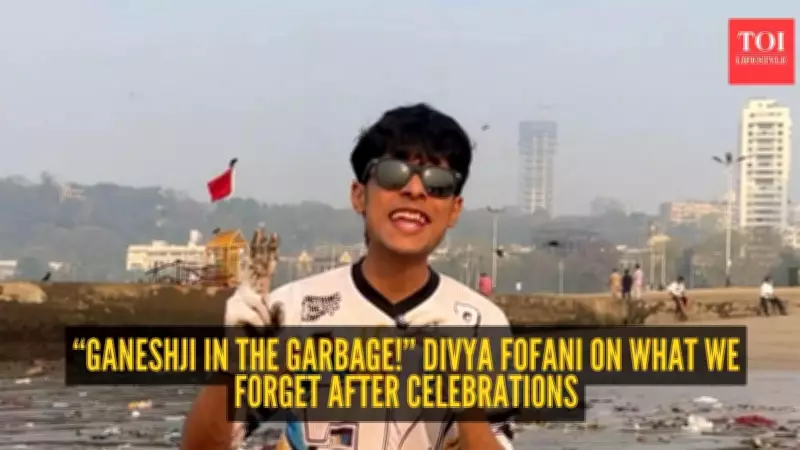
Rather than waiting for authorities or institutions to provide answers, anchor, actor, and entertainer Divya Fofani decided to take matters into his own hands. Instead of resorting to online rants or systemic blame, he adopted a remarkably straightforward approach: donning gloves, grabbing garbage bags, and personally cleaning Mumbai's neglected beaches.
What began as a modest personal effort has rapidly evolved into something far more significant. His Instagram series, titled "Day 1 of cleaning 1 kachra in Mumbai ?️" and continuing sequentially, has been quietly dominating social media feeds across the city. The videos stand out for their authenticity—featuring no dramatic background scores, no preachy narratives, just one individual methodically collecting trash while demonstrating that meaningful change requires no official permission.

A City Responds: Thousands Join the Cause
The response has been nothing short of extraordinary. Thousands of Mumbaikars have begun cheering Fofani on, sharing his clips widely, and even participating in organized clean-up drives themselves. In an era where most people passively scroll past problems online, Fofani's videos serve as a gentle yet powerful nudge, suggesting that perhaps everyone can contribute to solutions.
This movement addresses a critical environmental crisis. Mumbai's beaches, once cherished spaces for evening strolls, shared cups of chai, family gatherings, and breathtaking sunsets, now lie buried under mountains of plastic, festival waste, and everyday neglect. While the ocean continues to bestow beauty and vitality upon the city, human reciprocation has been severely lacking.
The Emotional Catalyst: A Ganesh Idol in the Garbage
Reflecting on his initiative's unexpected growth, Fofani shared profound insights. "I honestly didn't expect it to become this big," he admitted. "It feels overwhelming in the best way. When you start something with simple intentions and people genuinely connect with it, it renews your faith that we all care more deeply than our online personas suggest."
He described one particularly poignant moment that solidified his commitment. "Seeing a Ganesh idol discarded in the garbage hit differently—it was profoundly sad. We worship with immense devotion, yet somewhere between celebration and conclusion, we forget our post-festival responsibilities. Witnessing Ganesh ji in that condition wasn't merely about religion; it was about fundamental respect."
This experience strengthened his resolve. "If one follower translates to one piece of garbage collected, then every small action carries immense weight," Fofani emphasized. "I hope people don't just watch these videos but actually step outside and become active participants in change."
The Power of Quiet Activism
Perhaps this is why Fofani's work resonates so deeply. It avoids loud activism and viral outrage, instead embracing honest, grassroots effort. His journey serves as a crucial reminder that cities are ultimately shaped by ordinary people and their everyday decisions.
Fofani's clean-up campaign feels less like an organized movement and more like the wake-up call Mumbai didn't realize it needed. Saving a city doesn't always commence with grand policies or official announcements. Sometimes, it starts with one individual caring enough to pause, bend down, and clean what others consistently overlook.