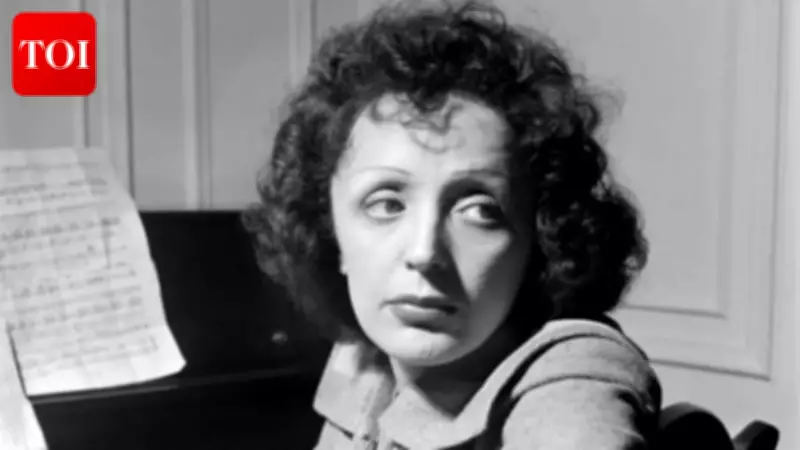
The Power of Words in Music: Edith Piaf's Enduring Philosophy
Music possesses a unique ability to transcend boundaries and connect with people regardless of their origin or language. While catchy melodies can capture attention, the true magic that makes songs memorable and impactful resides in the lyrics. Edith Piaf, the iconic French vocalist, understood this principle better than most artists. Her distinctive voice—alternating between fragile vulnerability and fierce intensity—became the defining soundtrack of 20th-century emotions, expressing love, heartbreak, longing, and hope with unparalleled authenticity.
The Little Sparrow's Big Impact
Known affectionately as 'La Môme Piaf' or 'The Little Sparrow,' Edith Piaf's influence was anything but small. She didn't merely perform songs; she poured her entire life experience into every performance. Listeners could feel genuine pain, passion, and resilience radiating through her vocal delivery. This profound connection between artist and audience is perfectly captured in one of her most famous observations about the art of singing.
Piaf once declared, "To sing is to bring to life; impossible if the words are mediocre, however good the music."

This statement might appear simple at first glance, but for Piaf, singing represented far more than technical skill or vocal perfection. She believed the heart and soul of any song existed within its words—the poetry, the message, and the authentic emotion embedded in the lyrics. This conviction fundamentally shaped her artistic career and explains why her music continues to resonate with audiences worldwide, decades after her passing.
Decoding Piaf's Quote: Why Lyrics Matter
What exactly did Edith Piaf mean with her famous quotation? Essentially, she was emphasizing that lyrics hold equal, if not greater, importance than musical composition. For Piaf, a singer's responsibility extended beyond carrying a tune—it involved breathing life into the emotional core of a song. When she stated "to sing is to bring to life," she meant that authentic singing transforms ordinary words and simple musical notes into something tangible that listeners can genuinely experience and feel.
However, Piaf didn't stop there. She insisted that the words themselves needed to possess strength and substance. Even the most beautiful melody cannot rescue a song if the lyrics are weak or meaningless. When words lack depth, the music simply passes by without creating lasting impact or touching the human heart.
What Piaf was truly articulating is that the most enduring songs combine two essential elements: a captivating melody that draws listeners in and meaningful lyrics that communicate something substantial. This philosophy explains why her own compositions—including timeless classics like 'La Vie en Rose,' 'Hymne à l'amour,' and 'Non, je ne regrette rien'—have maintained their popularity across generations. While the melodies are undoubtedly beautiful, it's the raw, honest emotion conveyed through the lyrics that makes these songs truly unforgettable.
For Edith Piaf, singing closely resembled acting or storytelling. The performer needed to genuinely feel the words, understand their meaning, and convince the audience of every line's authenticity. Without this fundamental honesty, she believed music would inevitably lose its spark and emotional power.
The Life and Legacy of Edith Piaf
Edith Piaf stands unquestionably as one of the most significant forces in French musical history. Born Édith Giovanna Gassion in Paris in 1915, she experienced considerable hardship from an early age. Her father performed street acrobatics while her mother sang in cafés, and Piaf spent much of her childhood surrounded by poverty and instability. She began singing on Parisian streets as a teenager simply to survive, until nightclub owner Louis Leplée discovered her talent and gave her the enduring nickname 'La Môme Piaf'—The Little Sparrow.

From that point forward, her career skyrocketed. Piaf became internationally renowned for her unmistakable voice and emotionally charged performances. She recorded some of France's most iconic songs, with 'La Vie en Rose' particularly emerging as a global symbol of hope and romance. Despite her professional success, Piaf's personal life remained challenging, marked by heartbreak, health struggles, and addiction—all of which fueled the intense emotional quality of her music.
Edith Piaf died at age 47 in 1963, but her artistic influence continues to endure. Singers and songwriters worldwide consistently return to her work for inspiration. Her life and career perfectly demonstrate her own artistic philosophy: it's not merely melody that makes a song timeless, but the story, honesty, and emotion conveyed through the lyrics. Through her powerful voice and fearless performances, Piaf transformed simple songs into unforgettable artistic expressions that continue to touch hearts across the globe.