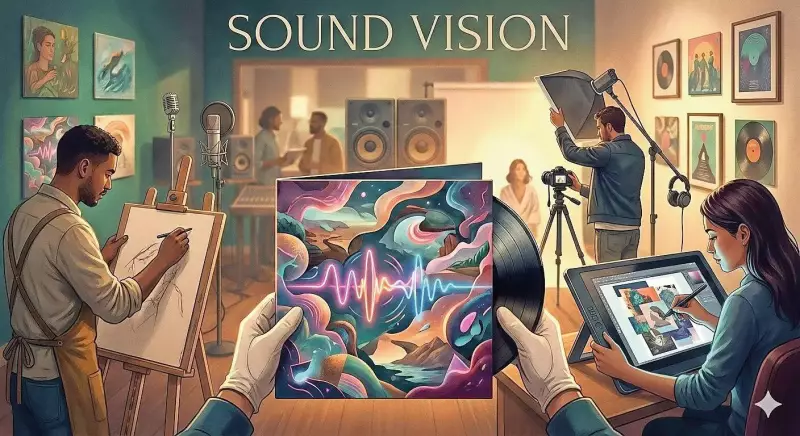
In a landmark decision for the music industry, the Grammy Awards have brought back the Best Album Cover category for the first time in more than five decades. This revival highlights the enduring significance of visual art in an era dominated by digital streaming, where an album's cover is often the first and most potent visual connection a listener makes.
The Resurgence of Tangible Art in a Digital World
Despite music consumption shifting to platforms like Spotify and Apple Music, where art is often reduced to a thumbnail, the cultural weight of album covers has not diminished. In fact, with vinyl records witnessing a steady resurgence, the album cover has reclaimed its central role as a tangible extension of an album's creative ethos. For collectors and enthusiasts, the artwork is not just packaging; it's a vital piece of the musical experience that frames perception, evokes mood, and embeds memory.
Singer-songwriter Bindu Subramaniam views this Grammy revival as a powerful signal. "It challenges the idea that album covers are dispensable," she states. This formal recognition, she believes, could lead to better crediting and fairer compensation for visual artists, potentially inspiring young creators to see album cover design as a viable profession.

More Than Just a Thumbnail: The Storytelling Power of Covers
Three-time Grammy winner Ricky Kej reminisces about the tactile joy of physical albums. "Growing up, I loved flipping through physical albums, reading liner notes, learning about the making of the album and everyone involved. That experience has almost disappeared today," he notes. However, he argues that in the digital landscape, the visual remains the crucial entry point. "The first thing you see on Spotify or Apple Music is the album cover. Sometimes, that image becomes your window into the music — and even more memorable than the songs."
Bindu Subramaniam agrees, emphasizing that while algorithms drive discovery, album art still pushes the story forward. "Every piece of the story matters, and album art is critical to conveying it properly," she asserts. This sentiment is echoed globally. Photographer Neil Krug, nominated for Djo's 'The Crux', observes that a successful cover "becomes part of the language and fabric of what makes a great record."
The AI Question and the Irreplaceable Human Touch
The conversation naturally turns to the growing use of Artificial Intelligence in visual design. Bindu adopts a balanced perspective: "I'm not against AI, but there has to be a human element for authenticity." Musician Bruce Lee Mani of Thermal and a Quarter believes the human creative process itself is irreplaceable. "For human beings, the process is more important than the output; that involvement is where the magic is," he explains.
Ricky Kej acknowledges the blurring lines but maintains an open mind. "I don't mind if an AI-generated album cover wins, as long as it truly represents the music," he says. The consensus among artists is that the core function—conveying the album's soul—remains paramount, regardless of the tool.
The revival of this category affirms the work of professionals like artist and designer Rakesh PK, who worked on the cover for The Down Troddence. "We didn't even know a category like this existed," he says, highlighting how this move validates an entire creative field.
The nominated album covers for the revived category include:
- Wet Leg's 'Moisturizer'
- Bad Bunny's 'Debí Tirar Más Fotos'
- Tyler, The Creator's 'Chromakopia'
- Perfume Genius' 'Glory'
- Djo's 'The Crux'
Ultimately, the return of the Grammy Award for Best Album Cover is a celebration of the inseparable link between sound and sight. It acknowledges that in a fragmented, digital-first music world, a powerful visual remains a key pillar of an artist's storytelling, capable of defining an era and etching itself into cultural memory.