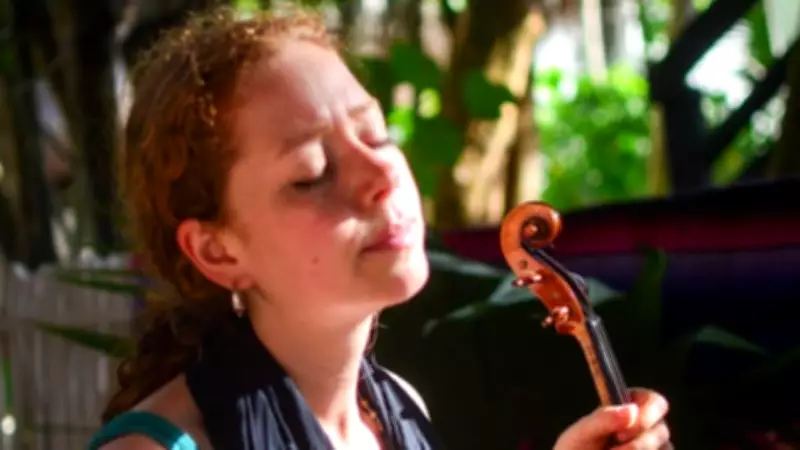
Indian Devotional Music Gains Grammy Recognition Through British Artist
In a landmark moment for global music, Indian devotional traditions found a spotlight at the 2026 Grammy Awards through the nomination of British musician Jahnavi Harrison. Her album Into The Forest was nominated in the Best New Age, Ambient or Chant Album category, marking a rare entry for kirtan, Sanskrit mantras, and Tukaram's abhang poetry into the prestigious awards conversation. Although the award was ultimately won by Carla Patullo featuring The Scorchio Quartet and Tonality for Nomadica, Harrison's nomination underscores a growing appreciation for spiritual music worldwide.
A Spiritual Lineage Rooted in Bhakti Yoga
Harrison's connection to Indian spirituality is deeply personal, tracing back generations before her birth. Her mother, raised in a Jewish household in Canada, and her father, from a Christian family in England, both embraced Bhakti Yoga. As she explained, her father's early fascination with yoga led him to discover the Hare Krishna mantra on a record produced by George Harrison. Both parents eventually became disciples of A.C. Bhaktivedanta Swami Prabhupada, the founder of the International Society for Krishna Consciousness (ISKCON).
Raised at Bhaktivedanta Manor near Watford—an estate purchased by George Harrison in the 1970s—Jahnavi grew up immersed in devotional practices. The Manor, housing a temple, primary school, and youth programs, shaped her childhood with daily Sanskrit prayers accompanied by harmonium and khol. This unique upbringing created a layered cultural identity, as she noted, blending Indian traditions with her English appearance.

Immersed in Indian Classical Music and Dance
Harrison's musical influences extend beyond kirtan to encompass rich Indian classical traditions. From listening to Ustad Bismillah Khan's shehnai performances to discovering Carnatic violinist Lalgudi Jayaraman's cassettes at age 16, she explored diverse artistic realms. She later studied under A.G.A. Gnanasundaram, a senior disciple of Jayaraman, in London, and trained in Bharatanatyam and Carnatic vocals. This rigorous training deepened her engagement with India's artistic heritage, informing her creative output.
The Grammy-Nominated Album: Into The Forest
Conceptualized during the pandemic, Into The Forest blends English lyrics with Sanskrit mantras, featuring tracks like 'Guha maha mantra', 'Govind damodar madhaveti', and Tukaram's abhang 'Sundar te dhyan'. The project brought together producer Chris Sholar and guest musicians such as pianist Utsav Lal, spoken word poet Londrelle, and mridangist Ananta Cuffee. This album builds on her earlier work, including the 2015 release Like A River To The Sea and collaborations with artists like Madi Das and Willow Smith, positioning her within contemporary devotional music circles.
Reflecting on the Significance of Grammy Recognition
Harrison views her nomination as part of a broader shift in how devotional music is perceived globally. She observed that in an era of increasing conflict, division, and tech addiction, people are seeking peace and deeper meaning, driving interest in spiritual music. "The response was phenomenal," she said, noting that kirtan is gaining popularity among youngsters worldwide, challenging stereotypes that it is only for the elderly or counterculture groups. Her travels over two decades have shown her that these outdated ideas are fading, making way for a more inclusive appreciation of chant-based music.
This Grammy nomination not only celebrates Harrison's artistic journey but also highlights the evolving landscape of global music, where ancient traditions find new resonance in modern contexts.