Javed Akhtar's Exasperated Response to Language Query at Jaipur Literature Festival
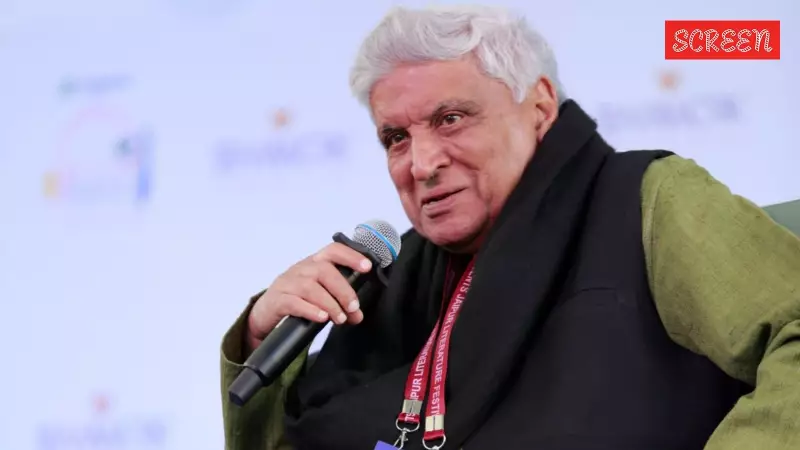
Javed Akhtar, the renowned poet and Bollywood lyricist, gave a fiery response to a provocative question about language at the Jaipur Literature Festival. An audience member asked him which language was older, Urdu or Sanskrit. Akhtar looked incredulous and replied with a mix of bafflement and gentle admonishment.
"What kind of question have you asked me?" he said. "Urdu is Sanskrit's younger sister. Sanskrit is the world's second-oldest living language. Urdu is not even a thousand years old."
Clarifying Tamil and Sanskrit
The questioner then reframed the query, asking about Tamil and Sanskrit. Akhtar clarified that Tamil is recognized as the world's oldest living language, while Sanskrit is the second oldest. He suggested a more sensible question would have been about Greek or Latin.

This exchange revealed Akhtar's deep reverence for linguistic heritage and his frustration with attempts to pit languages against each other.
Early Influences and Love for Language
Earlier in the session, Akhtar spoke about his mother's influence on his love for words. He described how she made language a game, teaching him small words and meanings. "That is where my interest in language was created," he said.
His mother was a "ferocious" chain-reader of novels. Akhtar recalled coming home excited, sure she would have devoured another chapter or two. She would narrate what she had read while he was away. "I am sure she edited the romantic parts," he joked, invoking laughter from the audience.
Even today, when he writes a script, something from his childhood memories of his mother's storytelling comes to mind. This early exposure shaped his lifelong appreciation for language.
Philosophy on Talent and Competition
Born into a family of progressive writers, including his uncle, poet Majaz Lucknawi, Akhtar dismissed the idea that such a legacy was intimidating. "You should appreciate people for their talent. Getting intimidated means you are comparing yourself," he stated.
He advised an audience member worried about board results and comparisons with others. "It is the way of life, someone will always be better than you, and you will always be better than someone. Your competition should be with yourself," he said.
Akhtar also dismissed nostalgia for "a golden era," noting that even ancient Greek philosophers complained about younger generations. He emphasized there is no basis for such nostalgia.
Secularism as a Way of Life
Akhtar's view on secularism extended naturally from his ethos. He called it a "way of life," not a political lesson. "If one day you are given a lecture and you remember points A, B and C, that is artificial. But if it is your way of life—the way you have seen your elders live—then it comes within you," he explained.
He illustrated this with a story about his illiterate grandmother, who once stopped his grandfather from offering him 50 paise to memorize religious verses. "That was the end of my religious education," Akhtar recalled. "She was a woman who could not write her name, yet she had this sensibility."
Reflections on Bollywood and Society
Turning to the film industry, Akhtar contrasted Bollywood of his youth with today's. He recalled starting as an assistant director tasked with fetching an actor's shoes or coat. "Today's assistants are on first-name terms with stars. The assistant director calls the hero by his name—we could never have imagined that," he observed, adding it was a good thing.
He analyzed Hindi cinema as a mirror of society's changing morals and aspirations. He pinpointed the 1980s rise of a new middle class as a shift towards "lower middle-class aesthetics" in art and politics.
Conclusion: Words as Bridges, Not Weapons
The session ended with Akhtar's flabbergasted rebuttal still lingering. He refused to pit one language against another, emphasizing a lifetime's work built on the simple, radical idea that words, whether Sanskrit, Urdu, or Tamil, are not weapons, but bridges.

His response highlighted a deep respect for linguistic diversity and a rejection of divisive politics. Akhtar's words resonated with the audience, reminding them of the power of language to unite rather than divide.