

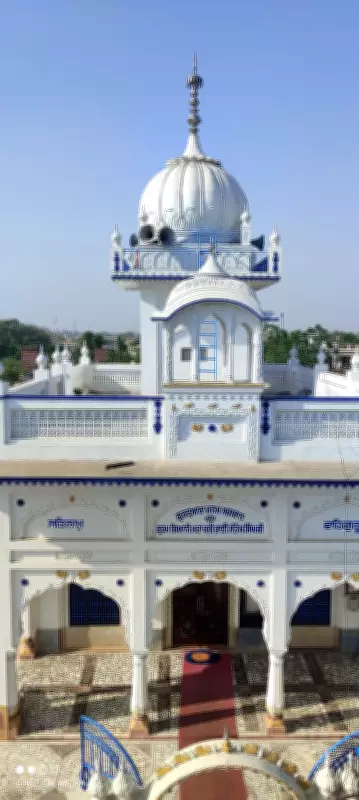
Mahakavi Bhai Santokh Singh, a towering figure in Sikh literature and history, left an indelible mark on the cultural and religious landscape of Punjab. Born in 1787 in the village of Sarai Naga, near Moga, he was a prolific poet and historian whose works continue to be studied and revered. His magnum opus, 'Sri Gur Pratap Suraj Granth', is a comprehensive poetic account of the lives of the ten Sikh Gurus, spanning over 66,000 verses. This epic work not only chronicles historical events but also delves into the spiritual and philosophical teachings of Sikhism.
Early Life and Education
Bhai Santokh Singh's early education was rooted in traditional Sikh learning. He studied under the guidance of renowned scholars and quickly mastered Gurmukhi, Persian, and Braj Bhasha. His deep understanding of Sikh scriptures and his poetic prowess enabled him to compose works that were both scholarly and accessible to the common person. His dedication to preserving Sikh history was driven by a desire to counter the colonial narratives that often marginalized indigenous perspectives.
Major Works and Contributions
Apart from 'Sri Gur Pratap Suraj Granth', Bhai Santokh Singh authored several other significant texts. 'Garbh Ganjini' is a poetic rendition of the life of Guru Gobind Singh, while 'Nanak Prakash' focuses on the life of Guru Nanak Dev. His works are characterized by their lyrical beauty, historical accuracy, and deep spiritual insights. They serve as vital resources for scholars studying Sikh history and theology.

- Sri Gur Pratap Suraj Granth: A comprehensive history of the Sikh Gurus in verse.
- Nanak Prakash: A poetic biography of Guru Nanak Dev.
- Garbh Ganjini: A detailed account of Guru Gobind Singh's life.
Legacy and Impact
Bhai Santokh Singh's works have had a profound impact on Sikh literature and identity. They have been instrumental in shaping the historical consciousness of the Sikh community. His poetic style, blending traditional forms with innovative expressions, influenced subsequent generations of Punjabi poets. Despite the passage of time, his writings remain relevant, offering insights into the socio-political context of 19th-century Punjab.
In recent years, there has been a renewed interest in his works, with scholars undertaking critical editions and translations. His legacy is celebrated annually at literary festivals and through academic conferences. The enduring appeal of his poetry lies in its ability to convey profound spiritual truths in a language that resonates with readers across generations.
Commemoration and Recognition
To honor his contributions, several institutions and awards have been named after him. The Punjabi University, Patiala, has established a chair in his name. His birth anniversary is observed with great reverence, featuring lectures, poetry recitations, and cultural programs. These events ensure that his legacy continues to inspire new generations of writers and historians.
In conclusion, Mahakavi Bhai Santokh Singh's enduring legacy is a testament to the power of literature to preserve and transmit cultural heritage. His works remain a cornerstone of Sikh studies and continue to enlighten and inspire readers around the world.

