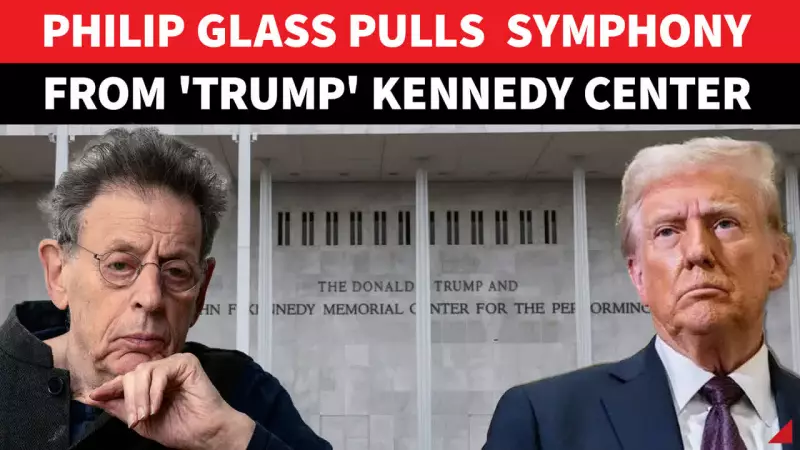
In a striking artistic protest, celebrated American composer Philip Glass has withdrawn the world premiere of his latest symphony from the prestigious Kennedy Center. The decision comes as a direct response to what Glass perceives as a fundamental misalignment between the institution's current values and the core message of his work, following President Donald Trump's takeover.
A Symphony Withdrawn: Artistic Values in Conflict
Philip Glass's Symphony No. 15, titled "Lincoln," was a joint commission by the National Symphony Orchestra and the Kennedy Center. The highly anticipated piece was scheduled to make its debut at the iconic Washington, D.C. venue in June 2026. However, in a strongly worded letter announcing his withdrawal, Glass explained that the Kennedy Center's present direction under the Trump administration creates what he described as "direct conflict" with the symphony's intended message.
The Lincoln Portrait and Contemporary Politics
The composer characterized his new work as a musical portrait of Abraham Lincoln, the 16th President of the United States renowned for preserving the Union during the Civil War and his stance against slavery. Glass emphasized that the symphony's themes of unity, democracy, and moral leadership now stand in stark contrast to the Kennedy Center's current environment. This move represents one of the most significant artistic protests against cultural institutions during the Trump presidency, highlighting ongoing tensions between artistic expression and political administration.

The Kennedy Center, established as a living memorial to President John F. Kennedy, has traditionally served as a national showcase for the performing arts. Glass's withdrawal raises important questions about how cultural institutions navigate political changes while maintaining their artistic integrity. The composer's decision underscores the complex relationship between art, politics, and institutional values in contemporary America.
Broader Implications for Cultural Institutions
This incident follows a pattern of artists and cultural figures responding to political developments through their work and institutional affiliations. Glass's protest through withdrawal rather than performance represents a particularly dramatic form of artistic dissent. The cancellation leaves the Kennedy Center without a major premiere and prompts reflection on how performing arts venues balance their roles as both cultural presenters and public institutions.
The National Symphony Orchestra, which co-commissioned the work, now faces the challenge of whether and where the "Lincoln" symphony might eventually premiere. Glass's action has sparked conversations about artistic freedom, institutional alignment, and the role of cultural organizations in times of political polarization. As one of America's most influential living composers, Glass's stand carries significant weight in both artistic and political circles.
This development occurs against a backdrop of ongoing debates about cancel culture, artistic protest, and the intersection of politics with cultural institutions. The withdrawal of such a prominent work from a major national venue represents a notable moment in the ongoing dialogue about values, expression, and institutional direction in American cultural life.