In a candid conversation, acclaimed author Rahul Pandita has opened up about the challenges of writing in today's polarised environment, the personal cost of online trolling, and the intricate process of weaving life into fiction. The discussion, held with journalist Amritesh Mukherjee, centred on Pandita's latest literary work and the broader landscape for writers who engage with political themes.
The Unflinching Voice in a Noisy Digital World
Addressing the phenomenon of targeted online harassment, Rahul Pandita made a powerful statement about personal agency and creative freedom. "Those who troll me don't own my voice," he asserted, highlighting a firm resolve not to let malicious online campaigns dictate his expression or silence his perspectives. This remark underscores a significant battle faced by many public intellectuals and authors in India who navigate the often hostile terrain of social media commentary.
The interview, published on 10 January 2026, at 23:30 IST, delved into the risks associated with speaking plainly during politically sensitive times. Pandita reflected on the delicate balance writers must maintain, where honesty can invite backlash, yet compromise feels like a betrayal of the craft.

Bridging the Gulf Between Life and Art
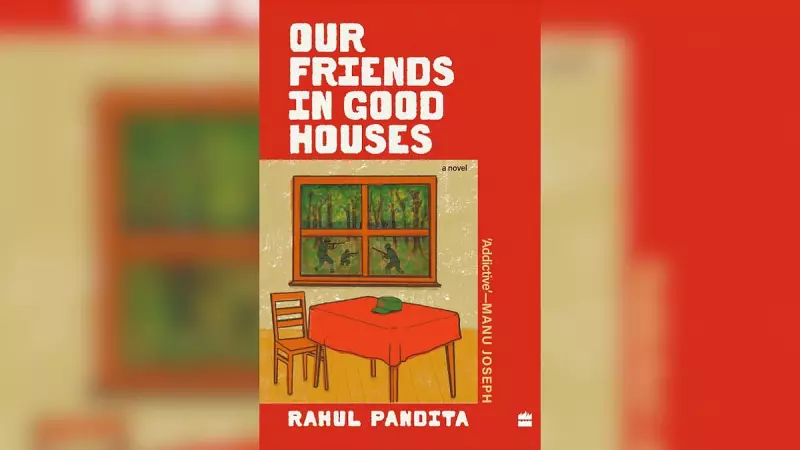
A substantial part of the dialogue with Amritesh Mukherjee focused on the creative process behind Pandita's new book, 'Our Friends In Good Houses'. The author reflected on the "difficult distance between life and fiction," explaining how real-world experiences, observations, and socio-political contexts are distilled, transformed, and sometimes painfully reimagined to create narrative art.
This process, as Pandita described, is not a simple transcription of reality but a complex alchemy. It involves selecting fragments of truth, examining them through the lens of character and plot, and constructing a story that, while rooted in reality, achieves a resonance that pure reportage sometimes cannot.
The Enduring Role of the Writer
The conversation ultimately pointed towards the enduring, if fraught, role of the writer in society. By choosing to address contemporary issues and political undercurrents in his work, Pandita places himself in a tradition of authors who use fiction to interrogate power, society, and human relationships. The risks of speaking plainly, as discussed, are counterbalanced by the necessity of such voices in a functioning democratic discourse.
Pandita's stance serves as a reminder of the courage required in creative fields today. His insistence on owning his voice, despite the cacophony of trolls, reinforces the principle that artistic and intellectual integrity must remain non-negotiable, even when the immediate cost seems high. The interview leaves readers with a deeper understanding of the man behind the words and the thoughtful, deliberate choices that shape impactful contemporary fiction.