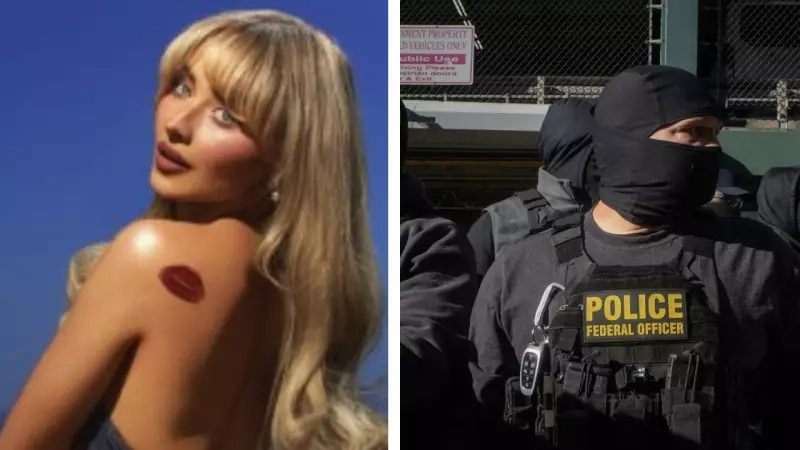
American pop sensation Sabrina Carpenter has issued a fierce public condemnation after a video shared by the White House used her song to accompany footage of arrests and deportations by Immigration and Customs Enforcement (ICE). The singer took to social media platform X to express her outrage, directly replying to the controversial post.
"Evil and Disgusting": Carpenter's Strong Rebuke
In her sharp response, Sabrina Carpenter did not mince words. She labeled the White House video as "evil and disgusting" and explicitly told the administration not to involve her or her music to benefit what she termed their "inhumane agenda." The video in question was shared earlier this week and begins with scenes of a protest before cutting to a montage showing individuals being captured, restrained, and handcuffed by ICE agents.
The caption of the clip lifted a lyric from Carpenter's song 'Juno,' reading: "Have you ever tried this one? Bye‑bye." This use of her artistic work without permission and in a context she finds abhorrent prompted the swift and unambiguous backlash from the artist.

A Pattern of Unauthorised Music Use
This incident is not isolated. In recent months, the White House has faced significant criticism for repeatedly using songs by popular artists in its social-media posts without seeking permission. This practice has sparked a debate about the ethical and legal implications of using copyrighted music for political messaging.
Other notable instances include:
- The use of Taylor Swift's 'The Fate of Ophelia' in a video featuring images of Donald Trump and military forces.
- The incorporation of Cynthia Erivo's performance from the musical 'Wicked' in similar footage showing ICE arrests and deportations.
Historically, the Trump administration also frequently incorporated music from pop artists into political content, often employing upbeat songs in an apparent attempt to make controversial policies appear more palatable to the public.
Contrasting Reactions from Artists
The forceful public statement from Sabrina Carpenter stands in contrast to the silence from some other artists whose work has been used similarly. Taylor Swift, for example, has not publicly spoken out or complained about the government using her songs, a stance that has disappointed many of her fans who expected her to take a stand. Carpenter's vocal opposition highlights a growing willingness among artists to directly challenge the political co-opting of their art.
The ongoing controversy underscores the tension between political communication strategies and artists' rights to control how their creative expressions are used. It raises critical questions about permission, context, and the moral responsibility of those in power when leveraging cultural products for propaganda or endorsement.