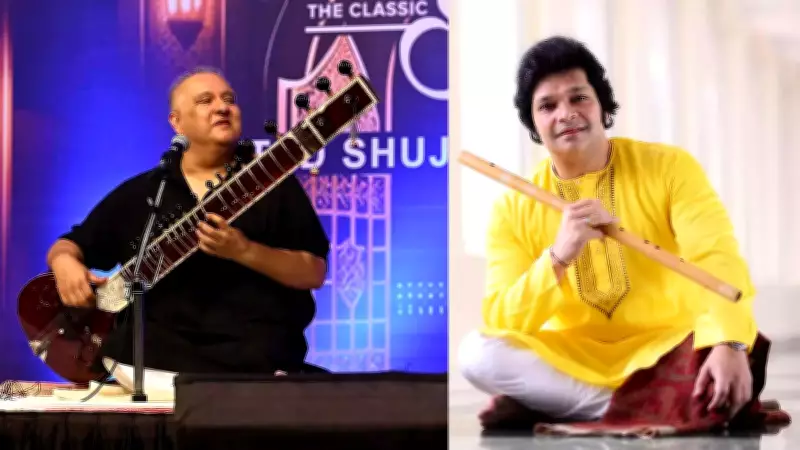
Ustaad Shujaat Khan and Pandit Rakesh Chaurasia: A Dialogue Beyond Virtuosity
In the rich tapestry of Hindustani classical music, two distinguished names stand out with their deep-rooted lineages and extensive careers. Sitarist Ustaad Shujaat Husain Khan, carrying forward the Imdadkhani gharana tradition, and flautist Pandit Rakesh Chaurasia, nephew and disciple of the legendary Hariprasad Chaurasia, represent pillars of musical heritage. When these two maestros come together on stage, their collaboration transcends mere technical display, focusing instead on a profound musical dialogue and structural harmony.
The Spontaneous Symphony of Collaboration
Ahead of their much-anticipated performance in the city, the duo opened up about their unique working dynamic. Ustaad Shujaat Khan emphasized that spontaneity is the cornerstone of their artistry. "For me, the joy of live music lies in not designing anything at all," he revealed. "There's no rehearsal, no planning, no studio work, no pre-thought ideas. Everything is spontaneous, improvised, happening in that very moment."
Pandit Rakesh Chaurasia echoed this sentiment, dispelling the notion that their duets resemble a competitive musical battle. "People often think it is like a competition — almost a musical wrestling match, like a war between two artistes. But that's not what it's like," he explained. "It's really about understanding and listening to each other. With a musician like Ustaad Shujaat, there's a certain maturity and sensitivity that comes from both experience and lineage. After doing a few concerts together, we've found that comfort and connection."

Navigating the Digital Landscape with Authenticity
In an era dominated by Instagram reels and algorithmic feeds, the conversation naturally turned to the pressure on classical musicians to seek online visibility. Ustaad Shujaat Khan shared his grounded perspective: "Honestly, I don't overthink these things. I'm not on any digital platform. Yet people still find me. I perform in around 50 shows a year, which tells me one thing: if you make good music, people will come to you."
His advice to emerging artists is unequivocal: "My advice to young musicians is simple: spend less time making reels and chasing views, and more time practising and refining your art. In the long run, it's your riyaaz that counts, not your followers."
Pandit Rakesh Chaurasia offered a more nuanced view, acknowledging the dual nature of digital tools. "Digital platforms are not wrong. Like every coin, they have two sides. For some people, they work very well. Use social media if you want, but don't let it replace your practice. Fame may bring people to the hall once, but only good music will make them stay."
Young Audiences: A Testament to Cultural Curiosity
Addressing the pervasive myth that younger listeners lack the patience for classical music, Ustaad Shujaat Khan offered a compelling rebuttal. "I think we underestimate young audiences when we say they have short attention spans. That's not true. If you give them three-minute songs, of course, they'll listen for three minutes. But if you offer them a proper classical concert, they're ready for that too."
He observed that contemporary audiences arrive with deliberate intent and genuine curiosity. "When people come to my concerts, they know what they're coming for. They're prepared to sit through a 45-minute or hour-long raag before we move to Sufi or lighter pieces. They listen with patience and curiosity. I give them a lot of credit. They genuinely want to connect with their culture. And honestly, I'm very satisfied with the way audiences respond to Indian classical music today."
The Enduring Rewards of Artistic Devotion
For Ustaad Shujaat Khan, the pinnacle of achievement lies not in accolades but in human connection. "At this stage of my life, the greatest reward is the love and affection I receive from people. When I step on stage and see the audience smile, stand, and welcome me, that's priceless."

Pandit Rakesh Chaurasia, meanwhile, highlighted the holistic benefits of playing the bansuri, extending beyond music into wellness. "I think everybody should play the bansuri, even if it's just as a hobby. It's like doing pranayam. It strengthens your lungs, brings rhythm to your breathing."
Their upcoming performance promises to be a testament to this philosophy—a celebration of spontaneous creativity, mutual respect, and the timeless appeal of well-crafted music that continues to resonate across generations.