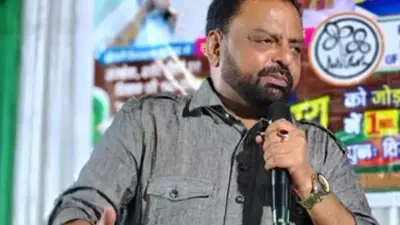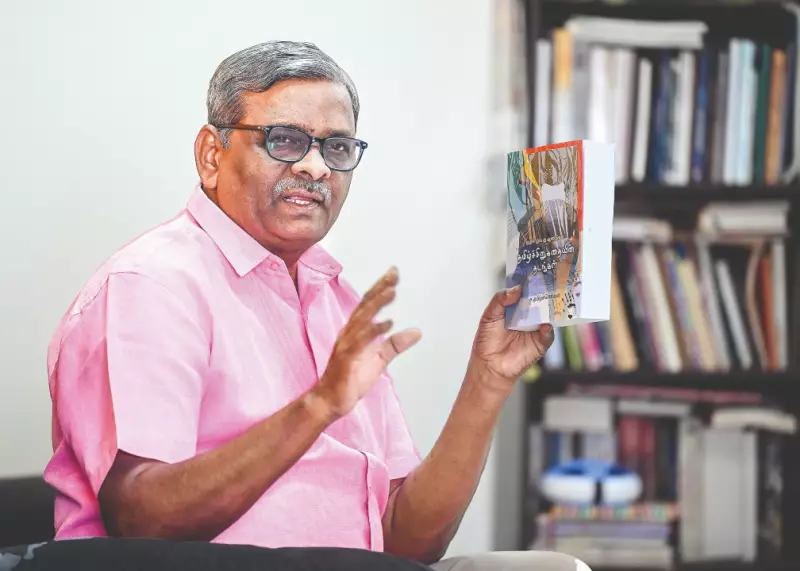
Writer S Tamil Selvan should have celebrated the new year with a Sahitya Akademi award. His book 'Tamil sirukathaiyin thadangal' earned him this honor. The book's jacket should have proudly displayed the line 'Winner of Sahitya Akademi Award 2025'. This tag would have stood out at the 49th Chennai Book Fair. However, uncertainty now surrounds the award. Meanwhile, the former president of the Tamil Nadu Progressive Writers and Artists Association (TNPWAA) has completed a two-volume book. This work traces 100 years of CPM's struggles in the delta region. In an interview, Tamil Selvan speaks about documenting a century of anti-caste movements.
Feelings on the Sahitya Akademi Award Delay
Tamil Selvan received news of his selection a day before the Akademi's press meet. He was asked not to share the information until the official announcement. He did not expect to be selected. Since he had no expectations, the withholding of the award has not greatly affected him. He notes this situation impacts writers in 23 other languages chosen this year.
Documenting the Tamil Short Story Genre
In his book, Tamil Selvan documents the first 50 years of the Tamil short story genre. The genre has now crossed 100 years. Each decade features outstanding stories by literary masters and lesser-known writers. Themes and language have evolved over time. He finds it interesting that only about 10 women writers existed in the first 50 years. Many of their stories were not widely read then.

For instance, Kamala Vridhachalam, wife of the late writer Pudhumaipithan, wrote only a few stories. Today, her work has been compiled and published. The number of women writers in this genre has grown to about 30. Many Muslim women have also entered the field. Tamil Selvan is working on the second volume of his book. It will feature more previously unknown women writers who deserve recognition.
Book on 100 Years of Anti-Caste Struggle
Tamil Selvan recently completed a book on 100 years of anti-caste struggle spearheaded by CPM in the delta region. The Communist Party was founded in India in 1920. Five years later, the self-respect movement emerged. RSS also started in the same year. All three movements have now crossed 100 years.
Yet, the Dravidian movement and RSS operate as well-funded sophisticated platforms. Communists still speak through megaphones. The other two have shifted focus toward the elite and middle classes. Communist parties continue to serve the working class.
Communists faced bans twice in India. The first ban lasted from 1934 to 1937. The second occurred from 1948 to 1951. They endured repression, including killings and curtailment of free expression. Little documentation exists of these dark years, especially in Tamil. Tamil Selvan tries to bridge this gap. He presents events in chronological order, using writings by foreign observers and oral histories from senior communist leaders.
The communist movement was active in the delta region, then known as unified Thanjavur. The area prospered agriculturally. However, many landlords employed economically weaker families as farm labor, treating them like slaves. B Srinivasa Rao was sent from Karnataka to Thanjavur by party leadership. He fought for peasants' rights. After his arrival, working-class peasants began resisting abuse and violence. Tamil Selvan's two-volume work tells this story. It also traces the history of the Communist Party in India, focusing on Tamil Nadu.
DMK's Claim on Caste Atrocities
Recently, DMK has staked a claim to reducing caste atrocities in the delta region. In the Kilvenmani massacre of 1968, 44 Dalits were burned alive. Landlords and the DMK bore responsibility for this episode. Labour leader V Meenakshi Sundaram wrote a letter to then Chief Minister C N Annadurai. He warned of tension between landlords and laborers and urged government intervention. The letter was not taken seriously. Twenty days later, the massacre occurred. Timely government action could have averted it.
During this period, Periyar criticized communists for taking what he called the path of violence. When landlords subjected laborers to violence, no one spoke up for them. But when laborers began resisting, their struggles were labeled as violence. DMK fought caste discrimination. Its anti-caste politics was based on equality. However, communists took that ideology to the ground.

TNPWAA's Impact on the Cultural Sphere
TNPWAA recently celebrated its golden jubilee. The organization has significantly impacted the cultural sphere. The question of whether working-class struggles can be reflected in literature has always been debated. Some say 'art is for art's sake'. They criticize working-class literature as campaigning. Today, fictional works portraying the working class have become a distinct genre in Tamil literature. This change is largely due to TNPWAA.
The association holds literary meetings, readers' circles, and art exhibitions regularly across districts. TNPWAA introduced 'kalai iravu' (art night) as an alternative to New Year celebrations. These events feature book releases, folk arts presentations, and special addresses by leaders. Because of TNPWAA's efforts, the Tamil Nadu government formed a welfare board for folk artists in 2007. Previously, people and organizations worked for their welfare in a fragmented manner. TNPWAA brought them together under one platform.
TNPWAA also encourages writers and artists by presenting awards in 16 categories. Every year, it conducts a week-long film festival in different districts. The festival screens and discusses world cinema. A couple of years ago, TNPWAA started a film school. It offers year-long training in cinematography, editing, and direction for a nominal fee of 17,000 rupees. Students receive one meal a day and free lodging. The school is now on its fourth batch.
Above all, TNPWAA has helped create a culture where anyone can speak about literature and books on public platforms. Tamil Selvan believes this is the association's most important contribution.
Autonomy of Sahitya Akademi at Stake
In December, the Sahitya Akademi cancelled a press conference to announce its annual literary awards. This followed a directive from the Union Ministry of Culture. The Akademi, an autonomous body under the ministry, was to make the announcement after its executive board cleared the list of awardees. Minutes before the press conference, the Akademi was asked to defer the announcement. Sources say the ministry raised concerns about the award selection process and sought time to review names. While executive board members reportedly objected, the award ceremony stands deferred. A list of awardees has since circulated on social media.
Tamil Selvan explains the reason given for cancelling the announcement. The Akademi signed an MoU with the ministry calling for a 'restructuring of awards'. This applies to Sahitya Akademi, Lalit Kala Akademi, Sangeet Natak Akademi, and the National School of Drama. This move appears to curtail the Akademi's independence. He emphasizes this is not merely a writer's problem. What is at stake is the autonomy of Sahitya Akademi, an institution founded under Jawaharlal Nehru. That is what we should question.
Regarding allegations that a Left-leaning jury favors TNPWAA members for the Sahitya Akademi award in Tamil, Tamil Selvan responds. Since 1954, 64 Tamil writers have received the award. Only 13 can be described as Left-oriented. Among them, barely five writers were directly associated with TNPWAA.
He adds that criticism of Left-leaning writers dates back to Tamil writer and critic Ka Naa Subramanyam. While reviewing a short story by Krishnan Nambi, Subramanyam remarked that Krishnan wrote some good stories, but he was not prepared to accept him as a good writer because his mind was filled with progressive darkness. Such allegations from traditional anti-Marxist groups have always existed. After all, even Pudhumaipithan never received the Sahitya Akademi award.