

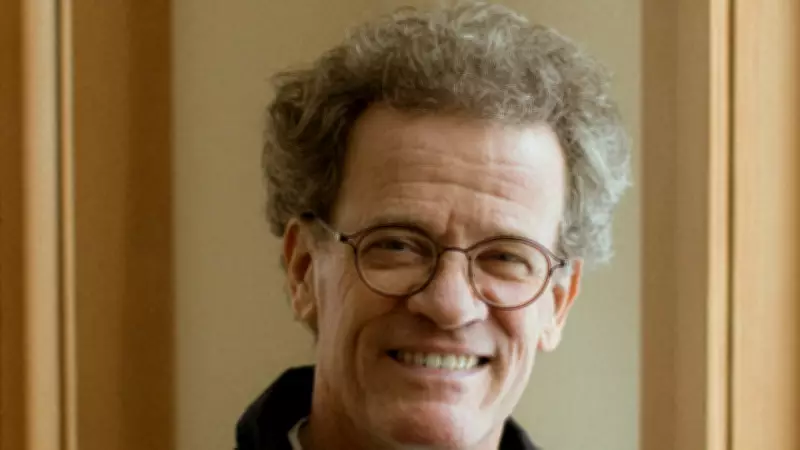
Yann Martel Returns with 'Son of Nobody', Reimagining Trojan War Through Soldier's Eyes
After nearly a decade, Booker Prize-winning author Yann Martel has made a highly anticipated return to the literary world with his new novel, 'Son of Nobody'. The book offers a fresh perspective on the ancient Trojan War, viewed through the eyes of a common soldier. In an exclusive interview with Sharmila Ganesan Ram, the Canadian writer delves into the enduring relevance of Greek epics and their surprising connections to texts like the Bhagavad Gita, particularly against the backdrop of modern global conflicts.
Reflecting on the Booker Prize and 'Life of Pi'
When asked about winning the prestigious Booker Prize in 2002 for his celebrated novel 'Life of Pi', Martel responded with characteristic humility and warmth. "I won't be glib or cynical: I loved it," he stated. He described the award as a wonderful validation for a book he initially thought might not find an audience, given its unconventional themes of religion and zoos treated without irony. The prize catapulted the novel to international fame, leading to extensive tours and millions of copies sold, memories he recalls with great fondness.
India's Influence and Evolution
Martel's connection to India runs deep, with his early travels in the country significantly shaping 'Life of Pi'. He has visited India four times, including extended backpacking trips in the mid-1990s that took him from Kashmir to Kanyakumari. Observing India's transformation into an economic giant, Martel noted the environmental costs and expressed concern over what he described as a slide towards authoritarianism, drawing parallels with Turkey. "Corruption and injustice may well kill the golden egg," he warned. Despite these challenges, he remains captivated by India's imaginative dynamism, evident in its literature, music, architecture, and pop culture, describing the country as kaleidoscopic in both positive and negative ways.

The Enduring Appeal of the Trojan War
In 'Son of Nobody', Martel revisits the Trojan War, a story that has captivated audiences for millennia. He attributes its longevity to its foundational role in Western consciousness as depicted in Homer's 'The Iliad'. Martel highlighted the modern relevance of the siege, emphasizing the theme of waiting—a universal experience in today's fast-paced world. "Waiting is the incubator of gnawing fear, wild ideas, and pent-up resentment," he explained. The conversations among Greek soldiers during this waiting period raised profound questions about purpose and meaning, echoing the philosophical inquiries that later defined Greek thought.
Interestingly, Martel drew a parallel between the Trojan War and the Bhagavad Gita, noting that both narratives feature pivotal discussions before battle. In the Gita, Arjuna seeks guidance from Krishna while awaiting combat, much like the Greeks in Homer's epic. "It's all so very Greek!" Martel remarked, underscoring the shared human experience across cultures.
Violence and Nihilism in Contemporary Context
With fresh wars raging globally, Martel reflected on why the Trojan War's themes of violence and nihilism remain pertinent. He contrasted Homer's detailed obituaries for fallen soldiers with the anonymity of modern warfare, where casualties are often reduced to mere numbers. The Trojan War's enduring relevance, according to Martel, lies in its depiction of a conflict with no true victors. "The Trojan War was a Pyrrhic victory before the term was invented," he stated, pointing out that both sides suffered devastating losses without meaningful gains. This resonates with today's conflicts, prompting us to question whether we are on the brink of a new Dark Ages.

Marginal Figures and Democratic Ideals
The title 'Son of Nobody' symbolizes anonymity and erasure, reflecting Martel's focus on marginal figures. He explained that the protagonist, Psoas of Midea, despite his low social standing, becomes the star of a Trojan War epic. Martel's writing is driven by democratic ideals that value every individual. "I stand with the ordinary man, woman, and child who is just trying to get by," he asserted, expressing disdain for billionaires who, in his view, threaten civil societies.
Pi's Message for a Divided World
When asked what message the character Pi might offer in today's polarized world, Martel emphasized themes of inclusion and empathy. Pi's story in 'Life of Pi' advocates for embracing differences rather than pushing them away, warning that judgment and exclusion diminish our humanity. "A true Hindu does not exclude a Muslim, for example, nor does a true Muslim exclude a Jew," Martel noted, highlighting the universal need for acceptance and understanding.
In 'Son of Nobody', Yann Martel continues to explore profound human questions, blending ancient narratives with contemporary insights. His work serves as a reminder of the timeless nature of storytelling and its power to bridge cultural divides, offering wisdom for navigating the complexities of modern life.
