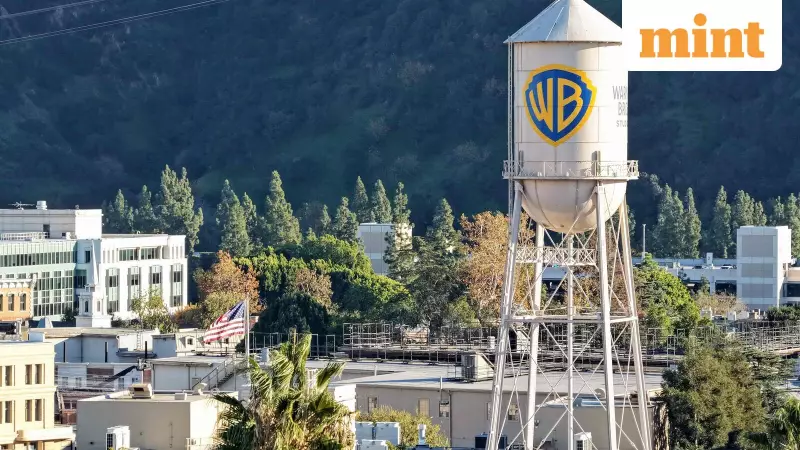
In a blockbuster move set to redefine the global media landscape, streaming giant Netflix has announced a monumental agreement to acquire the iconic Warner Bros. film and TV studios, along with HBO and HBO Max, for a staggering $82.7 billion, including assumed debt. This proposed merger marks the latest dramatic turn in the long and often tumultuous history of Warner Bros., a studio whose journey is a masterclass in Hollywood mergers and acquisitions.
From Golden Age to Corporate Drift: Warner's Rocky Road
The story of Warner Bros. is one of constant reinvention. The decline of Hollywood's Golden Era studio system in the 1950s, pressured by the rise of television and antitrust actions, left studios scrambling. In a move now infamous, Warner Bros. sold its entire pre-1948 film library in 1956, just as TV stations desperately needed classic content. Adrift for years, the studio was sold in 1967 by an aging Jack Warner to distributor Seven Arts, forming Warner Bros.-Seven Arts.
That venture faltered quickly, leading to another sale in 1969 to Steve Ross's Kinney National, a conglomerate with interests in parking lots and funeral homes. Rebranded as Warner Communications, this oddly sparked a renaissance. The 1970s and 80s were a creative and financial peak, expanding into music and television production.

The Highs of Time Warner and the Catastrophic AOL Merger
The merger with Time Inc. in 1990 created the media behemoth Time Warner, which grew stronger with the addition of Turner Broadcasting in 1996. This deal famously brought back the pre-1948 Warner library, reuniting the studio with classics like Casablanca. The 1990s were Warner's zenith, producing era-defining hits like Friends, Seinfeld, and ER, while its music and publishing divisions thrived.
However, fear of the internet led to one of the most disastrous deals in corporate history. In 2001, Time Warner merged with America Online (AOL) in an all-stock deal valued at $165 billion. The promised synergy between old and new media never materialized. The dot-com crash erupted soon after, and AOL's model became obsolete. The venture ultimately wrote down $99 billion in value, a catastrophic failure that ended Warner's golden streak and initiated a new period of struggle.
The Netflix Deal: Echoes of the Past and Future Challenges
After being owned by AT&T (as WarnerMedia) and later merged with Discovery to form Warner Bros. Discovery, the studio now faces another transformative shift. Analysts note that the Netflix acquisition bears a striking resemblance to the 1967 Seven Arts deal. Like Seven Arts, Netflix began as a distributor for a new medium (streaming vs. television), started producing its own original content, and is now acquiring a major, albeit distressed, traditional studio to supercharge its library and production capabilities.
While this does not doom the Netflix-Warner deal, it highlights the significant integration challenges ahead. Netflix must successfully absorb a vast, legacy media company with a complex culture and history. For Indian audiences and the global streaming market, this merger promises a seismic shift in content ownership and competition, placing an unprecedented catalogue of iconic films, series, and characters under one digital roof. The question remains: will this be the merger that finally secures Warner's future, or another twist in its long, winding tale?