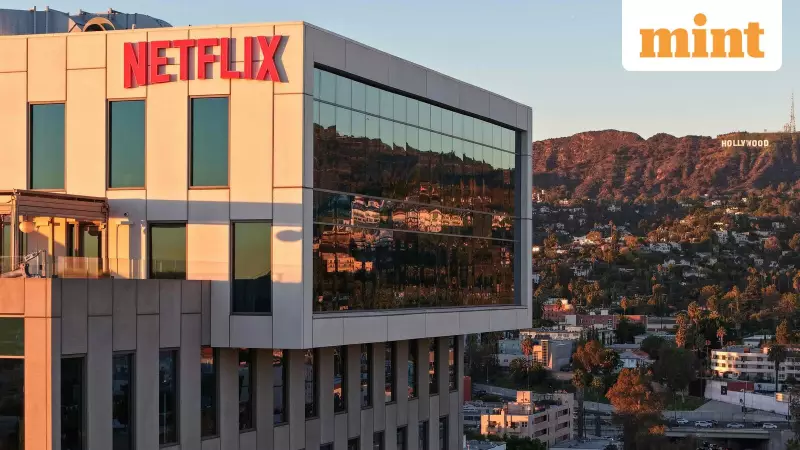
In a move that has sent shockwaves through the entertainment industry, streaming titan Netflix announced a monumental shift in its strategy on Friday. The company revealed plans to acquire the storied Warner Bros. film and television studio business for a staggering $72 billion. This deal, set to proceed once Warner Bros. Discovery completes its planned split from its TV network operations next year, represents Netflix's most audacious gamble yet, fundamentally altering its identity from a pure-play streamer to a full-fledged Hollywood studio.
A Staggering Price Tag and a Radical Pivot
The financial scale of the acquisition is unprecedented for Netflix. Prior to this, the company's largest purchase was the $700 million acquisition of comic book publisher Millarworld. The $72 billion price is particularly eye-catching given that the entire market valuation of Warner Bros. Discovery was just over $30 billion in early September, before rumors of a potential deal began to circulate. A significant portion of the payment will be made in cash, a substantial outlay for a firm that currently generates roughly $9 billion in annual free cash flow.
However, the financial risk is only one facet of the challenge. The acquisition signals a profound transformation in Netflix's business model. For years, Netflix built its empire on creating exclusive content solely for its own platform. Owning Warner Bros. would thrust it into the traditional Hollywood ecosystem, forcing it to produce big-budget theatrical films and television shows for rival networks and streamers. This means Netflix could soon be creating hit shows for competitors, a complete reversal of its original content strategy.

Investor Jitters and Market Reaction
Unsurprisingly, this radical departure from the company's "build, don't buy" philosophy has unsettled investors. Netflix's stock price fell nearly 3% on Friday following the announcement. This decline adds to a broader 17% slide since late October, when the company's third-quarter earnings coincided with initial reports of its interest in Warner Bros.
Analysts have expressed clear concerns. Wolfe Research analyst Peter Supino noted that with this deal, Netflix's stock "transitions from pure, organic growth elegance to something more complicated." Dan Salmon of New Street Research was more direct, slashing his price target on Netflix shares by 17%. He highlighted the risks of moving from building to buying, the immense investment of management time and capital, and the prospect of a "prolonged, likely highly politicized deal process."
Thorny Questions and Regulatory Hurdles
The deal raises several complex issues that Netflix's leadership, Co-CEOs Ted Sarandos and Greg Peters, must now navigate. On a conference call, they praised the value of adding iconic brands like HBO to Netflix's library. However, Warner Bros. currently licenses much of its content to other streaming services. If Netflix begins hoarding this content for itself, it will face fierce backlash from competitors and potentially from consumers accustomed to accessing Warner shows elsewhere.
Furthermore, Netflix's long-standing ambivalence toward the theatrical movie business now becomes a central concern. Warner Bros. has historically been one of Hollywood's largest producers of films for cinemas. Co-CEO Ted Sarandos stated that bringing first-run movies to subscribers remains Netflix's "primary goal," leaving its commitment to wide theatrical releases unclear. Any significant reduction in Warner's film output would anger the creative community and cinema chains. Stocks of major exhibitors like AMC, Cinemark, and IMAX all fell on Friday in reaction to the news.
Regulatory scrutiny is another major obstacle. Combining Netflix, with its over 300 million subscribers, with Warner's vast content library will undoubtedly attract antitrust attention. The outcome may hinge on how regulators define the competitive market, possibly pitting Netflix against giants like YouTube in terms of total viewer attention. The deal includes a hefty $5.8 billion termination fee—the third-largest ever and the highest since 2017—indicating Netflix's awareness of the significant regulatory battle ahead.

Netflix has successfully pivoted before, transitioning from DVD rentals to streaming and later introducing advertising and cracking down on password sharing. However, the acquisition of Warner Bros. is a venture into uncharted territory. It pits the streaming champion in a new, complex battle where the rules of engagement—theatrical windows, content licensing, and regulatory approval—are vastly different. While the potential rewards of owning a century-old studio empire are great, the risks and fresh wounds from this fight are likely to shape Netflix's trajectory for years to come.