

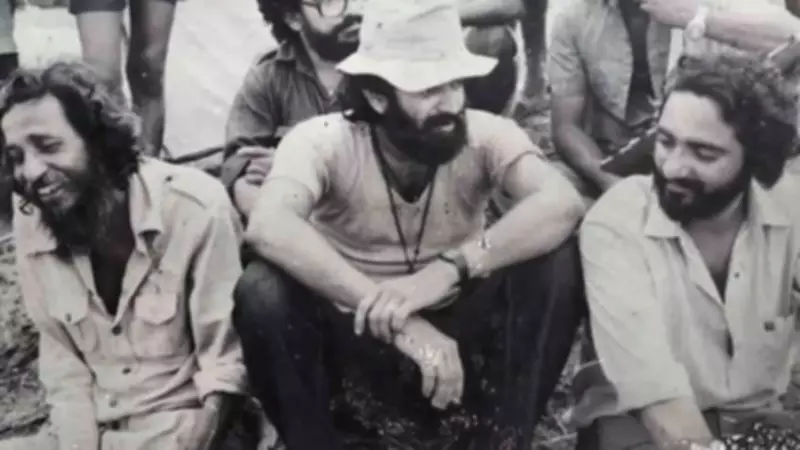
John Abraham's iconic Malayalam film 'Amma Ariyan' (Report to Mother), a cult masterpiece from 1986, has been selected as India's sole entry in the Cannes Classics segment this year following its 4K restoration by the Film Heritage Foundation. The screening marks the fifth consecutive year that the non-profit organization, led by Shivendra Singh Dungarpur, presents a restored film at the prestigious festival.
A Radical Voice in Indian Cinema
Directed by the late John Abraham, known for his politically charged and unconventional dramas, 'Amma Ariyan' is widely regarded as one of the most radical voices in Indian cinema. It was Abraham's final film before his death in 1987. The 115-minute feature was produced by the Odessa Collective, a group of film enthusiasts co-founded by Abraham, who aimed to break free from mainstream production and distribution systems.
In a groundbreaking experiment, members of the collective traveled from village to village, beating drums, performing street plays, and screening films to raise funds directly from the public. The film was not intended for conventional theatrical release but for a traveling cinema model that brought it back to the communities that made it possible.

In 2001, the British Film Institute included 'Amma Ariyan' in its list of the ten greatest Indian films of all time. At Cannes, the film will be presented by Dungarpur, lead actor Joy Mathew, cinematographer Venu ISC, and editor Bina Paul.
Plot and Political Context
Set against the political turbulence of 1970s Kerala, the film follows Purushan, who sets out to inform a mother of her son's death, gathering companions along the way in a journey that becomes both personal and political. The narrative blurs the boundaries between documentary and fiction, shot in a cinéma vérité style by Venu.
Restoration Challenges and Triumph
Dungarpur expressed his delight, stating, 'The selection of Film Heritage Foundation's restoration of John Abraham's 'Amma Ariyan' for a world premiere at the Cannes Film Festival is a strong validation of the work we've been doing. This marks our fifth consecutive year at Cannes with a restored film. This year, we've brought back a rare gem of Indian cinema that was in danger of being lost.' He added, 'With no original camera negative and only a single surviving unsubtitled print, the restoration was particularly challenging. John Abraham was a true original, with a cult following among film students when I was at the Film Institute in Pune.'
Joy Mathew, who played the lead role, said, 'I am happy that a film made over 40 years ago is being showcased at Cannes. It challenged commercial filmmaking by being funded entirely through small public contributions, rejected conventional theatrical release in favour of screenings in public spaces, and adopted a distinctive docu-fiction form that reflects the socio-political climate of the 1970s and 1980s.'
Editor Bina Paul noted, 'The restoration of 'Amma Ariyan' is as historic as the film itself. From securing permissions to locating viable source material, it required immense perseverance. Seeing the film as it was conceived reaffirms John Abraham's genius and the spirit of the Odessa Collective.'
Cinematographer Venu said, 'Abraham treated the making of 'Amma Ariyan' as a rebellion. We chose 35mm black-and-white and worked largely handheld, in a near-documentary mode. I would often be behind the camera while John pushed me into real crowds.'
Gerald Duchaussoy, Head of Cannes Classics, called 'Amma Ariyan' one of the best films they received this year. 'I was blown away by the intensity, the camera movements, the black and white imagery, and the political atmosphere. It felt like a 16mm feature from South America from the 60s or 70s but set in India in the 80s.'
Restoration Process
The restoration began in 2023 but faced challenges as the only widely available version was a poor-quality online copy. After locating surviving members of the Odessa Collective and securing permissions, a global search through the International Federation of Film Archives (FIAF) yielded just two 35mm prints at the National Film Archive of India—one subtitled and one unsubtitled. No original camera negative survived, and the prints showed significant deterioration, including scratches, broken splices, and emulsion damage.

After initial conservation work in India, restoration was carried out at L'Immagine Ritrovata in Bologna and Digital Film Restore Pvt. Ltd. The unsubtitled print served as the primary source, with the subtitled version used to fill gaps. The restoration required extensive manual work, particularly in sound, with over 4,000 interventions to address noise, dropouts, and inconsistencies. Work-in-progress was closely supervised by Venu and Bina Paul to ensure fidelity to the film's original aesthetic.
Film Heritage Foundation's previous restorations—'Thamp' (Aravindan Govindan), 'Ishanou' (Aribam Syam Sharma), 'Manthan' (Shyam Benegal), 'Aranyer Din Ratri' (Satyajit Ray), and 'Gehenu Lamai' (Sumitra Peries)—have all had red-carpet world premieres at Cannes between 2022 and 2025.
