Seven-Year Cinematic Journey Brings Meghnad Badh Kabya to Screen
It required seven full years of dedicated work to achieve this milestone. The team filmed across twelve distinct locations throughout India. Director Ashish Avikunthak and associate director Sagnik Mukherjee collaborated closely to bring Michael Madhusudan Dutt's Meghnad Badh Kabya to the screen for the very first time.
A Partnership Forged Through Previous Projects
Sagnik Mukherjee recalls the beginning of their creative partnership. "Kalkimanthankatha was my first film with Ashish," he says. Their collaboration continued on multiple projects. Seven years ago, they made a pivotal decision to adapt the epic poem.
They initially approached actor Goutam Halder for the lead role. Halder was known for his solo stage adaptation of the work. "He performs the entire epic himself," Sagnik explains. The idea was to transform that powerful solo performance into a cinematic experience. When Halder declined the offer, the filmmakers decided to proceed on their own.

An Untouched Literary Masterpiece
The poem itself is more than 150 years old. Remarkably, no one had ever adapted it for cinema before. Sagnik conducted thorough research. "I looked - both in Bengali and other languages, and realised no one had attempted it before," he confirms. He notes that a South Indian film called Meghnad Badh exists, but it has no connection to Dutt's original poem.
A Production Spanning Years and Landscapes
Production officially launched in 2017. Years of meticulous planning and shooting followed. Filming finally concluded in 2024. Post-production work finished in 2025. This timeline sets the stage for the film's festival debut this year at Rotterdam.
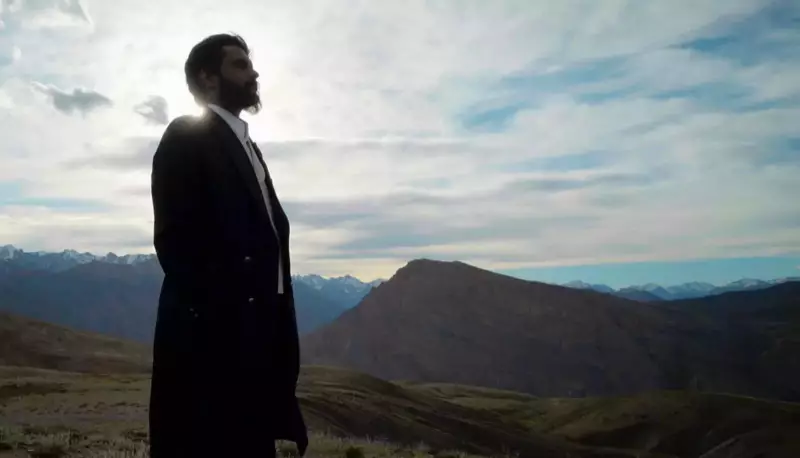
The team traveled extensively across India to find the perfect settings. They filmed in diverse locations:
- The expansive salt marshes of Kutch
- The dense forests of Jim Corbett
- The high altitudes of Ladakh
- The seaside pilgrimage town of Puri
Sagnik explains the reasoning behind these choices. "We needed landscapes that retained a sense of primal civilisation," he says. Tourist-heavy areas were unsuitable. The location became crucial for conveying the epic's vast scale of time and space.
Director Ashish Avikunthak elaborates on his vision. "I staged the epic within India's raw landscapes to avoid the extravagance typical of mythological cinema," he states. He views these locations as more than mere backdrops. The high altitudes, deserts, and forests serve as elemental, metaphysical spaces that actively shape the narrative.
A Talented Cast Brings the Epic to Life
Prasenjit Bardhan, in his final film performance, takes on the titular role of Meghnad. The supporting cast includes several accomplished actors:
- Anujoy
- Deepak Halder
- Riddhibesh Bhattacharya
- Sraman Chatterjee
- Arkoja Acharyya
Each actor plays a pivotal role in this ambitious adaptation.
The Challenge of Adapting Nine Cantos
Transforming nine cantos into a 93-minute film required careful selection. The team focused their efforts on specific elements. "We concentrated on the exchanges and dialogues," Sagnik explains. Key conversations like Meghnad with Ravan or Sita with Sarama took priority. The filmmakers deliberately avoided excessive ornamentation and description.
This editorial process was lengthy. "It took six to seven months just to decide what to include and what to leave out," Sagnik reveals. The focus remained consistently on dialogue and the dramatic encounters at the poem's heart.
Ashish emphasizes their approach to the source material. "From a dialogue standpoint, we have not moved a bit from what Michael wrote," he asserts. He describes the original text as radical. His goal was for the film to confront this complexity directly, even while presenting a contemporary screenplay.

Anticipation Builds for Festival Premiere
Early audience interest is already evident. The film's trailer attracted over 50,000 views within its first week online. Both Ashish and Sagnik express hope that audiences will finally experience a cinematic version of this epic. They aim to balance faithful adaptation with a fresh, modern perspective.
The film is scheduled to premiere at the Rotterdam Film Festival on January 30. For Sagnik Mukherjee, this project marks a significant professional milestone. "The film will mark my debut as an associate director," he notes. His contributions were multifaceted. He co-developed the script with Ashish, acted in the film, and handled the casting of the other actors.
Director Ashish Avikunthak summarizes his artistic philosophy for the adaptation. "In adapting this work, I chose to strip away the descriptive passages and focus on the dialogue," he says. He points out that Dutt embedded his most complex ideas within these conversations. The resulting film is less about physical action. It delves more deeply into the intellect and internal crises of the characters. This approach allows the audience to engage directly with the text's enduring radical complexity.