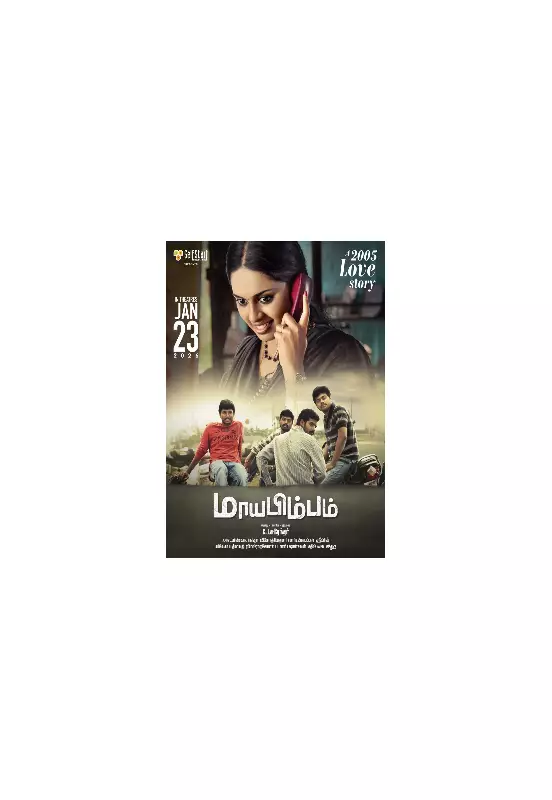
Maayabimbum Movie Review: A Time-Warped Romance That Misses Its Moment
The Tamil film Maayabimbum presents a curious case of cinematic timing. Released in January 2026, this romantic drama transports viewers back to 2005. Yet, its overall feel suggests it should have debuted around 2006. The movie arrives nearly two decades late, leaving audiences wondering why it feels so disconnected from contemporary sensibilities.
A Doomed Love Story Set in Coastal Tamil Nadu
Director K. J. Surendar sets the story in the towns of Cuddalore and Chidambaram. Medical student Jeeva, played by Akash Nagarajan, shares an auto ride one morning with Sumathi, portrayed by Janaki Srinivasan. She shows initial interest in him. Jeeva follows her on his bike but crashes during the pursuit. Sumathi volunteers to nurse him back to health, sparking a tentative romance.
The film reveals early that Jeeva ends up in prison, so viewers know this relationship faces tragedy. The central question becomes how everything unravels between these two characters.

Outdated Perspectives and Repetitive Scenes
Many films effectively mine nostalgia for emotional resonance. Maayabimbum struggles in this regard. Jeeva's three college friends dominate considerable screen time, repeatedly huddling together to discuss women. They analyze how to interpret signals from women, how to "correct" their behavior, and how to make appropriate moves.
These conversations sound like a committee workshopping a seduction manual. They trade nearly identical observations in slightly different configurations. This chorus of provincial wisdom loses its charm within the first fifteen minutes. Unfortunately, the film keeps returning to these characters as if they offer fresh insights each time.
The movie also features numerous scenes depicting mundane home life. We see Jeeva eating dosa, his mother preparing idli, the landline telephone ringing, and family members moving through their lower-middle-class home. While such details once helped establish texture in films, here they appear four or five times without adding new depth.
A Problematic Plot Pivot and Extended Explanations
When the narrative finally shifts direction, Sumathi recoils from Jeeva's physical advance despite having shown consistent interest throughout their relationship. She previously consented to accompany him to a room and initiated much of their earlier intimacy. This sudden reversal aims to register as tragedy but feels more like forced screenplay manipulation.
The lengthy second half attempts to explain Sumathi's perspective through diary entries. However, these mostly rehash scenes viewers have already witnessed, merely presenting them from a different angle without substantial new revelation.
Some Redeeming Qualities Amid the Flaws
Maayabimbum does offer occasional bright spots. Rajesh Bala delivers some genuine laughs as the group's designated punching bag. The film might resonate with a niche audience familiar with its specific time and setting.
The lead actors share decent chemistry, bringing sincerity to their emotional moments. Both Akash Nagarajan and Janaki Srinivasan commit fully to their roles, even when the material doesn't completely cohere. Their performances provide glimpses of what might have been with stronger writing.
Ultimately, Maayabimbum needed either a time machine to transport it to an earlier era or a substantial rewrite to make its themes feel relevant today. The film's heart exists in the right place, but its execution leaves much to be desired for contemporary viewers.